Showing posts with label Hibernia. Show all posts

07 May 2021

Old Britain and the Balkans: similitudes of sanctity


I’ve observed several strong commonalities as I’ve explored the hagiographies of the old Celtic saints and the saints of Bulgaria, Romania and Serbia. The style of monasticism which prevailed in each place is remarkably similar, with the Celtic style of monasticism privileging the lonely hermitage over the organised abbey. This style of monasticism is also prevalent in Romania and in Bulgaria even in modern times. This similitude presents itself in several ways in the hagiographies of these saints.

It is easy enough to see the commonalities, for example, between the hagiographies of Saint Melangell of Pennant and Saint Teodora of the Carpathians. Both women were engaged to men by their parents against their wishes, and sought out lonely hermitages in the wilderness when the time allowed; both were also quite close to nature and befriended wild animals. Equally so between Saint Illtud the Knight and Saint Prohor of Pčinja: both hermits protected deer from kingly hunters in their cells, and in turn served as mentors to the same kingly hunters, giving them spiritual guidance. And even the princes can sometimes appear similar! The abdication of the throne and resulting monastic obedience willingly undertaken by Saint Boris Mihail of Bulgaria mirrors the earlier monastic abdications of Celtic princes like Saint Elaeth, Saint Pabo and both Saints Custennin.

Bulgaria always has been remarkably westward-facing even among the Orthodox countries, going as far back as Boris Mihail. The position that Bulgaria occupied in the mediæval world as a buffer state between Byzantium and Francia ensured that certain forms of cultural exchange would be welcomed there. But this does not quite explain the similitudes between the animal-loving, near-to-nature, eremitical asceticism of the Celtic countries in the far chilly northwest of Europe, and the same phenomenon on the milder, more temperate southeast end of Europe.

What may explain it more thoroughly are the shared roots that each monastic tradition, the upper Balkan one and the Celtic one, have in the hermitages of the Ægyptian desert. William Dalrymple in his excellent book From the Holy Mountain explores the linkages between the early Ægyptian monastics and the saints of early Scotland and Ireland; Fr Gregory Telepneff also discusses this linkage in The Egyptian Desert in the Irish Bogs. Bulgaria, Serbia and Romania also received tutelage directly from the Ægyptian deserts in the Middle Ages, in the form of the leader of the hesychast movement Saint Gregory of Sinai, who spent the bulk of his life and took the Great Schema on that mountain, and only later in his life made the journey to Athos and then to Strandzha in Bulgaria. Hesychasm had a profound influence on the spirituality of the upper Balkans, and certainly influenced the character of the ascetics of the region.

The similarities of the Old British saints and the Balkan saints, however, should prompt reflection. More important than their shared roots are the lessons that we need to take from their lives. The kenotic, forgiving, nature-loving and wealth-renouncing nature of the Old British and Old Irish ascetics in particular ought rightly to be considered a part of the spiritual heritage of the English-speaking world, including North America. The saints whose example we venerate publicly, such as Saint Patrick, convey to us a distinctive spirituality. The Christianity which comes down to us from the Celts is distinguished by its love of nature, by its insistence of the immanence of God in all created things, by radical hospitality to the poor, by simplicity of spirit, by everyday prayer, by a particular care for children (especially orphans) and widows, and by a love for both Scripture and scholarship.

It strikes me that to honour this spiritual heritage correctly, we must defend the natural created order from destruction and sacrilege – and in particular defend our precious sources of clean fresh water. We must insist on the presence of God in that order. We must not only personally show hospitality and care for the poor, but also advocate for public policies that humanise the poor and working classes and treat them as worthy of life. We must aim for a greater simplicity of spirit – even, I will dare say, chastity – in our public and private lives. We must make space for prayer. We must make policies that encourage the healthy growth and flourishing of children, and which protect the most vulnerable – including the unborn. We should witness to such policies with the help of the Old Testament prophets and the founders of the Church. And we should exert ourselves to defeat the spirit of anti-intellectualism and anti-professionalism that continues to manifest itself in our culture.

Now, I understand that I tend to romanticise certain places, times and trends. And I understand quite well that Bulgaria, Romania, Moldova, Serbia and so forth are far from perfect. But a country that can publicly honour someone like Dobri Dobrev, who would likely be simply ignored here, clearly has something going for it. I would like to see a society that can begin to honour its Dobri Dobrevs again. That would be a good first step towards honouring the Christian heritage shared by Celtic, Balkan and Middle Eastern Christians.

21 June 2020

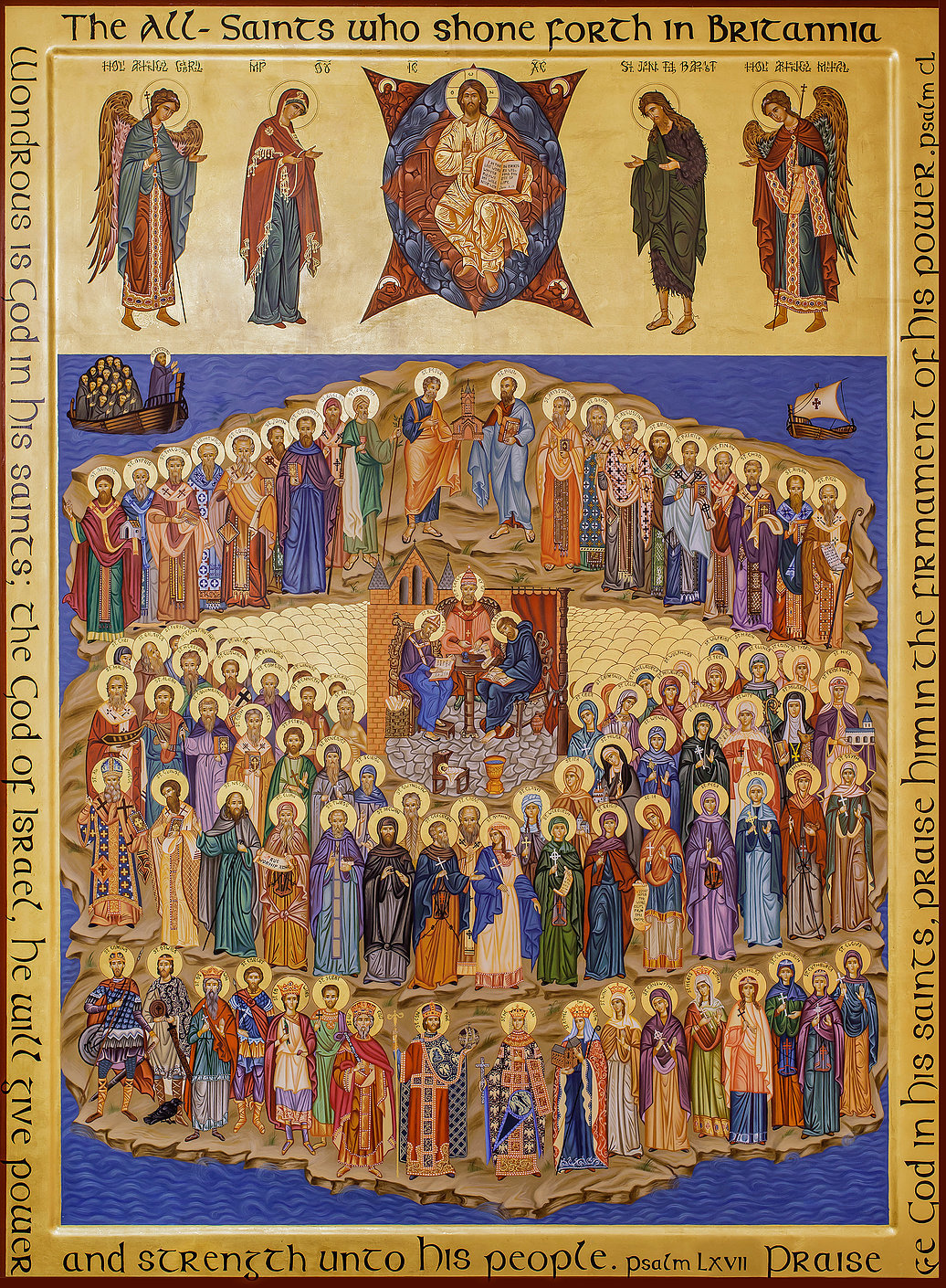
A calendar of the Pre-Schismatic Saints of Britain


THE MOST HOLY THEOTOKOS AND EVER-VIRGIN MARY
☩ Our Lady of Walsingham ☩ (15 Oct)

THE HOLY, GLORIOUS AND ALL-LAUDABLE LEADERS OF THE APOSTLES
☩ Apostle Peter (29 Jun)
☩ Apostle Paul (29 Jun)

THE FOUR PATRONS OF BRITAIN
☩ Holy and All-Laudable First-Called Apostle Andrew (30 Nov)
☩ Holy Hierarch Dewi of Mynyw, Bishop of Wales (1 Mar)
☩ Holy Hierarch Padrig of Armagh, Enlightener of Ireland (17 Mar)
☩ Greatmartyr, Victory-Bearer and Wonderworker George of Lydda (23 Apr)

THE FIRST MARTYRS AND ENLIGHTENERS OF BRITAIN
☩ Holy Apostle Aristobulus of the Seventy, Bishop of Britain (16 Mar)
☩ Alban, Protomartyr of Britain (22 Jun)
☩ Holy Priestmartyr Amphibalus of Verulamium (25 Jun)
☩ Martyrs Aaron and Julius of Caerleon (1 Jul)
☩ Righteous Joseph of Arimathæa (31 Jul)

THE HOLY SAINTS OF BRITAIN
☩ Dryhthelm of Melrose (1 Sep)
☩ Heiu of Tadcaster (2 Sep)
☩ Ealhmund of Hexham (7 Sep)
☩ Wulfþrýð of Wilton (9 Sep)
☩ Wulfhild of Barking (9 Sep)
☩ Ciarán ‘the Younger’ of Clonmacnoise (9 Sep)
☩ Deiniol of Bangor (11 Sep)
☩ Ailbe of Emly (12 Sep)
☩ Éanswíþ of Folkestone (12 Sep)
☩ Éadgýð of Wilton (16 Sep)
☩ Theodore of Tarsos (19 Sep)
☩ Adamnán of Iona (23 Sep)
☩ Ceolfrið of Jarrow (25 Sep)
☩ Barrwg of Ynys Barri (27 Sep)
☩ Leoba of Schornsheim (28 Sep)
☩ Tetta of Wimbourne (28 Sep)
☩ Sadwrn ‘the Knight’ of Llansadwrn (29 Sep)
☩ Honorius of Canterbury (30 Sep)
☩ Máel Dub of Malmesbury (2 Oct)
☩ Fragan of Armorica (3 Oct)
☩ Ósg‎ýð of Chich (7 Oct)
☩ Cynog of Powys (7 Oct)
☩ Tanwg of Harlech (10 Oct)
☩ Iestyn of Anglesey (10 Oct)
☩ Paulinus of York (10 Oct)
☩ James the Deacon (11 Oct)
☩ Æþelburg of Barking (11 Oct)
☩ Éadwine of Northumbria (12 Oct)
☩ Wilfrið of Ripon (12 Oct)
☩ Harold of England (14 Oct)
☩ Nóðhelm of Canterbury (17 Oct)
☩ Gwen of Talgarth (18 Oct)
☩ Friðuswíþ of Oxford (19 Oct)
☩ Acca of Hexham (20 Oct)
☩ Mellon of Rouen (22 Oct)
☩ Maelor of Sark (24 Oct)
☩ Gwynnog of Llanwonno (26 Oct)
☩ Eata of Hexham (26 Oct)
☩ Ælfrǽd ‘the Great’ of Wessex (26 Oct)
☩ Éadsige of Canterbury (28 Oct)
☩ Sigeberht of East Anglia (29 Oct)
☩ Æþelnóð of Canterbury (30 Oct)
☩ Cadfan of Bardsey (1 Nov)
☩ Erc of Slane (2 Nov)
☩ Gwyddfarch of Meifod (3 Nov)
☩ Gwenffrewi of Gwytherin (3 Nov)
☩ Byrnstán of Winchester (4 Nov)
☩ Kea of Devon and Cornwall (5 Nov)
☩ Fili of Cornwall (5 Nov)
☩ Illtud ‘the Knight’ of Llanilltud Fawr (6 Nov)
☩ Cyngar of Congresbury (7 Nov)
☩ Gwyddnog of Padstow (7 Nov)
☩ Cybi ‘the Tawny’ of Caer Gybi (8 Nov)
☩ Tysilio of Brittany (8 Nov)
☩ Pabo the ‘Pillar of Britain’ (9 Nov)
☩ Justus of Canterbury (10 Nov)
☩ Elaeth of Anglesey (11 Nov)
☩ Lebuin of Deventer (12 Nov)
☩ Dyfrig of Wales (14 Nov)
☩ Malo of Aleth (15 Nov)
☩ Hild of Whitby (17 Nov)
☩ Juðwara of Dorset (18 Nov)
☩ Maodez of Brittany (18 Nov)
☩ Æbbe of Minster (19 Nov)
☩ Bernward of Hildesheim (20 Nov)
☩ Éadmund of East Anglia (20 Nov)
☩ Columbán of Luxeuil (21 Nov)
☩ Éanflæd of Whitby (24 Nov)
☩ Cyngar of Congresbury (27 Nov)
☩ Ælfríc of Abingdon (28 Nov)
☩ Tudwal of Tréguier (30 Nov)
☩ Berin of Dorchester (3 Dec)
☩ Stinan of Ramsey Island (5 Dec)
☩ Beuzeg of Dol (8 Dec)
☩ Éadburg of Thanet (12 Dec)
☩ Fionnán of Clonard (12 Dec)
☩ Corentin of Quimper (12 Dec)
☩ Hygebald of Hibaldstow (14 Dec)
☩ Drostan of Deer (15 Dec)
☩ Judicaël of Brittany (17 Dec)
☩ Sturm of Fulda (17 Dec)
☩ Wynnebald of Heidenheim (18 Dec)
☩ Hildalíþ of Barking (22 Dec)
☩ Ecgwine of Worcester (30 Dec)
☩ Mael Rhys of Bardsey (1 Jan)
☩ Tyfrydog of Anglesey (1 Jan)
☩ Peter of Canterbury (6 Jan)
☩ Cedd of Lastingham (7 Jan)
☩ Cwyllog of Anglesey (7 Jan)
☩ Hadrian of Canterbury (9 Jan)
☩ Beorhtwald of Canterbury (9 Jan)
☩ Sǽþrýð of Faremoutiers (10 Jan)
☩ Benedict Biscop of Wearmouth (12 Jan)
☩ Eilian of Cornwall (13 Jan)
☩ Cyndeyrn ‘Mungo’ of Glasgow (14 Jan)
☩ Íte of Killeedy (15 Jan)
☩ Ceolwulf of Lindisfarne (15 Jan)
☩ Fursa of Burgh (16 Jan)
☩ Mildgýð of Minster (17 Jan)
☩ Theodosius ‘the Great’ of Rome (17 Jan)
☩ Ninnidh ‘the One-Eyed’ of Inishmacsaint (18 Jan)
☩ Cadog ‘the Wise’ of Llancarfan (24 Jan)
☩ Dwynwen of Llanddwyn (25 Jan)
☩ Torhtgýð of Barking (26 Jan)
☩ Gildas ‘the Historian’ of Rhuys (29 Jan)
☩ Bealdhild of Ascania (30 Jan)
☩ Brigid of Kildare (1 Feb)
☩ Seiriol ‘the Fair’ of Penmon (1 Feb)
☩ Euny of Lelant (2 Feb)
☩ Ia of St Ives (3 Feb)
☩ Laurence of Canterbury (3 Feb)
☩ Wærburg of Ely (3 Feb)
☩ Ansgar of Bremen (3 Feb)
☩ Rimbert of Bremen (4 Feb)
☩ Eborius of York (6 Feb)
☩ Restitutus of London (6 Feb)
☩ Adelphius the Bishop (6 Feb)
☩ Richard of Wessex (7 Feb)
☩ Iago of Saint-Jacut (8 Feb)
☩ Ælfflæd of Whitby (8 Feb)
☩ Teilo of Llandeilo Fawr and Llandaff (9 Feb)
☩ Cædmon of Whitby (11 Feb)
☩ Æþelwold of Lindisfarne (12 Feb)
☩ Eormenhild of Ely (13 Feb)
☩ Æþelgár of Canterbury (13 Feb)
☩ Sigefrið of Växjö (15 Feb)
☩ Finan of Lindisfarne (17 Feb)
☩ Colmán of Lindisfarne (18 Feb)
☩ Mildburg of Much Wenlock (23 Feb)
☩ Boisil of Melrose (23 Feb)
☩ Æþelberht of Kent (24 Feb)
☩ Wealdburg of Heidenheim (25 Feb)
☩ Ósweald of Worcester (28 Feb)
☩ Swiðberht of Kaiserswerth (1 Mar)
☩ Ceadda of Lichfield (2 Mar)
☩ Non of Dirinon (2 Mar)
☩ Gwenolau of Landévennec (3 Mar)
☩ Piran of Perranzabuloe (5 Mar)
☩ Billfrið of Lindisfarne (6 Mar)
☩ Balthere of Lindisfarne (6 Mar)
☩ Cyneburg of Peterborough (6 Mar)
☩ Cyneswíþ of Peterborough (6 Mar)
☩ Tibba of Peterborough (6 Mar)
☩ Eosterwine of Wearmouth (7 Mar)
☩ Felix of Dunwich (8 Mar)
☩ Bosa of York (9 Mar)
☩ Custennin of Cornwall (9 Mar)
☩ Óswine of Deira (11 Mar)
☩ Custennin of Strathclyde (11 Mar)
☩ Óengus ‘the Culdee’ of Tallaght (11 Mar)
☩ Gregory ‘the Dialogist’, Pope of Rome (12 Mar)
☩ Peulin ‘the Old’ of Léon (12 Mar)
☩ Ælfhéah ‘the Bald’ of Winchester (12 Mar)
☩ Benedict of Nursia (14 Mar)
☩ Éadweard of England (18 Mar)
☩ Cuðberht of Lindisfarne (20 Mar)
☩ Hereberht of Derwentwater (20 Mar)
☩ Liudgar of Billerbeck (26 Mar)
☩ Hǽlcelde of Middleham (28 Mar)
☩ Gwynllyw of Newport (29 Mar)
☩ Gwladys of Newport (29 Mar)
☩ Æþelburg of Lyminge (5 Apr)
☩ Brychan Brycheiniog (6 Apr)
☩ Ælfstán of Abingdon (6 Apr)
☩ Brynach of Nevern (7 Apr)
☩ Madryn of Boscastle (9 Apr)
☩ Beocca of Chertsey (10 Apr)
☩ Eðor of Chertsey (10 Apr)
☩ Gúðlác of Crowland (11 Apr)
☩ Padern of Vannes (15 Apr)
☩ Donnán of Eigg (17 Apr)
☩ Ælfhéah of Canterbury (19 Apr)
☩ Cædwalla of Wessex (20 Apr)
☩ Beuno of Clynnog (21 Apr)
☩ Máel Ruba of Applecross (21 Apr)
☩ Mellitus of Canterbury (24 Apr)
☩ Endelyn of Trentinney (29 Apr)
☩ Eorcenwald of London (30 Apr)
☩ Berhte of Kent (1 May)
☩ Asaph of Llanelwy (1 May)
☩ Brieg of Saint-Brieuc (1 May)
☩ Æþelræd of Bardney (4 May)
☩ Ósþrýð of Bardney (4 May)
☩ Éadberht of Lindisfarne (6 May)
☩ John of Beverley (7 May)
☩ Comgall of Bangor (10 May)
☩ Æþelheard of Canterbury (12 May)
☩ Damhnait of Geel (15 May)
☩ Breandán ‘the Navigator’ of Clonfert (16 May)
☩ Dúnstán of Canterbury (19 May)
☩ Helena of Constantinople (21 May)
☩ Elen ‘of the Hosts’ of Caernarfon (22 May)
☩ Aldhelm of Sherborne (25 May)
☩ Augustine of Canterbury (26 May)
☩ Bede of Jarrow (27 May)
☩ Melangell of Llangynog (27 May)
☩ Walstan of Bawburgh (30 May)
☩ Lul of Hersfeld (1 Jun)
☩ Oda of Canterbury (2 Jun)
☩ Cóemgen of Glendalough (3 Jun)
☩ Éadfrið of Lindisfarne (4 Jun)
☩ Pedrog of Padstow (4 Jun)
☩ Boniface of Crediton (5 Jun)
☩ Branwaladr of Milton Abbas (6 Jun)
☩ Willibald of Eichstätt (7 Jun)
☩ Willibrord of Frisia (7 Jun)
☩ Colum Cille of Iona (9 Jun)
☩ Iþamar of Rochester (10 Jun)
☩ Eskil of Tuna (11 Jun)
☩ Ternan of Culross (12 Jun)
☩ Eleri of Gwytherin (13 Jun)
☩ Éadburg of Winchester (15 Jun)
☩ Botwulf of Icanho (17 Jun)
☩ Nectan of Hartland (17 Jun)
☩ Hildegrim of Châlons (19 Jun)
☩ Mewan of Brittany (21 Jun)
☩ Æþelþrýð of Ely (23 Jun)
☩ Twrog of Maentwrog (26 Jun)
☩ Austell of Brittany (28 Jun)
☩ Euddogwy of Llandaff (2 Jul)
☩ Cenydd of Gower (5 Jul)
☩ Seaxburg of Ely (6 Jul)
☩ Erfyl of Llanerfyl (6 Jul)
☩ Modwen of Burton (6 Jul)
☩ Palladius of Ireland and Scotland (6 Jul)
☩ Hædde of Winchester (7 Jul)
☩ Æþelburg of Faremoutiers (7 Jul)
☩ Éadgár of England (8 Jul)
☩ Sunngifu of Selja (8 Jul)
☩ Iwerydd of Chittlehampton (8 Jul)
☩ Mwynen of Morwenstow (8 Jul)
☩ Wihtburg of Dereham (8 Jul)
☩ Eoforhild of Everingham (9 Jul)
☩ Mildþrýð of Thanet (13 Jul)
☩ Willehad of Bremen (13 Jul)
☩ Deusdedit of Canterbury (14 Jul)
☩ Swíþhún of Winchester (15 Jul)
☩ Helier of Jersey (16 Jul)
☩ Cynehelm of Winchcombe (17 Jul)
☩ Gwen ‘the Three-Breasted’ of Dorset (18 Jul)
☩ Frideric of Utrecht (18 Jul)
☩ Teneu of Glasgow (18 Jul)
☩ Samson of Dol (28 Jul)
☩ Óláfr of Norway (29 Jul)
☩ Germain of Auxerre (31 Jul)
☩ Neot of Cornwall (31 Jul)
☩ Sidwell of Exeter (1 Aug)
☩ Óswald of Northumbria (5 Aug)
☩ Beorhthelm of Ilam (10 Aug)
☩ Athracht of Lough Gara (11 Aug)
☩ Jænberht of Canterbury (12 Aug)
☩ Wihtberht of Fritzlar (13 Aug)
☩ Tydfil of Penydarren (23 Aug)
☩ Æbbe ‘the Elder’ of Coldingham (25 Aug)
☩ Gregory of Utrecht (25 Aug)
☩ Bregowine of Canterbury (26 Aug)
☩ Ninian of Whithorn (26 Aug)
☩ Degymen of Watchet (27 Aug)
☩ Aidan of Lindisfarne (31 Aug)

03 February 2020

Venerable Euny, Hermit of Lelant


St Uny’s Church, Lelant, Cornwall

The Sunday nearest the calends of February, which in this case happened to be yesterday (the second of February), is kept as the feast day of Saint Ia’s brother, Saint Euny of Lelant. Unfortunately, little information at all exists of this saint’s life, but his cultus is particularly strong in Cornwall, with five separate attested sites of veneration. The foremost of these is his resting-place at Lelant.

Saint Euny [also Uny, Ewny, Euinus or Euninus] is attested, as mentioned before, as the brother of Saint Ia and Saint Erc. This would place his birth sometime in the latter half of the fifth century, and his repose possibly in the mid sixth century. It would also mean that he was an Irish missionary to Britain and likely to have been a student and disciple of Saint Padrig. Also, based on the fact that his feast-day has been kept constantly on a local basis for fourteen hundred years, it seems reasonable to assume that the first of February really is the anniversary of his death.

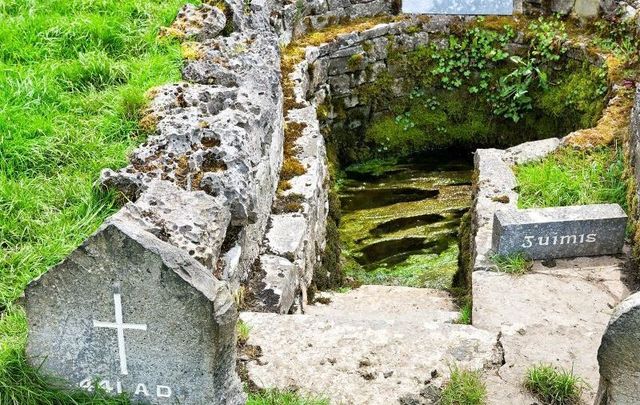
Other than that, we know very little for sure about Euny, except that his missionary and church-founding activities seemed to be centred on Penrith and Kerrier. At Lelant, the place of his repose, there is St Uny’s Church, as well as the Færie Well – his holy well. There is also St Euny’s Church in Redruth. He has a holy well at Merther Euny near Trevenen (the Brythonic toponym implying that he may have been martyred there), two holy wells at Carn Euny near Sancreed (whose waters had the gift of curing wounds and lesions of the skin), and a fourth just below Carn Brea.

Carn Brea is a particularly interesting place in Cornwall, and one of peculiar antiquity. It’s the site of a Neolithic tor enclosure dating back 5900 years, and a settlement dating back nearly as long with two or more long-houses. Between 100 and 200 people would have lived there. Archæological digs have unearthed axe-heads, coins (including Gaulish gold staters) and other artefacts which date back to the Stone Age and as recently as Roman times. It is supposed based on local lore that Saint Euny visited Carn Brea when it was still ruled as a heathen holy site by a Romano-British chieftain, and performed a wonder of God that resulted in or was commemorated by the holy well there.

He may also have visited Brittany. His sister, Saint Ia, is commemorated in Finistère with the toponym of Plouyé. Likewise, Saint Euny may have given the village of Plévin in Côtes d’Armor its name. His name was a common one for christening young boys in Cornwall down the centuries. Holy Saint Euny, pray unto Christ our God that our souls may be saved!


St Euny’s Church, Redruth, Cornwall

Holy Virgin-Martyr Ia of St Ives


Saint Ia of St Ives

Today in the Orthodox Church we venerate a particularly significant saint of the præ-Schismatic West, who indeed may not have been from the West at all – but might have been one of the Syriac saints. The third of February is the feast-day of the holy Irish virgin-martyr Saint Ia. Her legend is fascinating enough and indeed human enough to belong to a fully-historical personage. However, her veneration in Cornwall overlaps enough with trade in wares from the Eastern Roman Empire and Asian Christendom in those parts to suggest an identification with another holy virgin-martyr, Saint Ia of Persia. This name, shared by an Irishwoman and a Persian, also belongs to an ethnic-Manchu Chinese martyr of the Boxer Rebellion, Saint Ia the Teacher. The name of Ia thus links three cultures by the blood of holy martyrdom.

According to her hagiography, our Irish Saint Ia [also Hia, Hye, Eve, Ives, Íte or Yé] was born around the year 480. She was the sister of Saint Erc of Slane and Saint Euny of Lelant. She heard the preaching of Saint Padrig, and from him received baptism and became a Christian. Saint Padrig reposed in the Lord in the year 493, so if the date of her birth is correct, then she took baptism from him before her thirteenth year. She took fire for the faith, however, and yearned to become an anchoress and travel to Cornwall to preach the Gospel there.

She had made plans to travel to Cornwall together with Saints Fingar and Piala. However, the two of them got on the boat without her, and it sailed off. Saint Ia got to the shore only to see that the ship for Cornwall had already hauled anchor and was a long way out at sea. Stricken and tearful, she raised her hands to heaven and prayed for help from God. After she had finished praying on the shore, a tiny leaf floated by her on the waves. Idly she took up a stick and poked at the leaf to make it sink. But the leaf didn’t sink – instead it grew. Broader and firmer it became, and its edges curled up at the sides, such that soon it would make a serviceable coracle for the saint to ride in. She climbed atop her leaf, and it carried her across the Irish Sea to land at Hayle Beach on Penwith. As it turned out, she had made better time than her friends who had left without her, for Saints Fingar and Piala and their 777 shipmates arrived soon after she did.

She set up an anchorage not far away from where she landed, at what is now St Ives, after seeking the permission of a local prince named Dinan. Dinan sponsored a church on an island off St Ives, which was thereafter named for him – Pendinas. There she lived an austere and prayerful existence, struggling against the passions in solitude. She drew water from a holy well nearby that rose from her prayers to God. She was active in evangelising the countryside, as witnessed by the chapel erected by her in Troon some fourteen miles inland to the east. She may also have reached Brittany, as the town of Plouyé in Finistère is named for her. She was martyred under the persecutions of the wicked Breton Prince Tewdwr in the middle of the sixth century. Fingar and Piala were beheaded on the beach at Hayle by the same heathen Tewdwr; a vita of Fingar attests that Saint Ia shared in the same fate.

Mediævalist Caitlin Green has an intriguing and provocative theory about the Saint Ia of Cornwall. Though she does not dismiss the possibility of Saint Ia being an obscure local saint, she does not give much if any credit to the assertions of her later-mediæval hagiographers. She points out several commonplaces in the hagiographic tradition, including a noble and holy heritage – being the sister of two better-attested saints of Ireland – and the ‘clearly fantastical’ elements of her voyage. Dr Green goes on to make a case in a very different direction, however, asserting the possibility of Saint Ia’s identification with the Persian virgin-martyr under the persecutions of Šâpur II.

Cornwall, she points out correctly, had for a long time been a favoured trading destination of the eastern Mediterranean on account of its rich tin ore deposits. Though the method for smelting tin had been lost after the departure of the Romans from Britain, it was rediscovered in sub-Roman times in the waning years of the fifth century. It didn’t take long for the Eastern Roman Empire to ‘rediscover’ Cornwall as a valued source of the metal. As the hagiography of Saint Piran points out, trade in tin made Cornwall wealthy again quite quickly. Around this same time, she notes, Emperor Saint Justinian had just renovated in lavish style the main shrine to the martyr Ia, in the Golden Gate at Constantinople. Coincidence?

Dr Green points out the occurrence in Cornwall of astonishing amounts of North African and eastern Mediterranean earthenware dating to around this time – suggestive of where the goods being traded for Cornish tin were coming from. A significant amount, and that of a couple of very fine types, of this pottery has been unearthed on Hayle Bay around St Ives. Green also notes several textual references in Welsh and Cornish sources to events and personages that were current in the Eastern Roman Empire, which suggests that this particular corner of the West was not so cut off from happenings in the eastern Mediterranean as we might be liable to imagine. On top of this, she notes that Saint Ia might not have been alone in being a ‘transferred’ cultus from the Roman East. She gives the example of Saint Iestyn the Hermit, who shares the name (Justinian) with the sainted emperor in Constantinople.

Personally, I find Dr Green’s thesis quite attractive, and indeed plausible in certain ways. I do genuinely enjoy the idea of a Persian virgin-martyr venerated in Byzantium finding a welcome reception among Cornish miners and tradesmen! And I do share Dr Green’s scepticism of certain aspects of Saint Ia’s traditional hagiography, to be clear. But the very antiquity of the toponyms and certain aspects of the personality of the saint portrayed in the hagiography prevent me from writing off her historicity altogether. A poor girl, perhaps a bit of a romantic dreamer by temperament, seeming hopelessly late for her ship, despondently poking at the leaves in the water with a stick as they float by… it’s all too plausible a human type to be dismissed as fabrication. Even so, with a local Saint Ia and a Saint Ia venerated by Byzantine traders in Cornish ports, who is to say the two culti didn’t rub shoulders, didn’t enrich and support and strengthen each other? There are multiple Saint Constantines and Saint Helens venerated in Britain, who have been confused betimes with each other. One more Saint Ia isn’t beyond the scope of reason. Venerable anchoress Ia, athlete for Christ and bearer of the faith in Cornwall, pray unto Christ our God for our salvation!
Thy life and mission
Were pleasing to God, most pious Ia,
For seeing thee left behind in Ireland,
He miraculously transported thee across the sea to Cornwall on a leaf.
Wherefore O Saint, pray to God for us
That we may never give way to despair
But ever trust in His great mercy.


St Ia’s Church, St Ives, Cornwall

01 February 2020

Our mother among the saints Brigid, Abbess of Kildare


Saint Brigid of Kildare

One of the greatest – if not the greatest – of the holy mothers of the præ-Schismatic Western Church, is the late fifth- and early sixth-century Saint Brigid, Abbess of Kildare. In Ireland, devotion to Saint Brigid is matched only by that to Saint Padrig, who baptised and taught both her and her mother. The Life of Brigid amply demonstrates the spirited independence of Gælic holy women.

First, a note of caution. It is currently fashionable in some quarters to suggest that Saint Brigid is not a historical person, but instead the euhemerism of a heathen goddess, Brigantia. The evidence for this appears to consist of the fact that her feast-day, the first of February, coincides with the heathen winter festival of Imbolc (or Candlemas). It’s also true that the name Brigid [Scots Gælic Brìde, Welsh Ffraid, English Bridget] does indeed share the same root as the name (really an epithet) for the goddess, deriving from the unattested proto-Celtic name Brigantī, meaning ‘the High One’. However, apart from such circumstantial suggestions, ‘there is little evidence of a direct connection between the two figures’.

Saint Brigid was born around the year 451 in Faughart, now a ruin on the Northern Irish border six kilometres south of Forkhill and three kilometres north of Dundalk in County Louth. Her father was a chieftain named Dubhthach, and her mother was a Pictish slave named Brocca who had been baptised as a Christian by Saint Padrig. Dubhthach’s jealous wife forced him to put Brocca aside when she grew pregnant, and sell her to a druid nearby. Brocca gave birth in this druid’s household, and the druid attempted to feed her. However, she spat out all the food the heathen priest gave her, and was fed instead by the milk of a white cow with red ears, which was kept in the druid’s yard.

The druid sold Brigid and her mother back to Dubhthach when she was about ten years of age, and she entered her father’s house as a slave alongside her mother. Even at this age she had an incredible degree of generosity. When she was a youth, she was brought to the Liturgy by her mother, where she listened with great attention to the homilies of Saint Padrig, which inspired her to a degree of self-giving unusual for a child of ten. On one occasion she gave away her mother’s entire store of butter to the poor. Afraid of being punished by her angry mother, she prayed fervently to God, and it was later discovered that the stores of butter had been wondrously replenished. In the household of her father, she would ‘donate’ from her father’s clothes and other belongings to any needy person who asked.

This habit of hers infuriated Dubhthach, who at last resolved on selling her off to the king of Leinster. He brought her in his chariot to Leinster, and while he was negotiating with the king on her price, she saw a beggar by the side of the road. She took her father’s jewelled dagger, which had been wrought in Faughart as a gift for the king, from the chariot and gave it to the beggar for him to feed his family. The king of Leinster and her father both observed her as she did this – Dubhthach with outrage and mortification, and Leinster with approval. The king of Leinster would not buy her for himself, but he ultimately convinced her father to set her free, as it was obvious to him that she was a holy youth and well-disposed to a life consecrated to God.

Ultimately, the young Brigid was presented to Saint Mael of Ardagh – a nephew of Saint Padrig and one of his assiduous disciples in converting Ireland. Saint Mael consecrated Brigid as a nun along with seven other young women, and in some accounts even accorded her the honours due to a bishop! She was sent first to live a holy life at Kilbride (in County Offaly on the inlandmost side of Leinster) in 468, and here she spent several years. In 480 the King of Leinster invited Saint Brigid back and granted her a holding at Kildare (from Cill Dara – the ‘Church of the Oak’), on the plains of Curragh. Saint Brigid asked for only as much land as her cloak would cover. The king of Leinster agreed, seeing that her cloak was so small. But when she went to Curragh and spread out her cloak, by a wonder of God it seemed her cloak kept unrolling until it covered several acres. Beholding this wonder of God, the king did not go back on his word but allowed her to build there.

Here she founded an oratory and a monastic cell – the first such cloister for women in Ireland. In earlier times Cill Dara had been consecrated by the druids to the goddess Brigantia (another circumstance which has been drawn on by fans of the euhemerism theory), where virgins constantly tended an ‘æternal flame’ in her honour. However, under the saint who shared her name, tended instead were the flames of charity, hope and faith in Christ.

Not just young women, but even men had been drawn to Kildare by tales of Saint Brigid’s holiness, which when they saw it for themselves led them to desire a life consecrated to Christ. The monastery at Kildare was therefore consecrated as a double monastery – Brigid governed the one for women, while she selected a hermit named Conláed to lead the one for men. Saint Brigid travelled often from Kildare, preached the Gospel and founded other nunneries all around Ireland. She was of great assistance to Saint Padrig, and the two of them held each other in the highest affection and esteem. They were said to have been of one mind and one opinion.

Brigid and Conláed presided over one of the first Irish scriptoria as well. The illuminated Book of Kildare, described in glowing terms as a rival to the Book of Kells by the Welsh deacon Gerald in the twelfth century, was, to a large degree, the work of Saint Brigid herself. Saint Brigid was a sponsor and producer of many beautiful works of holy art including metalworking, and she quickly became a saintly patroness not only of scribes and illuminators but also musicians, poets and smiths.

Crosses made from rushes are associated with Saint Brigid as well. The hagiographies have it that Saint Brigid was called to attend a heathen man, a lord, who was sick and on his deathbed. Being feverish, the man wasn’t entirely in his right mind. Brigid picked up several rushes from the floor – flooring at that time often being made from such material – broke them and wove them together to form a distinctive cross. The sick man asked what she was doing, and patiently Brigid began to explain the Cross and its significance. Her conversation had the effect of soothing the man’s mind, and he came to believe in Christ before his death, through Brigid’s demonstrations and teaching. Since that time, it’s been customary in Ireland to weave crosses from rushes on Saint Brigid’s feast day.

Saint Brigid was a wonderworker, and wrought as many as forty-six wonders of God in her lifetime, with her request to the king of Leinster and the subsequent wonder of her cloak being spread over Kildare often being counted as the first. She cast out devils with the sign of the Cross, and she healed the blind. But many of her miracles involved food – as seen from the above anecdote about her prayer to God filling her mother’s store of butter after she gave it all away. Often these wonders would echo Christ’s feeding of the multitudes. When unexpected travellers came to visit Kildare and she didn’t have enough milk to feed them, Saint Brigid’s cows could be milked three times a day to sate their wants. At one time a large group of pilgrims visited Kildare and Saint Brigid had only a small pat of butter on hand, but this butter satisfied all their hunger. Honey would miraculously appear in Brigid’s refectory for her to give to beggars.

Not only do Brigid’s wonders involving milk and honey carry an obvious echo from the Hebrew Scriptures, but to mediæval Gælic ears they were also indicative of prestige. Milk in particular was associated with nourishment, healing and purity. Thus Saint Brigid’s wonders established her in the eyes of the early Gæls as a powerful patroness – but her choices of beneficiaries were always the poor, the indebted, the rootless, the kinless, the sick and the desperate. In a præ-feudal œconomy based on kinship and patronage, Brigid’s miracles also established her radicalism: she bestowed her wealth and purity on the people who had the least of both.

Saint Brigid reposed in the Lord, in peace among her nuns, in the year 525. She received the Gifts from a certain Ninnidh ‘of the Pure Hand’, but this is probably not the same person as Saint Ninnidh ‘the One-Eyed’ of Inishmacsaint. Her cultus is centred at Kildare, with her shrine having once been located at Kildare Cathedral. Her relics are now located at Down Cathedral alongside those of Saint Padrig and Saint Colum Cille. Saint Brigid is also venerated in Portugal; a skull said to be hers is enshrined at the Church of Saint John the Baptist in Lumiar, having been brought there in the thirteenth century by Irish crusaders. Her veneration is ubiquitous in Ireland and she is revered with Padrig and Colum Cille as one of Ireland’s three national patrons. She has a large number of holy wells throughout Ireland, with the most significant being the one at Kildare. Holy mother Brigid, wonderworker and open-handed friend to the poor, pray unto Christ our God that our souls may be saved!
O holy Brigid, you became sublime through your humility,
And flew on the wings of your longing for God.
When you arrived in the eternal City and appeared before your Divine Spouse,
Wearing the crown of virginity,
You kept your promise
To remember those who have recourse to you.
You shower grace upon the world, and multiply miracles.
Intercede with Christ our God that He may save our souls.


Cathedral of Saint Brigid, Kildare, Ireland

18 January 2020

Venerable Ninnidh ‘Laobh Dearc’, Abbot of Inishmacsaint


Inishmacsaint Monastery, County Fermanagh

Today on the new calendar in the Orthodox Church is the feast-day of Saint Ninnidh of Inishmacsaint, sometimes called Ninnidh ‘the One-Eyed’ to distinguish him from the Ninnidh who attended Saint Brigid on her deathbed. Saint Ninnidh is another of the great missionary saints of Ireland, and like Saint Breandán he often voyaged by coracle to be of service to armly folk and to preach the good news of Christ.

Saint Ninnidh was high-born, possibly the grandson of the Irish High King Lóegaire, but born among the Cenál Conaill in Tír Conaill around the turn of the sixth century. He had an interest in religious matters from a young age, and was thus duly given to be educated by Saint Fionnán of Clonard. There he became friends with Saint Ciarán of Clonmacnoise, Saint Laisrén of Devenish and Saint Máedóc of Ferns. He subsisted on the milk from Saint Ciarán’s dun cow, and upon the words of the Lord as they were spoken by Saint Fionnán.

Ninnidh took to the nautical life early. He preached the Gospel, as mentioned above, by coracle all around the southern end of Lough Erne, settling himself and a few monastic disciples on the isle of Inishmacsaint in 532. Saint Ciarán of Clonmacnoise would visit him at his new monastery two years later and give it his blessing. (The monastery at Inishmacsaint is now a craft brewery which claims to be following in the tradition of monastic brewers going back 900 years.) He went ashore frequently to visit the sick and give alms to the poor, and he established a church at Glenwinny. A number of toponyms nearby indicate the importance of Saint Ninnidh to this corner of Fermanagh: Knockninny, for example; and Ninnidh’s Well at Knockninny Quay, whose water is said to be able to cure blindness and diseases of the eyes. The well was apparently at one point also a scenic spot where local boatmen and their families would go for recreation. As one hagiographical account has it:
A route led from Inishmacsaint Island to Maherahar and Inishway; thence to Glenwinny where there was a small church; through Urros and Beagh along what was later to become the old coach road from Dublin to Ballyshannon through Magho. The route then turned to Ninnidh’s Hill above Roscor where a small church was established and then through Killybig to another little church at Kilcoo. This route was probably used by St. Ninnidh and the early Christians of the area during rough weather when it was dangerous to go by Lough Erne.
Saint Ninnidh was accustomed to going into Knockninny by coracle, and fasting in solitude on the hilltop there during the forty days of Great Lent. The first time he did this seems to have been the year 530. He was also given a precious bronze bell, cast by Senach the smith of Derrybrusk, which was in existence and written memory at least until 1877, when it vanished from an auctioned museum collection. This bell was a relic on which local people would swear solemn oaths as needed. The missionary saint reposed in the Lord on the eighteenth of January in an unknown year, probably sometime in the middle of the sixth century. Venerable Ninnidh, lake-faring witness to the love of Christ, pray for us sinners unto Him who loves mankind!

15 January 2020

Holy Mother Íte, Anchoress of Killeedy


Saint Íte of Killeedy

Today in the Orthodox Church is the feast-day of a beloved Irishwoman, Saint Íte of Killeedy, whose importance in præ-Schismatic Celtic Christianity is second only to that of Saint Brigid, to whom she is often compared. Indeed, she has been called by her hagiographer ‘the white sun of Munster’ and is known as the ‘foster mother of the Irish saints’, because she was an inspiration and a direct teacher of an entire generation of Irish saints including Saint Breandán the Navigator.

Saint Íte [also Deirdre or Míde] was born around the year 480 near what is now Waterford, near Munster, in southeastern Ireland. Her high-born parents were both Christian, and she was given the baptismal name of Deirdre. From a very early age she exhibited a passion for the Church and a particular love for Christ; as a child she had a particular meekness and kindness that distinguished her from her fellows in age. Her parents were amazed to see that she kept the fasts even as a toddler, and for some time her room was filled with a holy fire which did not burn hot, and by which her parents knew it for the grace of God.

Therefore, it surprised no one when, on reaching the age of maturity, Deirdre decided to move out of her home and pursue the life of an anchoress. Her father – who had sought to match her with another nobleman for political reasons – was displeased at first, but he soon came to accept and bless her decision, and he offered her to Bishop Declán of Ardmore so that she might take the veil. It was Declán who gave her the monastic name of Íte (meaning ‘thirst’ in Gælic), by which he signified her thirst for the love of God.

Saint Íte went out with her sister Fiona, who too became a nun. Together they followed the sign that took the form of pillars of light – a sign which echoed the pillar which guided the Hebrews in the desert – into Limerick, where at last they stopped at a place suitable for a small hermitage. They asked of the ruler there, and the ruler granted them a large tract of land. Saint Íte refused, however, all but four acres of his offering: the four acres which had been shown to them by the three pillars of light.

This four acres of wilderness in Limerick would become the convent of Killeedy, where Íte became the first abbess. The stead sat at the foot of the mountains, and was the first religious community of its kind in that part of Ireland. Íte’s little cloister had a vegetable garden to attend to the simple needs of the body for the women in her convent. She also encouraged music and singing among her nuns, and even herself composed melodies which still exist in the Western tradition of church music. But the chief accomplishment of her monastery was not in composing airs or in tending vegetables, but in growing another and much more precious sort of crop.

Íte’s passion was for education. She established a school for children, which welcomed both girls and boys. Many parents who desired for their children the best of learning both sæcular and religious sent them to Saint Íte, who in her time taught not only Saint Breandán at her school for boys but also the holy men Mochoemoc, Cumian, Fachanan and Columbán. In this way she earned the epithet ‘foster-mother of the Irish saints’. What is truly amazing is that this mere girl of sixteen, the daughter of a local chieftain who did not possess so much as the rudiments of an education by books let alone great erudition in the matters of sæcular life, was given the wisdom to teach children who would themselves become known among the wisest of men in the Christian West. Saint Íte was elevated among the wise not through books or through travels or through first-hand observation, but precisely through the spirit of humility and devotion to Christ that she cultivated in her small anchorage.

So great indeed was Saint Breandán’s love and awe for his tutor that he often came to visit Saint Íte between his farings by sea, when he found himself in need of spiritual advice or direction. One time her pupil asked her what things Christ loves best, and Saint Íte answered him: ‘faith in God with a pure heart; a simple life with a religious spirit; and love and generosity to the least of His brothers and sisters’. When Breandán asked her what things He most detested, she told him: ‘a hateful heart; an obstinate life persisting in sin; and reliance on money’.

Saint Íte herself did her best to exhibit in her own life all three of these qualities Christ loves best. She taught not only by words but by example. She drew many women of all ages from every corner of Ireland to her little corner of Limerick, and when these women understood the faith of her heart they followed her in imitation of her life. She lived a very simple life indeed – she was quite stable, and never left her convent. Instead she spent all of her waking hours singing the glory of God, nursing her vegetables and her pupils. And she gave of whatever substance she had in assisting the needy, the elderly, the sick and infirm, and infants.

Saint Íte was unfortunately given to some of the extremes of austerity exhibited among the Celts in their occasional giddy self-assurance, and had to be warned by the angels of God on more than one occasion not to tax her body too heavily with strict fasting and strenuous toil. On other occasions, also just as with the Hebrews in the desert as they were led by Moses, food would appear to her from the heavens and the ministers of the Most High would bid her to eat. However, her holiness of life was never in doubt, and her Christ-given meekness and humility guided her in these visions. She gained a reputation as a wonderworker in life, and performed miraculous healings including one man from among her kin, whom she raised from the dead after he was slain in battle.

Saint Íte was gifted with a long span of years, and lived to the age of ninety. She was given to know when her end was approaching before it happened, and prepared herself accordingly. She gathered her sisters around her and gave them her blessing, and exhorted them to the way of life she had done her best to exemplify. She reposed in the Lord on the fifteenth of January, 570. The site of her monastery (which was raided and destroyed by Danish pirates in the ninth century) and her gravesite are still destinations of pilgrimage, and it’s customary for pilgrims to honour her grave with posies. She is still a particular patron of schoolchildren and pregnant women. Holy mother Íte, gentle tutor of the Irish saints, we beseech your intercessions with Christ our God!
Casting aside thy royal rank, and embracing the godly monastic life,
Thou didst found a renowned school of piety,
Wherein thou didst nurture the souls of saints
In reverence and the knowledge of God;
And having thus labored to please thy Bridegroom and Master,
Thou hast moved all the land of Erin to cry unto Him:
Have pity on us, O Lord of all,
And grant that we may ever stand with Íte at Thy right hand!

St Íte’s Cemetery, Killeedy

15 December 2019

Venerable Drostan, Abbot of Old Deer


Saint Drostan of Deer

Today in the Orthodox Church we celebrate a venerable Goidelic father of the church, a missionary from Ireland to Scotland and a beloved disciple and companion of the great Saint Colum Cille, or Columba, of Iona. Saint Drostan, the abbatial father of Deer who resided betimes also in Holywood and as a hermit in Glenesk, is remembered both today, on the fifteenth of December, and also together with his fellow-saints in the Synaxis of All Saints of Britain on the eleventh of July. He is mentioned in the Book of Deer – one of the very earliest still-extant Gælic texts in Scotland – and in the Aberdeen Breviary.

Drostan was the scion by blood of the earthly kings of Dál Riata, which was the formative Goidelic kingdom which spanned the western part of what is now Scotland – including the Isles – and part of the county of Ulster. His father was named Cosgrach. When discussing this part of Britain’s history it is worth remembering this: that the Goidelic peoples, whether on Ireland or on Great Britain, were long considered one and the same. It is neither an omission nor an error nor a slight on Saint Bede’s part, that he refers even to the Goidelic-speaking peoples of Ireland as ‘Scots’; for they were the same people. In any event, young Drostan was given early by his family to the abbey of Saint Colum Cille on Iona, there to be educated by him.

Saint Drostan was apparently very dear and close to his abbot, for he accompanied Colum Cille on not just one but several missions among the Picts. He was one of twelve disciples of Colum Cille who departed Ireland for Scotland. On one such occasion, Colum Cille took Fergus and Drostan with him into the Pictish lands, and apparently impressed the king of that land enough that he granted them lands for a monastery at Deer. The three of them worked to construct the monastery, after which Saint Colum Cille appointed Drostan as abbot, and then left on the return voyage to Iona. It is said that Deer takes its name not from the animal, but instead from the tears that Saint Drostan shed upon his master’s departing. (‘Tear’ in Old Gælic is dér; in Modern Irish deoir, in Scottish Gælic deur.)

Saint Drostan did not flag, however, in his missionary works. He founded churches all up and down the firth of Moray and around Aberdeen, and he became so respected and loved by the common folk that he was called to take up residence at another monastery at Holywood (or Dalquhongale) as abbot, succeeding the old abbot there who had died. He did not stay there long, however; he took up the mendicant life and later settled down at a lonely hermitage in the valley of Glenesk. An Anglican church dedicated to Saint Drostan still stands at the site of that hermitage, by Tarfside. Saint Drostan there also became renowned among the common Pictish folk of the area, a figure of Christlike humility and generosity. He was visited by the sick, by the poor and by the needy, and he worked wonders on their behalf. A local Pictish priest named Simon came to him with an infirmity of the eyes, and Drostan restored his sight through a prayer to the Holy Trinity.


St Drostan’s Church, Tarfside

Saint Drostan reposed in the Lord at Glenesk sometime in the early seventh century, probably around the year 606. His relics were borne back to Deer, where they were interred in a stone coffin. His bones wrought wondrous cures for the sick and those suffering from pain. There is also a holy well attributed to Saint Drostan which is located near Deer, and which effected similar cures. Today Saint Drostan is remembered as one of the apostles of Scotland alongside Saint Ninian, Saint Cyndeyrn and Saint Colum Cille. Holy father Drostan, pray unto Christ our God for us!
Zealous disciple of Saint Columba,
You left your native land of Ireland
To take the light of the Gospel
To the land of Scotland, of which you were an apostle.
Holy abbot of the monastery of Deer,
Drostan, pray to the Lord that He save our souls!

Old Deer Old Kirk, Aberdeur