Showing posts with label Dixie. Show all posts

30 December 2023

Ulysses S Grant: fighter, lover, honourable profligate

I am currently writing this blog post from the great south Midwestern town of St Louis, Missouri, where my family and I are planning to bring in the New Year. It had been our hope—to this point, not a disappointed one—that the stratospheric conditions would be amenable to a mild and restful holiday. Today, we visited (a safe distance after the winter solstice) the Mississippian holy site of the Cahokia Mounds—which may be the subject of a blog post in the near future. We also visited the farm which belonged to Civil War hero and former US President Ulysses S Grant.

I am prompted to write this post on account of the fluctuating posthumous historical fortunes of a number of American figures in public life. It’s a foregone conclusion, for example, that the reputation of Alexander Hamilton is far more positive in the present day, on account of a certain neoliberal Broadway non-talent, than it was thirty or even twenty years ago. (And this: for one of the right reasons and a hell of a lot of wrong ones.) It strikes me that Grant is another, similar victim of the historiographical ‘swing’ which began in earnest in the Obama era. And the national monument dedicated to his memory seems fully committed to this ‘swing’ and a revisionist view of its subject… for better and for worse.

It has been customary to view Grant, possibly under the influence of the Dunning school of American historiography, as a drunkard, a butcher, a fool and a failure. To its great credit, the Ulysses S Grant National Historical Site here in St Louis does a thorough and creditable job, drawing from primary sources, to deflate some of these caricatured assessments.
Apart from one unfortunate bout in his younger years as a distinctly-unhappy minor officer stationed far away from his beloved family at Fort Humboldt, Grant’s relationship with alcohol was a distinctly moderate and temperate one. Far from being a fool, Grant had a natural cunning and understanding of military strategy, as well as a distinct streak of stubborn tenacity, which manifested itself in his victorious career during the Civil War. And as for being a failure… that is a distinct matter of perspective. Certainly Grant’s efforts to manage Southern Reconstruction met with less than stellar results. And as for economic policy… well, we’ll get to that later. Suffice it to say for now, that I do not share the National Park Service’s rosy view of Grant in that regard. However, he did manage to bring the American military campaigns against the Plains Indians to a satisfactory close, and began the slow, fitful, rocky and still-incomplete process of finding a tolerable place for the Indigenous peoples in postbellum American society that did not involve genocide.

But the National Park Service, aussi dans l’air du temps, swings far, far too hard in the opposite direction. They portray Grant in what I would consider to be nigh-hagiographical terms, according to a certain civic-religious sensibility. A saint—yea, a racial visionary far ‘ahead of his time’ in terms of his treatment of the African-American, a stoic patriot of monumental proportions, a military genius, an even-handed diplomat of a distinctly liberal temper, and a devoted gallant and family man whose final and overriding concern was for his beloved wife and children. If he had certain flaws, they are incidental failings, ones which can be explained by temporary quirks or established habits of the culture he grew up in… or else they are endearing, mild faults, like being too trusting of political allies and business partners too eager to take advantage of his largesse for their own ends. The picture which the National Parks Service paints of the man begins with his manumission of William Jones, and ends with his deathbed bequest of the proceeds of his dictated memoirs to his faithful Julia and their four precious children.
Insofar as one can draw something like this picture from the primary sources… well and good. And I certainly understand the desire to portray a beloved native son in his very best possible light. But bringing my own ‘lens’ and background knowledge of Grant and his times to bear, I came away from his monument with a rather different picture of man and legacy than the one which the National Park Service sought to impress upon me. For me, President Grant is neither blackguard nor saint, neither bleary-eyed dullard nor Moses on the interracial mountaintop, but indeed precisely a man of his time and his culture—with some very distinct and (again, to my own view) highly blameworthy and inexcusable flaws.

What is interesting to me is how, culturally, Grant comes off very much so as a man of the backcountry South. More specifically, he comes off as an Appalachian—a ‘born fighter’ after the ethnographic portrait of his tribe painted by former US Senator Jim Webb. Grant’s father Jesse Root was born in the solidly-Appalachian Pennsylvania hinterland, and he married and sired Hiram Ulysses by a Scots-Irish Presbyterian girl, Hannah Simpson. Grant himself was born in Point Pleasant, which belongs solidly in the Cincinnati foothill zone of southern Ohio and is probably best considered a part of the American South in its own right.

In his early life especially—though his early habits foreshadow in many respects his behaviour in later life—Hiram Ulysses talks, behaves and reacts like a hillbilly (in the very best and noblest of senses). Our young Ulysses demonstrates many of the best characteristic features of Appalachian culture: aggressively independent; highly opinionated; dedicated to a deep individual internal sense of right; fiercely and even fanatically devoted to his friends, family, faith and flag. One sees this intriguing mix of traits particularly in his relationship with the (Deep Southern) Dents. Ulysses was deeply committed to his friendship to Fred Dent, enough to stay for extended periods of time with Dent’s family and work there. He grew even more closely, and touchingly, devoted to Fred’s younger sister Julia—whom he later married. Yet he often got into heated, even explosive, arguments over the subject of slavery with his host (later father-in-law). Ulysses had inherited both his father Jesse Root’s abolitionist convictions and a particularly hotheaded way of expressing them: for both of which Dent, slave-owning plantation patriarch that he was, had no use whatsoever. Very often young Julia was the one left mediating these arguments and preventing them from coming to blows.
Ulysses and Julia Grant enjoyed probably one of the most touchingly tender and enduring romances ever to grace the White House. Their initial attraction was probably born out of common interests: Ulysses Grant had a deep and abiding love for horses, and Julia Dent was an avid equestrian in her youth. But—‘for ought that I could ever read, could ever hear by tale or history, the course of true love never did run smooth’—and this of old Bill’s observations certainly held in regard to these two. First of all there was the age gap: when they met, Ulysses was 20 and Julia 16; at his first proposal Julia turned him down because she felt she wasn’t mature enough to reciprocate his feelings. Then there was the problem of their families. Initially neither the Dents nor the Grants gave the union their approval—owing largely to the differences in class and political convictions between the two fathers. Grant’s failures in business placed the young family under considerable financial strain, and later his placement at various military postings often drew him away from Julia. But their bond was strengthened by the fact that they carried on regular and frequent correspondence, of which many of the letters from Grant’s side survive.

Ulysses took the characteristically Appalachian career choice of joining the military in his youth, graduating from West Point with no particular academic distinction, though he did devoted and admirable service in the Mexican War (which he later recalled with some chagrin as a pointless imperialistic adventure). Yet being posted far from his beloved Julia took a toll on him—prompting his one youthful alcoholic bout which sadly dogged his later career. It was in his military career, in the Mexican War as well as later in the Civil War, where he displayed yet another pair of typically-Appalachian traits: tenacity and vengefulness.
Grant had written on his bones the law of the feudal Scots, which dictates that if someone hits you, you hit them back harder so they can’t do it again. He lived his military (and, in some instances, later political) career by this principle. He distinguished himself at Fort Donelson by staging a ruthless and unrelenting counterattack against a Confederate sortie, against his superior officer’s orders, and would not be satisfied with anything less than an unconditional surrender of the fort by its Confederate commander. His performance in the Battle of Shiloh also followed this pattern. The first day of the battle, on 6 April, commanded on the Union side by Sherman and Prentiss and McClernand, was an utter débâcle and a total human waste: the single bloodiest battle, in terms of American lives, of this or any other American war. Grant noted in his writings that one could walk across the clearing from one end to the other treading only on fallen bodies, with one’s feet never touching the ground. Yet, in Grant’s typical style, his order for Buell and Wallace the following morning was: to hit the Confederates back at once, and hit them hard. And early in the morning on 7 April, that is exactly what the Union troops did: surprising the Confederates at the captured Union camp before breakfast, and fighting them to a bloody rout throughout the afternoon. At the end of the day, over 23,000 soldiers lay dead at Shiloh.

Ironically, it was precisely for this archetypically Southern personality trait in Grant, that later Southern historians would revile him as a ‘butcher’. Yet I do not count this as sin on his part. Grant fought his fights with honour and tenacity. Intriguingly, particularly from a monument in Missouri, it is not for these traits that he is chiefly remembered now, but instead for his (equally-controversial) policy of accepting African-American recruits under his command. The National Park Service credits this to Grant’s racial egalitarianism, and there is indeed a good case to be made there from Grant’s letters. Yet it needs to be remembered also that Greater Appalachian culture was broadly (if imperfectly) equalitarian in this respect—if one could handle a gun, black or white, he was welcome to join a fight.
From the other side, I think, certain assertions of Grant’s ‘bigotry’ against various groups—Irish and German Catholics, for example, and Jews—fail to take this aspect of his personality into account. Grant was liable to lash out, often unfairly and in sweeping terms, against people whom he thought had wronged him. He joined (for the length of a single week, before walking out in disgust) the ‘American Party’, better known as the Know-Nothings. This happened after, and because, he was precipitously rejected from a civil service vacancy in St Louis, which Grant attributed to a conspiracy on the part of the Irish and German Catholic residents of the town. And his indefensibly antisemitic General Order 11 during the War, expelling all Jews from the states under his military command, was issued in response to certain specific unscrupulous Jews like the Mack brothers who, unfortunately, actually were in the business of smuggling Confederate cotton into the North and undermining the war effort. Adding a personal angle to this order, Grant may have been particularly incensed that the Mack brothers had inveigled his own father, Jesse Root Grant, in their shady business.

What fascinates me, rather, is Grant’s magnanimous posture toward Lee and toward the Confederate armies, after Lee surrendered at Appomattox. His terms were more than generous. If there was any basis for considering Grant a saint, that basis would be best in evidence here: his offer to the Confederate soldiery to keep their horses, their arms and their freedom after their surrender and demobilisation was practically unprecedented anywhere. Grant’s offer of peace to Lee was a gesture of noblesse oblige more easily credited to a medieval chevalier, or a particularly-saintly Kievan Rus’ boyar. One is tempted to think that Lincoln’s vision of a lasting peace without rancour between the North and the South reintegrated under the same Union made a deep impression on Grant.

Grant’s overall plan for Southern Reconstruction was, in my view, also saintly—though that plan’s actual implementation considerably less so. It’s true that this vision was considerably hampered by Andrew Johnson’s far less-egalitarian model for Reconstruction, and later by the politics of racial backlash and domestic terrorism which undid much of Grant’s work. But it’s generally true that Grant’s continuous desire was to lift up the South in an image of reconciliation and racial equality-of-opportunity, coordinate with Lincoln’s direction indicated in the Second Inaugural. This high value that he set on reconciliation and peace is one which followed him into his negotiations with the Plains Indians and the wise (if belated) halt he put on the extermination campaign the US Army was waging on them in the American West; and into his foreign policy endeavours elsewhere in the world. His attempt to resolve the standoff between Qing China and Meiji Japan over the Ryûkyû Islands, though ultimately unsuccessful (much to the sad fate of the Ryûkyûan people themselves), was nonetheless guided by the high value he set on peace and mediated agreement.
Now… up to this point my interpretation of Grant’s cultural background and its influence on his decisions sits together fairly comfortably with the National Park Service’s view of him, though it offers a somewhat different colour to the Union general’s rationality and decision-making process. When it comes to Grant’s presidency, my assessment of him notably diverges from that which the National Park Service provides. I do not view Grant as a particularly successful or praiseworthy president.

My assessment rests primarily on account of his stubborn attachment to the gold standard, and his concurrent hostility to the greenback movement. What is true is that the popular perception of Grant as personally corrupt simply does not stand up to scrutiny. On the other hand, it is undeniable that as president, his policies viciously squandered the brief window for a truly democratic economy which President Lincoln’s far-sighted soft-money policies opened, rendered the Panic of 1873 inevitable… and inescapably favoured corrupt interests, plutocracy and the concentration of Money Power in the United States. Both the right-wing racist Democratic backlash in the Deep South, and the left-wing Populist insurgency in the Midwest and Upper South, can in some measure be attributed to Grant’s blockhead approach to economics. What’s more, Grant’s late-life personal financial misfortunes, which the National Park Service presents tragically as the result of Grant’s trusting nature, mirror precisely his poor management of the national economy.

Grant simply did not have the same experimental temperament that Lincoln did, a willingness to play with new ideas. Lincoln was open and welcoming, for example, to the advice of Illinois Col. Dick Taylor in 1862 when it came to financing the war effort with greenbacks (government-issued promissory notes not backed by specie in precious metals), in a way that Grant evidently had not been the year before. What Abraham Lincoln, along with his ingenious Treasury secretary Salmon Portland Chase, handed to the American people, was a currency system that could be responsive to their own growing productive capacity, rather than hitched to a commodity medium that fluctuated in value, and whose price fluctuations stood to benefit primarily the (wealthy) holders of the medium. Sadly, the holders of specie—and the industrial and usury-financial caste they represented—militated against this pro-producer, pro-farmer, pro-labour currency system from the very beginning.

Grant’s understanding of economic and monetary policy, unfortunately, was always fairly shallow. He understood it in the same moralistic terms that many other ordinary people, both North and South, did. Gold was gold, and had to be honoured as such anywhere, whereas the promises of a government printed on a piece of paper were considered to be somehow dishonourable. When considering his Appalachian cultural proclivity toward a certain valence of honour, in timocratic terms, this interpretation of specie-versus-greenbacks gains further force. Just as with General Order 11, this explanation is not meant to stand in as excuse, but perhaps to shed some light on its psychological meaning for him.
Unfortunately, this attitude toward gold as the only acceptable basis for an American monetary policy created a series of escalating problems for Grant that only worsened as he tried to correct course. His attempts to break the Johnsonian gridlock over the greenback question and steer the American economy back toward a ‘sound-money’ basis, resulted directly in a legislative demonetarisation of silver in 1873, which later produced a bank run that same year. This ‘Crime of ‘73’ was seized on by advocates of silver currency (themselves no better on this question than the goldbugs, largely being silver mine owners in the far West and other middle- to upper-middle-class holders of silver specie) as proof of Grant’s economic incompetence. Several subsequent legislative ‘fixes’ meant to ease the nation into a ‘resumption’ of payments in gold specie, served only to kick the can down the road, and send the nation into a prolonged economic slump… despite several (vetoed) attempts by soft-money advocates and their sympathisers (dismissed and derided as ‘inflationists’) to jumpstart the national economy by tabling the specie question and queueing a fresh legislative injection of greenback currency into the system.

One can easily imagine from this how people reacted. Grant’s Reconstruction policies, however well-intentioned, were viciously attacked by racist demagogues in the South who seized on the worsening plight of poor farmers with nothing but greenbacks to their name. They scapegoated blacks and Northern educators as agents of Grantian corruption, and these foul parasitic ‘Redeemer’ Democrats waged an unremitting campaign of beatings, rapes, murders and organised domestic terror against them, destroying the Reconstruction governments of their respective states through brute violence.
Elsewhere in the nation, third-party advocates of the greenback and the democratic promise behind it struggled to get their message out regarding the causes of the economic slump… with limited electoral success largely confined to the Midwest American states. But a consistent pro-greenback message would be sent only in the 1880s with the rise of the People’s Party (which enjoyed considerable popularity in the American South when plain people started to realise that the race-baiting Democratic promises of ‘redemption’ were no better than Republican ones).

Grant’s reputation suffered in his second term, not on account of any corruption on his part (the accusations of corruption were always only a politically-convenient distraction), but rather on account of his invincibly-clueless approach to the monetary question. The golden bullet-wound to the leg with which Grant was determined to hobble the American economy continued to bleed through the rest of his term and into that of Hayes. Yet, stunningly, and continuing in the same vein of economic illiteracy and idiocy that Grant was mired in, the National Park Service lauds him for having ‘paved the way for the resumption of specie payment, reestablished a sound currency, and provided the basis for the orderly growth of the American economy’! Yikes. I suppose this is one way to sidestep the problem of America’s lost decade, especially if you’re out to determine that Grant was a man ‘ahead of his time’.
In his private life, too, Grant’s gormless but ‘honourable’ approach to questions of finance left him an easy mark for dishonourable men to come and cheat him. Grant’s son Buck introduced his father to a certain Wall Street broker (and, as it would turn out, notorious con man) Ferdinand Ward, along with a certain banker who underwrote his schemes named James Fish. Grant was convinced to lay out most of his personal fortunes in Ward’s shell game, and even used a personal loan from Vanderbilt to keep Ward’s firm afloat when it was clear it was going belly-up. Ward absconded with all of Grant’s money and left him penniless and in deep debt at the very end of his life. The only way that Grant, dying of throat cancer, could manage to keep his family solvent and out of penury, was to sell his memoirs (a task with which he received significant help from a certain modestly-successful author and satirist by the name of Sam Clemens).

There is much in Grant’s biography for one to admire. One may, and should, point to his ability to take principled stands even when doing so affected him adversely, as a mark of his high character. One may also point to his tenacity and cunning as a strategist and a fighting man, a true son of Appalachia. And one may justly point to his tender relationship with Julia Dent and his manifest devotion to his children. But the man was not without certain critical blind spots and flaws particularly on economic matters: flaws for which his presidential reputation has, to a certain degree deservedly, suffered.

17 March 2023

The Prayer of a Broken Heart: a review

Fr Paul Abernathy’s new book, The Prayer of a Broken Heart, is a splendidly multifaceted exploration—from a perspective rooted in the Orthodox Christian tradition—of the religious history and spiritual character of African slaves in America and their descendants. Speaking as a white American Orthodox Christian, I’m sure that what I got out of it would be very different than what a black American would get out of it. And I’m sure that a ‘cradle’ Orthodox Christian from within one of the traditionally-religious immigrant communities that came here after slavery had been abolished would get something else entirely out of it. However, the fact that The Prayer of a Broken Heart has something to say to each of these groups is a mark of its strengths. Although it is an adaptation of his seminary master’s thesis, precisely as a work of religious history it stands firmly on its own merits.

The Prayer of a Broken Heart may be said to have three strands. The first strand is an apologia of African-American Christianity as an, if not the, authentic and valid expression of African-American culture (as opposed to being a ‘white man’s religion’ or a ‘slaveowner creed’ foisted upon the slaves by their masters). The second strand is a portrait of African-American spirituality as it was formed through and the experiences of slavery, race-based terrorism, segregation and informal discrimination. And the third strand is an exploration of the commonalities between the African-American religious experience and the historical witness of the Orthodox Church. Interspersed through all of these strands are the accounts of pastoral experiences Fr Paul himself has had, working as a priest in Pittsburgh’s Hill District. The men and women whom he encounters have lives shaped by profound grief and loss. But that same suffering leads them, just as it has led many generations of their ancestors, before the Cross.

The historical aspect of the book is logically presented and carefully argued from primary source materials—slave narratives in particular. Olaudah Equiano, Frederick Douglass, Charles Ball, Josiah Henson, Harriet Jacobs, William Wells Brown and others are given space to speak in their own words from their own experiences. If Fr Paul’s authorial voice is somewhat more distant in these passages, that is all to his credit, as these narratives have their own power. The picture he draws out of these narratives is one which complicates and deflates both triumphalist-panglossian white accounts of slavery as a ‘civilising mission’, and anti-Christian tendencies in black-nationalist thought that portray Christianity as a ‘white man’s religion’. It becomes quite clear in these accounts that slave-owners had no interest whatsoever in edifying their slaves or leading them to Christianity. Their sole interest in their slaves was as productive property. In fact: slave-owners feared slaves’ expressions of religiosity, as the prayers of slaves were a powerful implicit witness to their spiritual equality before God.

Slave-owners were known to hold dances and parties with music and secular entertainments for their slaves to keep them ‘happy’. But religious gatherings were feared and forbidden. It was common for slave-owners to have slaves beaten cruelly or even killed for praying. Slaves would therefore organise prayer meetings in ‘hush harbours’: backwoods or basement locations hidden from the eyes of masters and overseers. For two hundred years, African-American Christianity was by necessity an ‘invisible institution’—a phrase borrowed from the religious historian Albert J Raboteau, whom Fr Paul Abernathy quotes at length. The message that he draws from this is clear: African-American Christianity, far from being received by slaves from masters, was attained and held in spite of the suppression of Christianity by their masters. Fr Paul tells us outright that the first records we have of slaves converting in any significant number to Christianity occurred during the first Great Awakening, when ‘New Light’ itinerant preachers would draw mixed-race crowds to revival meetings… often over the strenuous objections of the supine ‘Old Light’ pastors who were the representatives of the slave-owners’ religion.

This leads Fr Paul to open a descriptive account of the character of the Christianity of black America. Because it was an ‘invisible institution’—a church of the catacombs, shaped by the ever-present reality of persecution—it quickly became characterised by a radical trust in the will of God; an extended hope of justice however long deferred; a reliance upon the power of prayer; deference to the witness of elders who had experienced God’s action in their own lives; and an emphasis on salvific suffering and the openness of a ‘broken heart’ to God.

This provides an opening for Fr Paul Abernathy to explore the parallels between the African-American religious experience and Orthodox theology. To a certain extent, he counts on the Orthodox Christian section of his audience to have a great enough familiarity with the rudiments of hesychasm and the words of Psalm 50 to make certain connexions on their own. But he deftly illustrates how the sublative, broken-hearted and penitential character of African-American Christianity shares fundamental similarities with Orthodoxy—drawing upon numerous Patristic writings from Saint Isaac of Nineveh through Saint Gregory Palamas to Saints Silouan of Athos and Sophrony of Essex for demonstration.

Here Fr Paul Abernathy has a much clearer and direct case to make for a connexion than does, say, Hieromonk Damascene Christensen in Christ the Eternal Tao. Fr Paul has enough respect for the tradition he examines to acknowledge the clear differences between it and the Orthodox tradition. At the same time, though, he makes an honest appeal for the Orthodox ‘case’ with African-Americans. He notices in the remnants of African religion which were carried over into Christianity still more similarities with Orthodoxy: communality, the person as a web of relationships, the closeness of the human world to the Divine. And he notes in the tradition of African-American Christianity certain unmet needs and expectations in itself, most notably: a desire for self-denial, for discipline (explaining the appeal of the Nation of Islam), for mystical communion with God. And he argues that the Orthodox Church is capable of meeting these needs and expectations, as Protestant churches are quickly finding themselves deficient of these things.

Ultimately, though, this book is a labour of love. I use that term advisedly. Fr Paul Abernathy is not a nationalist of any sort: indeed, he considers pride (including national pride) to be the very source of many of the ills which the love of Christ must heal. For him, the most salient and salvific features of African-American Christianity are its insistence on forgiveness and on love of enemies: both insistences which are shared by the best aspects of Orthodox Christianity. And it is clear that he himself speaks from a position of love, even when he issues criticism.

His analysis is not without its critical dimension. Although he has nothing but words of praise for the musical tradition of the black spiritual (that true cry from the bottom of a broken heart, expressed in a cappella harmony!), he waxes particularly critical of modern African-American culture when it comes to popular music and consumption habits. He considers much of modern black musical and popular culture to be a form of propaganda which weakens the spirit—in much the same way as the secular dances and parties held by the slave-owners kept their slaves docile. I was rather surprised and a bit dismayed to read the harsh words he had even for blues and rock-‘n’-roll music, both of which (instrument-driven, individualistic, disillusioned and worldly) he views as a qualitative falling-away from the otherworldly hope and communal fellow-suffering epitomised by the spirituals.

Many thanks to Fr Paul Abernathy for publishing this work in a form which makes it available to a broad audience outside the academy. The Prayer of a Broken Heart is very much worth the time taken to read. For American Orthodox Christians in particular (and anyone interested in the history of American religion and constructive modern approaches to race relations generally), it is an excellent source to ingest, to ponder, and to begin conversations from.

02 March 2023

The life and frustrated politics of John B Rayner

For Black History Month last month, I read a biography by Gregg Cantrell: Feeding the Wolf: John B Rayner and the Politics of Race, 1850-1918. As with a lot of books about race relations in America at the time of and after the Civil War, it’s a rather bracing and sobering read. But it says some fairly valuable and needful things that we should pay attention to now, if we want to actually improve things in America for poor people of all races. There are some specific messages which the modern-day left (particularly left anti-war voices) would do well to heed.

John Baptis Rayner was the illegitimate son of a slaveholding white North Carolina planter, Kenneth Rayner, in the year 1850. His mother, 15-year-old Mary Ricks, was at the time Kenneth Rayner’s slave—and a mulatto, herself the product of an exploitative union between white master and black slave. Even though he could pass for white, John B Rayner spent the first thirteen years of his life as his biological father’s property.

There were certain elements of Rayner’s upbringing which were clothed in layers of genteel mendacity. Such occurrences were all too common, as one quickly realises upon reading Frank Tannenbaum’s history Slave and Citizen. Biracial children—mulattos—occurred wherever slavery occurred. However, how they were treated depended a great deal on the cultural context they grew up in. Although the African slave trade and chattel slavery were every bit as brutal and exploitative in Spanish- and Portuguese-speaking countries as they were in English-speaking countries, attitudes toward freedmen and mulattos were very different. In general, Latin American mestizos were accorded the rights of free men, and their social status was not considered automatically inferior to white men of a similar class—partly on account of residual, humane Catholic sensibilities that had never sat too comfortably alongside the brute fact of slavery and colonial expansion. This was not the case for English-speaking mulattos of slave parentage, who were automatically considered slaves under the law, and who were socially considered inferior to whites.

Such was the case with John B Rayner’s upbringing. His father Kenneth Rayner was dynamic, energetic, well-spoken, well-educated, independent-minded, politically-active and (considering his time, place and social position) fairly humane, albeit possessed of a certain degree of condescending paternalism. These were all traits he passed on to his illegitimate son. Rayner received a high-quality education at his biological father’s behest, grounded in the classics of the Western canon (from which he frequently enjoyed quoting). But despite his clear intellectual and political talents, on account of his mixed-race parentage he was both legally unfree, and barred irrevocably from the upper echelons of Southern society in which his father moved, in which he was considered a ‘white n—r’. And then, after the Civil War and the defeat of the landlord class, Kenneth Rayner packed up and moved his family northward, leaving his former slaves, including his own son, behind without any further social contact, without any compunctions or qualms.

Rayner himself moved to Texas after a brief flirtation with political life under Radical Reconstruction. His clear talents managed to be noticed by the postwar state government, and he attained office as a Republican justice of the peace. He also became a Baptist minister and enjoyed a certain degree of prominence sermonising against alcohol. However, after marrying, he moved to Texas and quickly became involved in the fledgling People’s Party there.

Throughout his life, the one constant that defined Rayner’s political sympathies was that he was squarely against the Dixiecrat contingent that clung to white supremacy. Not only did he personally suffer from the laws and unwritten rules which held him to be an inferior on account of his ancestry, but he also held from his own education that such a caste system was senseless and self-defeating. There’s every reason to believe that Rayner embraced with the zeal of the converted all the economic principles of the new People’s Party—including chartalism, the graduated income tax, the Subtreasury Plan, and state ownership of transit and communication infrastructure. But his primary goal was to build up a political vehicle for black people which would neither deliberately oppress them and consign them to second-class personhood (as the Democrats did), nor abandon them to the vagaries of the political and economic winds (as the Republicans had after the engineered ‘failure’ of Reconstruction). Even though the People’s Party never managed to actively advocate for full social equality between blacks and whites, their emphasis on economic betterment and their opposition to centralised financial and political power seemed to Rayner to offer blacks the best hope for social and political advancement.

Rayner charged headlong into the political field on the behalf of his new party. He was the single most active and popular public speaker on the East Texas circuit, and he bent his formidable energies, intelligence and oratorical skill toward spreading the Populist gospel among poor black tenant farmers and day-labourers, and bringing them into the new sheepfold. He was admired on this account both by his black and his white colleagues, and his speeches invariably drew a mixed-race crowd, who stood together without segregating. It was particularly interesting to read about how poor white East Texas tenant farmers would stand up and protect John Rayner with their bodies if he came under threat by armed enforcers from the old ‘Democracy’, the moneyed political opposition.

Two conditions conspired to thwart and scatter the Populist insurgency in 1890’s East Texas. The first condition was the heated and desperate appeal by the Democratic Party to the racial paranoia of poor whites. In lurid language the Democratic party machine and its agents in the press described the coming upheaval and overthrow of all civilised institutions, if the Populists came to power and handed the organs of the state over to a mongrel, mixed-race mob. The Texas Populists, to their credit, had taken a firm and principled stand on equal jury representation for blacks—but they wouldn’t go further than that. And even that was too far for many poor white Texans. But through a concerted campaign of fearmongering, race-baiting, open ballot fraud, armed intimidation, violence and even murder, the Democratic party machine managed to turn back the Populist tide in several key districts.

The second condition which thwarted the Texas Populists was the fateful decision by the national People’s Party to pursue a tactic of fusion with the Democratic ticket. Although the Democrats were still in many senses the party of old Southern money and furnishing merchants, within the party there were reformist voices like William Jennings Bryan who could effectively channel the popular anger against the coastal plutocracy in their rhetoric, while remaining conveniently flexible on matters of actual policy. The Populists acceded, fatally, to a deal whereby they would endorse Bryan on the national Democratic ticket in exchange for a ‘bimetallic’ plank in the Democratic platform (itself a gelding of the chartalist principles of the Omaha Platform). The entire contingent of Texas Populists greeted this news with dismay and horror—and pursued the opposite policy to the national party: advocating a Republican vote for McKinley at the national level in exchange for Republican support for the Populist candidate for Texas governor, Jerome Claiborne Kearby. Kearby lost, on account of the dirty and desperate Democratic campaign against him described above. And the Populists never recovered from their losses in 1896, either nationally or at the state level.

Rayner became deeply disillusioned with politics after this. He grew particularly bitter against the poor whites who had, in his view, abandoned the Populist cause and left their poor black brothers to the (in some cases very literal) dogs. But he also became more and moreso an advocate of political quietism and gradualism in the black community. This was where the old paternalistic instincts he’d inherited from his white planter father came back to the fore. From the Southern black perspective, such messages might come credibly from, say, a Booker T Washington who shared the class and cultural background of the men he addressed; but they weren’t regarded as kindly when they came from a man of high-flown oratory who could pass for white. From the sobering experience of the thwarted Populist insurgency, he maintained (at least in public) that black men in the South had to build up better habits of life and become more virtuous before they could begin to be trusted with political power. And so he turned his energies instead to establishing black schools in East Texas: Conroe Normal and Industrial College and the Farmer’s Improvement Society.

In his pursuit of funds and patronage for these schools, Rayner had to forge relationships with some of his old adversaries—including the wealthy Dixiecrat and Houston lumber magnate John Henry Kirby. Rayner’s public speech and writing at this point in his life grew increasingly pathetic on account of these new ties. He began forging an image of himself as a contented black man of the Old South, a former ‘faithful slave’. He began holding forth that the poor black man has no better friend than the Southern white man, and he incessantly cautioned against black people moving too fast or agitating too loudly. These efforts to win the patronage of wealthy whites earned his new school projects very little material remuneration, and came at—as appears from the writings Rayner left toward the end of his life—a considerable cost to his sense of self-worth.

Both Conroe and FIS eventually severed their ties with Rayner, though Cantrell informs us that the primary sources don’t really give us a clear picture of the reasons. He surmises that it could have been because of Rayner’s sycophantic public speeches (which were becoming increasingly annoying to a younger generation of black men who were struggling against incessant campaigns of racial violence as well as legal segregation), or it could have been because of Rayner’s involvement with anti-Prohibition activism (which, given the heavy moralistic demands on the behaviour of poor black men, was an embarrassment to these schools).

At the same time, Cantrell paints us a very credible picture of why Rayner joined forces with the East Texas brewers. From the perspective of a Southern black man at the dawn of the twentieth century, the most dangerous kind of Dixiecrat was the reformist, ‘progressive’ Bryan-style Dixiecrat. Bryan himself may or may not have harboured the more odious and violent kind of white-supremacist sentiments, but he certainly opened the floodgates to a particular brand of new Democrat who did. The reformist Democrats who came after William Jennings Bryan often championed silver coinage, women’s suffrage, anti-imperialism and (white) labour unions, as well as Prohibition. But they also gave voice to some of the most vicious and vitriolic forms of anti-black bigotry, defended lynching and intransigently opposed even the smallest concessions to blacks’ political liberties. Rayner evidently decided that it was better to side with (plutocratic, reactionary, laissez-faire, but only mildly anti-black) ‘wet’ Democrats, than with (producerist, ‘progressive’, interventionist, but virulently-racist) ‘dry’ Democrats.

Rayner did make one final push for integration of the armed forces during the Great War. But his final years were frustrated, lonely and miserable. His health began to fail. When he was out walking his dog, the white sheriff beat the elderly Rayner for not having a tag on his pet—and he never recovered from the beating. In his last years his only solace lay in writing collections of aphorisms which were published only long after his death—and which showed that he had never truly given up on his old Populist convictions, that he was convinced of the vileness and stupidity of white supremacy, and that what hopes he had left were in the practical education of ordinary black men and women. However, as far as we know, at the end of his life none of his black acquaintance outside his immediate family circle knew of this. To them, Rayner was an embarrassing anachronism bereft of self-respect, ‘feeding the wolf’ of white supremacy, which would never be sated on what he sacrificed to it. To the white acquaintance whose opinions (and funds) he courted with too little success, Rayner was hardly remembered at all.

‘There is little that one can call encouraging in the story of John B Rayner,’ writes Gregg Cantrell, ‘for it is mostly a story of injustice, failure, and the humiliation of a man whose lifelong efforts to do good met with repeated frustration—primarily because of the distorting power of racism.’ The high point of Rayner’s career was the Populist insurgency of the 1890s, a rare period in Southern history when poor blacks and poor whites stood side-by-side and demanded fair and equal treatment against a bipartisan political establishment which held both groups in contempt.

Rayner’s story should be taken as a cautionary tale to modern populistic movements which are trying to bridge the left-right gap in the same way the late nineteenth-century People’s Party did. It would be naïve to assume that the old dynamics of American politics have ever disappeared completely. The critique offered by black commentators of—to give one recent example—the ‘Rage Against the War Machine’ rally rhymes in a particularly uncomfortable way with the old internal disputes within the original People’s Party, and the betrayal of true-believing, full-platform, midroader Populism by the (exclusively-white) advocates of ‘fusion’ with the Democrats. Although cross-ideological coalitions to urge action on one particular issue are a common and necessary feature of any kind of mass-based politics, there is a particular danger which comes when good causes entertain the notion of ‘fusing’ with political forces that are entirely inimical to one’s goals. In the case of Populism, the two major parties were able to use the wedge of racism to split the movement. The anti-war movement should take care not to let the same happen to it.

I’d say that this biography is one that I’m happy I read, though it was by no means particularly happy reading. On the other hand, Gregg Cantrell’s book also introduced me, in its afterword, to the brilliant and colourful career of John B Rayner’s Catholic grandson: Lt Ahmed Arabi ‘Sammy’ Rayner, Jr. Sammy Rayner had a career in the United States Air Force as one of the original Tuskegee Airmen, became a mortician in Chicago where he assisted his father’s business—including the open-air casket funeral of Emmitt Till, protested against the Vietnam War, was investigated by the FBI for supposed links to the Black Panthers, and ran against the Daley machine in Chicago and won as an Independent alderman. There’s another biography I’d be more than happy to read.

05 September 2022

The twin geniuses of Creedence and Pesnyary


Creedence Clearwater Revival

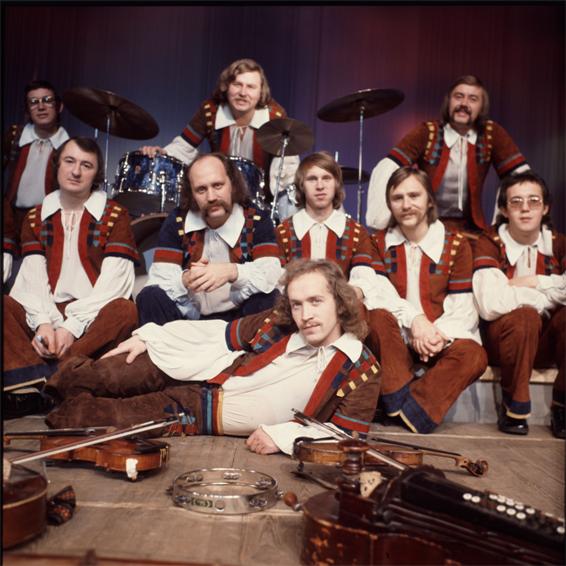
Recently I’ve been listening to the folk-tinged rock music of Creedence Clearwater Revival, on the one hand, and the rock-tinged folk music of Pesnyary on the other. Creedence were a Bay Area band who emerged out of, and came to exemplify, a certain strand within the sixties counterculture—though they usually composed lyrics about, and were influenced by the folk culture of—Greater Appalachia, the Bayou, the American South generally. Pesnyary, by contrast, were a Soviet state-sponsored VIA (vokal’no-instrumental’nyi ansambl’, literally ‘vocal-instrumental ensemble’) who played acid-rock and progressive-rock arrangements of traditional folk songs as well as their own compositions. They were also one of the very few Soviet bands to actually tour in America—specifically in the American South. Creedence had split up by 1972; Pesnyary were then just getting started: officially, there are two bands calling themselves Pesnyary now and four or five others borrowing the name without licence, but most people agree that Pesnyary’s classic period ended in 2003 with founding member Vladimir Mulyavin’s death. Despite their very different origins and ‘stances’—the lyrical and thematic difference between ‘Proud Mary’ and ‘Ave Maria’, as it were—I’m finding I’m enjoying them for very similar reasons.

One of the reasons I find both of these bands so enjoyable to listen to, is because they invest these deceptively simple melodies and chord progressions (these are rock groups, after all) with a great deal of dynamic and emotional depth. Creedence Clearwater Revival build on a basis of swamp blues—the harmonica was there from early on—and diverge from there in various directions, adding more and more rock instrumentation, as well as elements like Hammond organ. By the end of their career, as one can hear on songs like ‘Sweet Hitch-Hiker’, they were veering very close to hard rock or even proto-metal. CCR’s tunes are catchy, instantly-recognisable, iconic: ‘Suzie Q’, ‘Down on the Corner’, ‘Fortunate Son’, ‘Have You Ever Seen the Rain?’, ‘Lookin’ Out My Back Door’.

As important as Creedence Clearwater Revival are for a certain generation of Americans, I’d say that the Pesnyary are equally as important for a certain generation of people from the former Soviet Union. The Belarusian group, led by Vladimir Mulyavin, took its influences both from Western rock music (particularly the Beatles) and from traditional White Russian folk melodies. Pesnyary songs blend guitar melodies, drums, keyboards and even saxophones with traditional folk instruments (wooden whistles, fiddles, flutes, accordions, hurdy-gurdies) in a unique way. The VIA was signed to the state-owned label Melodiya in the Soviet Union (the only real game in town, as it were), and their albums sold millions of copies. Their unique approach to making accessible music with depth and feeling—with hits including ‘Aleksandrina’ and ‘Belovezhskaya Pushcha’—and Mulyavin’s ability to seek out and recruit talented multi-instrumentalists and singers, made the Pesnyary very literal rock stars in the Soviet Union.

John Fogerty and Leonid Bortkevich are, obviously, two very different vocalists—but even here there are some interesting similarities. Fogerty gives a very nasal delivery, with occasionally having a hoarse or a hard edge to his tenor melodies. There’s definitely a ‘country’ or ‘Southern’ inflection to this delivery, but it’s easy to hear the lasting influence on rock—even hard rock and heavy metal—that Fogerty’s voice had. Leonid Bortkevich was a much more traditional tenor: clean-toned, pectoral delivery, like a classically-trained singer. On the surface, he sounds much more like John Denver than John Fogerty. But Bortkevich deploys some interesting flourishes in his singing—a breath’s delayed approach to the note, a glide or a back-throat catch, that can make his vocals sound grittier, or ‘folksier’ (a good example of this being ‘Do Tret’ih Petruhov’).

It’s a bit strange. I’ve explored a lot of the musical differences between the two bands here. If we take account of their analogical positions within their respective cultures, the countercultural and ‘oppositional’ political nature of CCR’s music (‘Fortunate Son’, ‘Effigy’) more closely aligns with the career of the alternative rock / new wave band Kino headed by Viktor Tsoi. Pesnyary, meanwhile, despite the influence they took from the Beatles, probably more closely aligns with the folk-revival artists like Lead Belly, Woody Guthrie, Pete Seeger, Burl Ives and so on than with the later tail of the folk-rock trend in American music to which Creedence belongs. But somehow it seems more natural to my ear to connect these two bands. Both of them evince a vitality and a creativity that tends in a similar direction. Both CCR and Pesnyary seek their inspiration in the deep roots of their respective countries—not without a critical eye in each case—and both draw them out to infuse them with the sounds of their contemporaries. Certainly both bands are worth listening to and appreciating.


Pesnyary

17 July 2022

Neither Fordham nor Montanica!


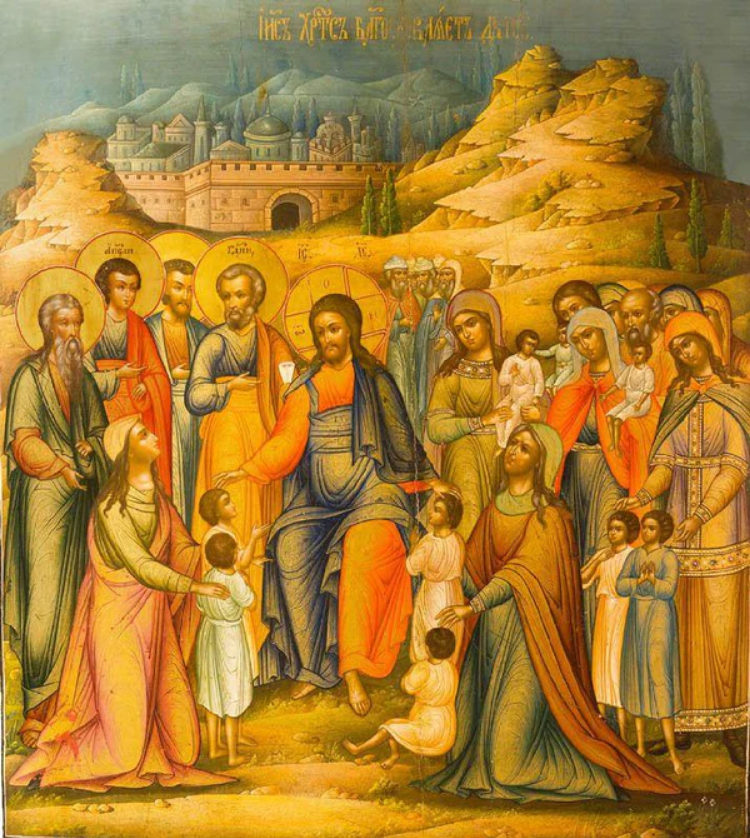
Christ confronts the pride of the disciples, Russian icon

Now I beseech you, brethren, by the name of our Lord Jesus Christ, that ye all speak the same thing, and that there be no divisions among you; but that ye be perfectly joined together in the same mind and in the same judgment. For it hath been declared unto me of you, my brethren, by them which are of the house of Chloe, that there are contentions among you.

Now this I say, that every one of you saith, I am of Paul; and I of Apollos; and I of Cephas; and I of Christ. Is Christ divided? was Paul crucified for you? or were ye baptized in the name of Paul?

For the Jews require a sign, and the Greeks seek after wisdom: But we preach Christ crucified, unto the Jews a stumblingblock, and unto the Greeks foolishness; But unto them which are called, both Jews and Greeks, Christ the power of God, and the wisdom of God. Because the foolishness of God is wiser than men; and the weakness of God is stronger than men.
- 1 Corinthians 1:10-15, 21-25

The divisions currently evident in American Orthodoxy are entirely American in character, and not one whit Orthodox. They are reflective of the culture war priorities in American politics and, as such, represent parochially American concerns. The Fordham and Butte sects in American Orthodoxy represent a ‘liberal’ and a ‘conservative’ pose within American culture, respectively, which neither liberates, nor conserves. They are, in fact, like most heresies which come in pairs, both heretical.

By the Fordham Sect, I mean the culture-war liberals which centre on the so-called ‘Orthodox Christian Studies Centre’ at Fordham University. This ‘Centre’ is squarely under the thumb of the Catholic Jesuits, share entirely the Jesuitical cultural-political priorities, and are entirely adept at performing an Orthodox step-‘n’-fetchit ‘minstrel show’ for the sake of the grant money their Ignatian ‘Massa’ provides. George Demacopoulos and Aristotle Papanikolaou, the elders of this ‘house-Ortho’ greekface minstrel-show act (along with First Things contributor, Michael Novak apostle and all-around pretentious popinjay David Bentley Hart, Notre Dame-based scion of effete Tidewater plantation-gentry, replete with a ready arsenal of affected transatlanticisms and sesquipedalian highfalutin puffery which he, his indefatigably-miserable elder brothers, and his sycophantic clique of pseudointellectual toadies routinely mistake for wit), have assembled around themselves a veritable rogues’ gallery—Nathaniel Wood, Nicholas Denysenko, Sarah Riccardi-Swartz, Paul Ladouceur, Cyril Hovorun, Paul Gavrilyuk, Sr Vassa Larin, Antoine Arjakovsky, Inga Leonova, the defrocked Giacomo Sanfilippo—of well-manicured academics and experts whose sole purpose in life seems to be to mock and denigrate the hoi polloi of Orthodox believers both here and abroad; to pay a crescendo of degrading obsequies to the American war machine; and to ‘push the envelope’ of acceptable practice, particularly with regard to sexual ethics, in directions which have never been acceptable at any other time in Church history.

And by the Butte Sect, I mean the opposing culture-war conservatives and reactionaries which have nucleated in several places around several increasingly-radical Montagnard cults of personality. Fr Josiah Trenham seems to be the (ahem) ‘Tren-setter’ in this regard along with Fr Johannes Jacobse, though he has of course been joined by the increasingly-unhinged political pugilist Abbot Tryphon, the disgraced former metropolitan of the OCA Archbishop Jonah Paffhausen, YouTube chuds and social-media gadflies like Jay Dyer and (at the fringes) ‘Brother’ Nathanael, and bloggers like George Michalopulos and the cartoonishly-camp Rod Dreher. They claim to be the true defenders of Orthodoxy in America, and yet they rally around open heretics and political lightning-rods like pill-popping kvetch and Pelagian pedlar of penny-ante Jungianism Dr Jordan Peterson in their misguided pursuit of purity-through-far-right-political-action. I call them the Butte Sect because several of these figures are planning to meet later this month in Butte, Montana at something of a ‘constituent assembly’, if you will: the so-called ‘Patristic Faith Conference’.

It may seem strange to you, readers, that I take such pains to describe the ‘liberal’ side of this cultural divide using descriptors which would seem to belong to the ‘right wing’, and that I take such pains to describe the ‘conservative’ side of this cultural divide using those which belong to the ‘left wing’. But there is a reason for this.

~~~

The Fordhamites fancy themselves to be ‘open-minded’ and ‘tolerant’, but in reality their cultural attitudes give inadvertent voice to forms of white supremacy and Eurocentrism that should have been left behind with the death of Jim Crow. One example may suffice here as an archetype. Hovorun, writing for Fordham’s blog Public Orthodoxy, speaks of Africa like a latter-day apostle of Cecil Rhodes and Leopold II of Belgium would. Lamenting the departure of ‘the Western democracies’ (by which, one presumes, he can only mean Britain, France, Germany, Italy and Belgium) from their putatively-benevolent colonial overlordship of the African continent, he points the finger at Russia and China—the ‘Eastern authoritarian regimes’—for a ‘recolonisation’, a ‘second Scramble of [sic] Africa’ which depends on infrastructure and investment on the Chinese side, and patronage of ‘murderous regimes’ on the Russian.

Never mind that the typical characterisation of Russia as an ‘Eastern’ dictatorship falls right in line with a long litany of tired Orientalist tropes (many perpetrated by the Jesuits), or that the characterisation of China in equally insidious terms is meant to recall the Yellow Peril. Never mind that the attempt to ascribe demonic motives to China falls particularly flat given Debt Justice UK’s explanation that China is emphatically not to blame for the current debt crisis on the African continent—private Western concerns hold three times more African debt than China does. The true point here is that one searches in vain to find anywhere in Hovorun’s essay, any attempt either to ascertain or place value upon the inherent well-being and dignity of the peoples of Africa. For him, Africans are relegated to the status of pawns, and his preference is merely for a (presumably benevolent) Western colonialism over an (evil and insidious) Eastern one.

This is not a one-off phenomenon for Fordham, nor is it indicative only of the usual bigotry with which Ukrainian nationalists routinely discriminate against and attack Africans and Asians. I have mentioned before how there is more than a germ of genteel liberal cultural discrimination against Middle Easterners by the contributors to Public Orthodoxy, such as Katie Kelaidis. And, of course, more recent essays by different PO contributors have doubled down on Orientalist and Yellow Peril scaremongering, in service of the foreign policy goals of the American military-industrial complex.

Which brings me to Fordham University’s current toast of the New York Times booklist, Sarah Riccardi-Swartz. It is a truism in the Orthodox deposit of spiritual wisdom that accusation is a kind of confession: as Saint Jerome said in his epistles, ‘When you believe you are excusing yourself, you are accusing yourself.’ So when Riccardi-Swartz goes around ROCOR parishes in West Virginia and sees there only white supremacism and fascism and Lost Cause mythology, one ought to suspect that she is merely confessing, in bad conscience, to the faults of which she and her own academic peer group are already guilty. One can hardly blame ROCOR for the widespread nature of the veneration of Tsar Nicholas II, for example—whose blessed feast is upcoming. On balance, given that he is perhaps (from a more objective standpoint) one of the more humane and forward-thinking figures in modern Russian history (or of his era in general!), attributing nothing but the darkest motives to such veneration appears to be a classic case of Freudian projection. The academics at Fordham and their associates are quick to signal their alliance with sexual minorities to burnish their liberal bona fides, and then promote and join witch-hunts against what they view as openly racist elements in the Orthodox Church—so that no one will think to scrutinise their own discriminatory tendencies, their own Eurocentric lenses of interpretation, their own enthusiasm for America’s wars of choice on the other side of the globe.

~~~

Now let’s talk about the other side of the coin: the Butte side. Even if ‘the lady doth protest too much, methinks’, Riccardi-Swartz isn’t wholly wrong in her diagnosis of a certain subset of ‘vocal’, ‘digitally-savvy’ Orthodox converts who flock to far-right political causes. The effect of these digital communities, which tend to propagate themselves around self-promoters like Jay Dyer and Rod Dreher, can be felt even within fairly ‘normal’ Orthodox parishes. Ironically, given how much they like to inveigh against ‘the Left’ (which is to blame for every manner of social ill from mass shooting to pornography to transsexualism), in truth their programmatic tactics resemble nothing so much as those of a revolutionary vanguard party in a Montagnard or Trotskyist vein.

There is an irreducible germ of Gnosticism or Kabbalah in the œuvre to which Dyer, Dreher and (sadly, increasingly so) Abbot Tryphon belong. The entire conceit of this œuvre is that an occult They (Hollywood, the ‘Cultural Left’, the Jews) are seeking to control society and control the spirits of the people through esoteric-occult means, and only by knowing the code can one hope to defeat them. This promise of a key to hidden knowledge, of initiation into mysteries, acts as the lure by which people gain entrance to the ‘inner circle’. This is analogous in many ways—and follows from—the phenomenon of being ‘redpilled’ or ‘blackpilled’ on online message boards. And of course, once one is gifted with this initiation, this occult hermeneutical ‘key’ to the inner workings of the hidden Them, one is essentially primed to be handed the Programme. And it is similar in many ways to the initiation practices of many secret societies and revolutionary cadres throughout history; the irony is that many of those thus initiated do not see it—they believe instead that they are counter-revolutionaries.

It is not, therefore, an accident that classic fascism and other far-right ideologies have a draw on such people. Fascism has historically held great appeal for those who believe themselves privileged with a degree of superior knowledge into a mythopoeic-symbolic order, to combat the degeneracy of their surroundings. It is well-known—and one can cite authors like Goodrich-Clarke on this—that fascist movements drew heavily on and even grew out of an idle middle-class fascination with esotericist movements such as Theosophy and the Thule Society.

Likewise, this preference for ‘keys’ that break into a mythopoeic-symbolic order creates synergies with the half-baked pseudo-Jungian pop-psych claptrap bandied about by Joseph Campbell, Jordan Peterson and the like. Of course, there is nothing particularly Christian about any of this, as evidenced by Peterson’s completely Pelagian understanding of Christianity – or, as my friend Dan DeCarlo aptly described him, ‘[an] anti-Tolstoy who has rewritten “The Death of Ivan Ilyich” but changed the ending’. That doesn’t prevent it, however, from being alluring. As St Paul warned us, false teachers will never go wanting for itching ears. And some of those itching ears, sadly, claim for themselves the mantle of Orthodoxy.

~~~

I must beg the pardon of friend and kinsman Luke L—, who coined the slogan ‘Neither Fordham nor Montanica’ for precisely this purpose. I must also beg your pardon, readers, if my wording here seems a bit eristic, in the tradition of the aforementioned Saint Jerome and the more recent Saint Alexis of Wilkes-Barre. I have always held to this point. Also, I have long since run out of patience with both sides, and in this case, proper Christian love for adherents of these twin, very public, errors requires a certain public sharpness. Indeed, as far as I can tell, this split in Orthodoxy between Fordham and Montanica seems to be a repetition-as-farce of the errors of the Hellenisers and the Judaisers, respectively. The pride of Fordham’s scholarly sect is in its philosophical erudition, its professed adherence to the norms of modern academia, and its greed for the simulacrum of virtue which passes for currency in elite circles. And the pride of the Butte sect is in its purity and holiness as those possessing the true revelation, fancying themselves its sole inheritors and upholders, through initiation into its secrets. Yet the fullness of truth rests with neither of them.

Culture wars are not spiritual wars, despite what the combatants themselves might think. Culture wars by definition divide humanity into warring camps. These camps then fight over things which are decidedly not spiritual: wealth, power, prestige, glory, conquest, the adulation of men, the warm fuzzy feelings of being on the ‘right side of history’, the thrill and passion of being a ‘chosen one’ in a cataclysmic battle between light and darkness. Academics are jealous of their ‘seats of honour’. YouTubers and social media personalities are driven by the cash generated by ‘likes’. There is no room for the great mass of humanity in either of these formations (the great majority of whom are geopolitically non-aligned). And it goes without saying that there is no room for Jesus Christ in either of these formations. Orthodox Christianity as a whole must therefore stand up and cast aside such divisions within itself, because they are not of Christ.

20 March 2021

Trying to process the Atlanta shootings


It’s been my experience that Clean Week always seems to hit hard with bad news, at least in recent years. Tuesday’s news of the shootings of eight workers in massage parlours in Atlanta kind of struck home hard for me and my family. We haven’t discussed it that much, but it’s been on my mind a lot. Firstly, there is much here to grieve over, much here to pray over. In particular I pray for the affected communities in Atlanta, for the victims and their families, and for the Asian American and Pacific Islander folks in the United States who feel the grief and insecurity of this massacre most keenly.

But it is only natural, as part of that grieving process, to ask ‘why’ and to seek to understand how this could have happened. This case should raise for us Americans several troubling questions surrounding the modern relationship between the sexes. We should be intensely scrutinising how particularly American Protestantism has attempted to address that relationship, and how fraught it has become in recent years. We should be looking closely at the historical ways in which white American (and British and French too, to be fair) men have ideologically colonised the (female, or feminine) Asian body, and how the association of Asian-ness with a certain kind of femininity has fed into sexist myths. And following from this we should be carefully examining the current-day power struggles and ideological struggles between Western and East Asian countries that continue to prop up both the related ‘yellow fever’ construct and the ‘yellow peril’ construct. I’ve already encountered people commenting on this story, already trying to dismiss the killer as ‘mentally ill’ and pointing out his sexual hang-ups to preclude any discussion on how race relations, œconomic exploitation or foreign policy might have had some bearing on his motives or on the vulnerability of the victims. This is remarkably depressing, because there is much that needs to be said along each and every one of these dimensions.

To the first, the fact that there was a self-acknowledged motive of sexual entitlement and ‘sex addiction’ on the part of the killer, and the fact that the killer was a fundamentalist Baptist, are both worth commenting on. To a certain extent, the same commentary that I made in the blog post ‘Misogyny and the flight from feeling’ also applies here. Our culture places a ridiculously unhealthy emphasis on sex. American culture having abandoned healthy traditional rites-of-passage, fraternal and communal forms of male bonding, and ideals of physical fitness and activity in their own right as expressions of masculinity, American manhood is now primarily expressed in the unhealthy terms of capitalist wealth acquisition, risk-seeking behaviours and sexual conquest. Although women have not been desocialised to the same degree by the culture, there is also an unhealthy burden placed on women to make themselves sexually-appealing and -available; contradictorily to remain chaste and ‘pure’; but at the same time also responsible in toto for the consequences of frustrated male libido, including any violence perpetrated against them. The killer in this case seems to have been motivated by the same frustrations, and foisted the responsibility for his own sexual hang-ups onto the women who ‘tempted’ him.

It’s also worth exploring the relationship of how these ‘temptations’ are configured, to the expressions of chiliastic American fundamentalism and the incredible, intolerable psychic burdens that it places on its members as individuals as a result of its apocalypse-oriented legalistic and Calvinistic theology. The Southern Baptist Church of which the killer was a member has, of course, repudiated all of his actions and made a public statement renouncing all forms of misogyny and racism. We may take that statement, for what it’s worth, as sincere and well-meaning. But we also need to be examining the content of the misguided and hæretical theology that this church and its pastor have preached, which absolutely had an effect on the actions the killer chose to take. It is worth asking what sorts of beliefs made him think that murdering masseuses would ‘help’ and ‘protect’ other men, and preserve them from ‘temptation’; and if a belief that the end of time and the threat of hell was imminent might not have accentuated and lent an urgency to these beliefs.

Likewise with the idea that Asian women’s bodies are in some way ‘fair game’ for white Western men – a power dynamic that undergirds an entire marketing and business model of Asian-themed American erotica. That goes all the way back to the days of British and French colonialism in Asia. Among George Orwell’s œuvre (knowledge of which among Americans seems to stop with his anti-Soviet screeds Nineteen Eighty-Four and Animal Farm), his book Burmese Days actually manages to be an insightful view into the way that even well-meaning British colonisers used their military power and carefully stage-managed social prestige to sexually dominate and use local women (and then toss them aside). This pattern also held true with the French in colonised Southeast Asia, the Dutch in Indonesia, and the American military in the Philippines, Vietnam, Korea (still ongoing), Guam (still ongoing) and Okinawa (still ongoing). The entire stereotype of Asian women as ‘exotic’, hyper-feminine, submissive sex dolls, which figures into the marketing of pornography and prostitution involving Asian women, stems from this long legacy of colonial violence and rape by Britain, France, the Netherlands and America.

The ‘yellow fever’ problem and its associated stereotypes among Western men, are thus inextricable from even the present-day configurations (and associated myths) of military power and capitalist exploitation in the Pacific. The mirror image of this, of course, is the demonisation of Asian masculinity in the ‘yellow peril’ stereotype. It’s an old story, but the ‘yellow peril’ mythology has extended in the modern time into the international scene, where it has metastasised into a shadowplay of anti-Russia and anti-China narratives, meant specifically to distract the American people from the gross political mismanagement and œconomic rapine happening at home. But to begin with, the stereotype of the fecund, inscrutable, untrustworthy and ultimately disloyal and seditious Asian man has its roots in the deliberate capitalist exploitation of Chinese wage slavery on the railroad construction projects in America in the latter 1800s. To prevent Chinese workers and ‘native’ white American workers from banding together or unionising, California railroad bosses actively promoted anti-Chinese racism as a way to divide the workers and depress wages. Which leads us full circle back to the beginning consideration: the deconstruction and hyper-individualisation of masculinity in America by capitalist modernity, and the sole remaining outlets for masculine self-expression being wealth acquisition, consumerist excess, violence and sexual domination.

What is clear to me is that in the murders of these eight Atlantans – six of whom were AAPI women – the entire American culture needs to grapple with itself. Standing in the dock are the emptying of American masculinity of all values except violence and material gain and sexual domination; the pervasiveness of evil doctrines of penal substitutionary atonement and chiliastic proclamations of a divine judgement in wrath and wilful damnation; and the ongoing American imperialist warmongering in East Asia and the Pacific that initially led to, and reinforces, these racial stereotypes of Asian women. Not just one man, and not just one confession, but America as a nation must repent of its sins before God and humankind.

08 March 2021

A call from the heart against her class

Catherine Liu

I just finished Dr Catherine Liu’s newest book Virtue Hoarders this weekend. I can easily say that it is, though perhaps not a polished work of exhaustive and objective scholarship (which it never pretends to be), a book after my own heart. Concise, impressionistic and self-avowedly polemical, Virtue Hoarders is a full-on broadside against the ‘progressive’ pretensions of the professional-managerial class, or ‘PMC’. Virtue Hoarders deflates the professional-managerial class’s self-appointment as a vanguard of liberation, and exposes its actual rôle as an ideological handmaiden and propagator of capitalism. It carries this argument forward in the same vein – which Liu herself acknowledges and celebrates – as Christopher Lasch, Barbara Ehrenreich, Diane Ravitch, Michael Lind, Angela Nagle and Amber A’Lee Frost. The punchline is in fact a call to class treason: a member of the PMC calling other members of the PMC to repent of, and renounce, their support of capitalism, and to rebuild actual solidarity to with the working class.

Catherine Liu’s argument is fairly straightforward. She argues that the upper middle class has come to project an image of itself as a kind of vanguard of virtue. The professional-managerial class conceives of itself as blazing a brave trail of liberation for humanity, through the personal lifestyle choices and consumption habits of its members. The professional-managerial class presents itself as having forged a path to the end of the world’s problems through cultivated pieties of gender radicalism and ‘woke’-ism. It attempts to cast itself as more virtuous than the hoi polloi, based on its embrace of postmodernism, based on its reading and dietary habits, based on its sexual mores and childrearing methods. Liu draws a clear line from the ‘free love’, countercultural ethos of the hippie of the 60s, to the rapacious hedonism and predatory self-interest of the yuppie of the 80s.

At the same time, Liu argues, the professional-managerial class has been busily kicking away the ladder it climbed up on, and blaming the working class for its perceived failures of moral constitution. If the poor could only eat, read, screw and raise kids like us, the professional-managerial superego says, they wouldn’t be poor, and then we shouldn’t need a safety net or a state oriented toward the common good. The professional-managerial cultural diktats in fact put a great deal of psychological and financial strain on the poor, and also make it harder for the poor to access or even be offered public assistance.

Liu’s writing here can, as I said before, often be impressionistic. It may not be entirely obvious why she begins by levelling the same sort of caustic polemic against Gabriel Winant that Georges Sorel reserves for the likes of Jean Jaurès. It might also seem a bit baffling at first, why she chooses to ‘zoom in’ on the Sokal hoax, on Harper Lee’s To Kill a Mockingbird and the Yale-based New Criticism, or on Rolling Stone’s misadventures in reporting campus sexual assaults at UVA. But when one looks at the way that Liu connects and composes these vignettes, the overall picture becomes clearer – that in each case the professional-managerial class actors are seeking to tear down the preexisting standards of academic or professional or personal sexual behaviour, and replace those standards with ones that self-servingly promote their own material interests. It is not a style of argument that all will find convincing. However, one cannot help but admire Liu’s gift for deftly and poignantly illustrating trends with a few simple strokes of comparison and argumentation.

It also quickly becomes clear that as Liu argues for greater empathy for and compassion towards the working class – one that goes deeper than merely a performative exercise of putting oneself in ‘someone else’s shoes’ vicariously by reading Harper Lee – she is making a deeper and profounder argument. She is waging a battle against postmodernity as a whole and the ‘floating signifier’ in particular, and in favour of an older way of doing politics that is grounded in concrete material realities. She places herself on the side of ‘good enough parenting’, Medicare for All, childcare for all, professionalism (as opposed to expertise) and objective reality (as opposed to social constructivism).

Some of the stances that Liu takes in Virtue Hoarders will, I’m sure, be dismissed as ‘conservative’. She rejects, for example, the narrative of the 1619 Project. She has a certain degree of contempt for the sort of ‘sex-positive’ feminism that imagines the material conditions of all women to be unconstrained enough for perfect consent to be normative. In Liu’s view, such feminism ignores the œconomic and material constraints that many women live under, and fails to account for instances in which women’s bodies are sexually exploited by their bosses. Liu highlights the oscillation in the professional-managerial imagination between a sterile, plastic, commitment-free world of sexual adventure (in reality open only to the affluent), and moral panics over imagined or real transgressions against puritanical norms of sexual expression (whether by men or by women), and points out that these panics invariably miss the point and serve to generate a great deal of performative outrage but little real lasting benefit for women. She also has a certain degree of contempt for the sorts of identity politics that discourage underprivileged groups from banding together in common cause, but instead seek to form networks of patronage and dependency that are fully compatible with American late capitalism.

But these are merely the consequences of a view that takes class seriously. Liu may occasionally sound like Sorel in her polemics against her class, but her conclusions are markedly different. She champions an ‘unglamorous’ left politics, devoid of ‘new pronouns’, ‘fancy neologisms’, affect and posturing, which is grounded in ‘good statistics, objective reality, and the power and uncertainty of the scientific method and reason’. In other words: she is proposing a realist direction for the left. In order to get there, though, the professional-managerial class must abandon its own self-righteous, faux-radical posturing and learn to criticise its own material interests and behaviours.

There is something in Liu’s final exhortations against the self-righteous pieties of the PMC that sounds, at least to this Orthodox Christian’s ear, quite familiar. This past twenty-first of February was the Sunday of the Publican and the Pharisee, and of course the relevant Gospel verse is the one from St Luke 18. Notice that the Pharisee in this passage comments upon his own righteousness before God – we could also say things like ‘the right side of history’ – by pointing to his eating habits, his spending habits, his charitable giving and even his sexual habits; while the tax collector stands far off, holds his head down, beats his breast and humbly asks for God’s mercy. It would have been known to Christ’s audience in His day, that the Pharisee was meant to represent an upper middle class reformer: a literate Jew knowledgeable in the law, who carefully followed all the præcepts, avoided debt and cultivated ritual cleanliness for himself. The tax collector was a ‘deplorable’ of his day: a man who worked with the hated idolatrous Romans and incurred debts which he paid off with ill-gotten tax money.

In our modern understandings of the dynamics of debt and cleanliness, we have told ourselves stories about which people are ‘responsible’, which people are ‘successful’, which people are ‘deserving’ – and which people are not. The professional-managerial class has worked actively to shape these stories in ways which accrue these virtues and perceptions to themselves… and deny them to the working class. When Liu says, toward the end of her book: ‘We should be heretics; we should blaspheme’, what she means is that we must reject these standards of virtue which revitalise and reimbue the pagan, peripatetic notion of ‘moral luck’. Her prescription – that we should actively reject ‘the cloaks of virtue, erudition and detachment’ and instead agitate for the older standards of excellence that were achievable by the working class – is the same call that characterised early Christianity’s radically-universalist overturning of Platonic-Aristotelian virtue ethics. Liu’s call to a humbler, less glamorous politics in support of the working poor, is the rejection of the self-righteousness of the Pharisee in the parable.

In sum, Catherine Liu’s book, short and sweet, is profound and provocative. Not only so for the quality of her writing, but also for the impressive array of intellectual resources she marshals into the lists. My own reading list has expanded quite a bit following Liu’s bibliography and acknowledgements. Her willingness to engage with the marginal, and sometimes ‘cancelled’, figures of both the twentieth and twenty-first century left, has enriched her narrative materially, and certainly broadened my horizons. It’s my hope that she’ll flesh this short volume into a longer, more comprehensive work… but even if she doesn’t, this is a highly worthwhile contribution to our current political moment.