Showing posts with label gardening. Show all posts

04 July 2019

Can an American be Christian?


This is a question that I have been struggling with throughout the life of this blog, it seems like – but the question became most acute to me during my time in Beijing, when I first dimly became aware of the Christianity of the Chinese social reformers whose perspective roots the work of Wang Hui and lends it a certain Grantian colour. I have since taken the opportunity to marvel that the Chinese who (quietly, often abashedly or seeming half-heartedly) embraced Christ – Jimmy Yen, Tao Xingzhi, even the half-agnostic Fei Xiaotong – were often far, far better at imitating Christ’s life in service to the poor, the downtrodden, the ‘least of these’ of St Matthew 25 than their American and British evangelical mentors were.

George Parkin Grant – along with his pupils John Milbank and Ron Dart – first confronted me with the problem that America, however loudly certain parts of it proclaim it to be a ‘Christian nation’, can be nothing of the kind. Our Christianity is too much Pilate and not enough Christ; and this is a problem rooted in our founding mythos. We are always jockeying like Cæsar and the princes of the world for global leadership and hankering after action when we need to be seeking the low places in humility and pursuing a less active policy. We are always extolling and applauding the great, rich and powerful – our Bill Gateses and Warren Buffets and Elon Musks – while we shame and exploit the widow with her mite.

This is not a problem of ‘right’ versus ‘left’. I have never been particularly convinced by the American right wing’s worship of markets and invisible hands – particularly when the hand becomes not-so-invisible. Even if it might occasionally be nice for folks to be able to trade in something other than kind, the golden calf idolatry of modern mainstream œconomics and its vulgar manifestations have never sat particularly well with me. (Don’t get me started on the American right wing’s disordered post-Charlottesville love of blood and soil.) Likewise, the increasing and accelerating Pelagian and Gnostic loopiness of the ‘woke’ American ‘progressives’ – with its utter contempt for the merely-human limitations imposed on us feeble mortals by basic biology, physics and common sense – is not endearing in the slightest to this leftist.

Moreover, this is not a problem of ‘modern’ interpretation of American institutions versus ‘original intent’. America’s very founding was deeply conceived in two interrelated heresies. Most of the élite Founding Fathers themselves – Jefferson, Franklin and Paine most openly; but probably also Madison and Washington as well – were Deists who disavowed the divinity of Christ. Most of the foot-soldiers on the ‘Patriot’ side of the War of Independence were, on the other hand, utopian Calvinists who believed themselves to be building the City of God. Neither of these factions had much use for the Prince of Peace, for the lowly Palestinian Jew and Incarnate God who came into the world not to conquer but to save. Even today there is not much use for Him, even among those who most loudly proclaim ‘Lord, Lord’.

As one who attempts to follow Christ, I find I am the child of a patria which is very difficult to love healthily or well from a 1 Corinthians 13 perspective. I don’t believe that the enabling stance that assures fellow Americans that we are the ‘greatest’ or the ‘indispensable’ nation is, in fact, love. I don’t think ‘support our troops’ while keeping them fighting abroad is love. I don’t think caging Central American migrants or shooting and gaoling black folks or drone-bombing Arabs or hating Iranians or Chinese or Russians is love. On the other hand, I don’t believe that the stance that conditions affection upon constant progress toward a disembodied Gnostic ideal is, in fact, love either. (Thank you, Berdyaev!) And unfortunately, on the fourth of July I see both kinds of disordered love displayed with a dismaying prominence in every public space and on every social media platform. On the fourth of July I all too often see ‘love’ which is not long-suffering or kind, and much less so all-bearing, all-believing, all-hoping or all-enduring. I all too often see ‘love’ which vaunts itself, which is puffed-up, which is unseemly, self-seeking, easily-provoked and which rejoices in iniquities. Many takes on what it means to be a ‘good American’ seem incompatible with a Christian understanding of love.

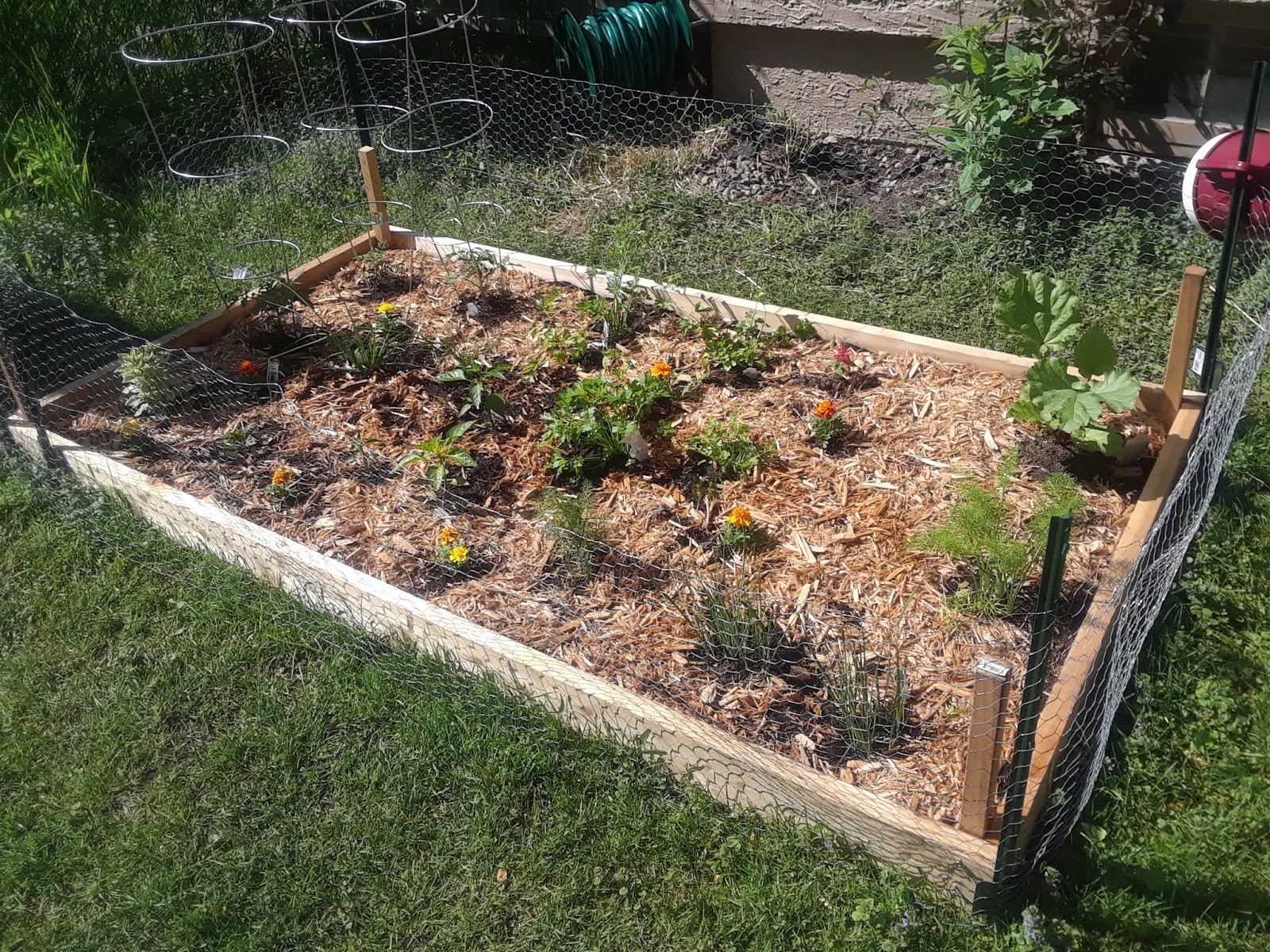
But does this mean America is unloveable? That’s a very different question, and I find myself incredibly loath to say ‘yes’: partly because that cedes way too much conceptual ground to the people who want us to kiss the Constitution, salute the flag and praise the greatness of the American Way. I believe Grant and Milbank are right, and I take it as a given, that you cannot love a piece of paper or an abstract idea as if it were family. But you can love your family (preferably with kisses more than with salutes). You can love your neighbours, too. You can love your backyard. In fact, go out on a limb and love your front yard, too – even and especially if you rent. Stretch out your toes in the grass and wave at the folks on the pavement. I love my parents and sister; I love my children; I love my parishes and their people; I love the tomatoes, peppers, basil, onions, fennel, dill, parsley, rhubarb and marigolds growing in my garden. I love the lakes and parks and rivers of my community, and want to keep them clean. I even love the creeping charlie and violets growing in the yard and the wild coney living under the shed. And if those are America, then yes – America can be loved, in the right way.

30 May 2019

Saint Walstan of Bawburgh


Saint Walstan of Bawburgh

Today in the Orthodox Church we commemorate the pre-Schismatic English saint Walstan. Walstan, who was born in Bawburgh a few miles west of Norwich in the year 975 to eldern named Benedict and Bl‎ýð, was a bright young child who became fond of reading in his father’s library. He was struck in particular by a passage from the Gospel of Saint Luke: ‘So likewise, whosoever he be of you that forsaketh not all that he hath, he cannot be my disciple.’ Taking this commandment of our Lord in its fullest possible sense, at the tender age of seven he formally renounced any part of his inheritance, and at the age of thirteen he asked his parents’ blessing to leave their house and undertake a manner of living pleasing to God. Benedict and Blýð, though they were sorrowful to lose their son, both understood his sincerity and also were given to know in dreams by God that he would so choose to leave the world.

As he was leaving the home of his eldern he met two beggars on the road, and he gave to them his rich clothes and changed them for their shabby rags. Thus without any trace upon him of his birth or lineage, he came to the town of Taverham and took a rest from his walk. He was near the fields of a freeholder named Nalga, who needed hands to gather the harvest. Nalga saw him at rest, and offered him work, which Walstan took. He would spend the rest of his days a hired tenant in Nalga’s fields.

Nalga had good grounds to be pleased with Walstan, because Walstan was a tireless worker with a good disposition. He also loved poor folk and beggars, and routinely gave away all he had to care for them. Nalga was a fair employer and gave him wages and food and good clothing, but these easily and always passed out of Walstan’s hands and into those of those poorer than himself he met. Owing to this, he often went barefoot as he worked. Nalga’s wife, taking pity on him, gave him a pair of new shoes and an extra share of food. But Walstan did not keep these for himself, instead giving them to two passing beggars, one of whom went barefoot. Thinking that he was belittling their gifts to him, Nalga and his wife became angry at Walstan and demanded to know why he had given away what they had given him. Walstan answered them that the beggars had been sent by God, that God might see whether he loved them more than he loved himself. ‘I shod Christ in the poor man,’ was Walstan’s answer.

Nalga’s wife, still resentful of Walstan, sent the barefoot farmhand to go into the woods and bind and fetch back a load of briars. To do this, he would need to trample them down with his bare feet. He went cheerfully to his task, and his unhurt feet trampled on the briars as easily as if they were rose-petals and leaves, giving off a sweet fragrance, thus seeming for the Lord to win ‘a crown of thorns’. Beholding this wonder, Nalga and his wife fell down at Walstan’s feet and begged his forgiveness. Walstan forgave them and loved them as ever.

Walstan became known over the years for his simple way of life. He prayed, fasted, gave alms, worked and showed a great love to everyone – particularly to animals. God granted his steadfast and humble servant the strength to work wonders. Many farmers brought sick animals to him and he would heal them by the power of his prayers; his prayers were effective for people as well. Though whatever he put his hand to would flourish, he was content to work in his simple way. Never once did word of his high birth reach the ears of his friends and fellow-workers, and despite his eldern living just a few miles hence, they never had an inkling that the holy labourer of Tavenham was in fact their own son. (Consider how swiftly news could travel in small English villages of late antiquity, and then consider for a moment just how hard it was for King Custennin of Alt Clut to keep his identity from being known!)

He continued to be beloved by Nalga and his wife who, being childless, wanted to make Walstan their heir. True to his oath, however, he refused. Only when an angel of God told him to accept did he finally take Nalga’s wife’s gift of two white calves and a small wagon – not out of greed or sloth, but that God’s will might be done.

In May of 1016, as the haying season was beginning, Walstan was reaping with a fellow-worker when an angel came before him, saying: ‘Brother Walstan, on the third day after this shalt thou depart this life in peace and enter Paradise.’ At once, Walstan lay down his scythe and sought out the village priest, and asked him to give him the Holy Gifts on the third day as the angel had told him. On the same day Saint Walstan beheld a heavenly host of angels, with the praises of the Holy Trinity in unspeakably sweet song upon their tongues.

Some hagiographies relate the following tale. On the first day after, which was a Saturday, Nalga went into the cheaping-ground in Norwich, which was then under the sway of the Danish Cnut King. There was at that time a proclamation being cried aloud, that anyone knowing the whereabouts of Walstan – son of Benedict and Blýð, kinsman to Éadmund King of Wessex, should make them known to the king’s men. The Danes were then plotting to take the whole of England, and the proclamation warned than anyone found giving shelter to Walstan without giving him up into Cnut’s hands must pay with both his wealth and his life. After he fared home, he spoke to Walstan: ‘What am I to say to the Danes, when they learn that I have kept you here?’ Walstan was not worried: he told his master that he must tell them the truth. Then he told Nalga about what the angel had shown to him.

On the third day, which was a Monday, the thirtieth of May 2016, the village priest came to Walstan while he was haying. He was working with his scythe up until noon and his final hour came. The priest came to administer the Gifts and found he had no water to wash his hands. Saint Walstan knelt and prayed, and before him there bubbled up a spring of fresh water, in which the priest could laver his hands. Having taken the Gifts, Walstan told those gathered in the fields that after his death they were to set him on the wagon and yoke it to the two white calves Nalga’s wife had given him – and that none should lead them but rather they would go where God pleased. He then besought God that every workman and all livestock fallen ill should gain healing, if they were to ask of it meekly. At that a heavenly roust answered the saint: ‘O Holy Walstan: that which thou hast asked, is given. Come now from thy work and rest!’

With that, Walstan gave up the ghost. A white dove was seen to fly upwards. Nalga and the men of Tavenham did as they were bidden, taking Walstan’s body upon the wagon and hitching it to the calves, who then began to wander along the banks of Wensum Water, and then through a wald. They forded at the deeps, and came up the other side with dry hooves. At Costessey Wood where they stopped to rest, another holy well sprang forth with clean fresh water. The calves and those following, waxing in numbers, forged on through fenlands until they came to Bawburgh, where again they rested. Here again, a third well gushed forth. The calves then went up the hill to the church and entered through a gap in the wall which wondrously appeared and then vanished once they were through. There they stood, until Ælfgar Bishop of Elmham came with his monks to hold the Liturgy for the funeral.

The bishop, who knew something of Walstan’s tale already from his youth, sat still as Nalga and the folk of Tavenham unfolded the rest to him. They told him of the many wonders wrought by Walstan, and the Bishop thereafter made a full investigation as to their truth. This done, Bishop Ælfgar allowed the townsfolk to keep the relics and venerate them as a saint’s. Walstan’s relics were interred in the north transept of the church, and many pilgrims and wayfarers came to the church thereafter, and many wonders were wrought and illnesses cured. In particular, Saint Walstan continued to intercede with Christ for sick livestock. Water from the holy wells of Saint Walstan is still sought-after for its curative properties for both human and animal patients. Saint Walstan has, understandably, been considered a particular patron of farmers and gardeners. Having worked in Norwich in college, growing – not hay or briars – but rather mouse-ear cress for the FIBR Project at the University of East Anglia, and now trying to do a gardening project myself at home, I deeply appreciate Saint Walstan’s prayers for me, a sinner. Righteous and generous Walstan, pray to God for us!
O Righteous Walstan, thou didst leave thy home
To labour for Christ in the fields of Taverham.
Through fasting, prayer and great humility
Thou hast gathered many for the harvest of Christ.
The Lord crowned thee as a saint and bestowed upon thee the gift of miracles.
Pray then that our souls may be saved.