16 September 2018

Holy Martyr Ludmila of Tetín


Protomartyr Ludmila of Bohemia

Ludmila, Protomartyr of the Czech people and a South Slav by origin, was the wife of Kníže Bořivoj of the Czech lands. Bořivoj, who belonged to the pagan noble Přemyslovci, was baptised along with his wife Ludmila by Holy Father Methodius, Enlightener of the Slavs, in his evangelical mission to that people. Both husband and wife took to their new faith with the zeal of the newly-converted, and began supporting churches and inviting priests to hold Divine Liturgy among the Czechs.

Unfortunately, Bořivoj died in 889, leaving Saint Ludmila a widow at the young age of twenty-eight. Their sons, Spytihněv and Vratislav, succeeded their father to the office of Kníže, and Saint Ludmila assisted them as she could – though the young widow never remarried. Instead she devoted her life to prayer.

Vratislav married a pagan woman named Drahomíra, with whom they had a son who would become a saint in his own right: Martyr-Duke Václav the Good. Saint Ludmila was charged with the young child’s upbringing. She doted on young Václav, and made sure he was provided with a good education, sending him to the church school in Budeč. When Kníže Vratislav died, his wife Drahomíra assumed the regency for her son, who was then still only eight years of age. Drahomíra, jealous of her mother-in-law’s influence over Václav, began influencing the young Kníže to allow pagan practices among the Czech people.

Saint Ludmila objected – vehemently, and Drahomíra seized the opportunity to begin laying plans to have her murdered. When Ludmila retired to her home in the town of Tetín, Drahomíra sent after her two retainers, who burst in on her at home and strangled her with her own veil. Practically at once after the news of how the Martyr Ludmila died spread, she began to be venerated as a saint among Czech Christians. She was buried in the local church at Tetín, but her remains were later translated to the Basilica of St. George in Prague.

Holy Martyr Ludmila is remembered today on the Orthodox New Calendar, along with the Synaxis of Saints of Carpatho-Rus. Among the saints most important to the long-suffering Rusin people, Protomartyr Ludmila is honoured alongside Saints Cyril and Methodius, Holy Prince Rastislav, Martyr-Duke Václav, Venerable Prokop of Sázava, Venerable Moses of Kiev, Venerable Efrem of Novotorzhsk, Holy Father Alexis of Wilkes-Barre, Saint Aleksei of Khust, New Priestmartyr Maksim of Gorlice and New Hieromartyr Gorazd of Prague.

Ludmila, martyr for the True Faith and holy grandmother of the Czech people, pray to Christ our God that the souls of us, your wayward children, may be saved!
O Ludmila, when godly fear entered thy heart,
Thou didst abandon the glory of the world,
And hasten to God the Word.
Thou didst take His yoke on thy flesh,
And shed thy blood in a contest surpassing nature.
O glorious Martyr, entreat Christ our God to grant us His great mercy!

Synaxis of the Saints of Carpathian Ruthenia

15 September 2018

The Platonic Tory feminism of Mary Astell


Mary Astell

I have made mention once or twice of Mary Astell on this blog before, but have only seriously engaged with her work recently. In fact, I’m rather glad I did – A Serious Proposal to the Ladies would hardly make as much sense if not regarded in its true Platonic light. I’m also indebted to several other comparisons to her work which I could not have made when I first became aware of Astell’s contributions to Western philosophy.

Mary Astell, whose proposal for a religious retirement for women of all ages desirous of education or spiritual improvement unfortunately fell on the ears of an English male public more inclined to toss cheap wit at it than to take it seriously, was hardly a political radical in her own day. She was certainly a Tory of the old-fashioned make. She believed wholeheartedly in the supremacy of the English crown and was avid in her defence of royal prerogatives. As her Serious Proposal shows, she was a devotee of traditional High Church Anglicanism (complete with its clerical hierarchies, elaborate liturgics and fasting and feasting observances), and even some male readers otherwise sympathetic to her thought her proposal for a ladies’ religious retreat to be something too ‘popish’ and too akin to continental monasticism to be taken seriously. She hated the ‘upstart’ pretensions of the new moneyed class, and saw them as a threat to the ethos and privileges of the elder nobility. And she had that distinctively-Tory detestation of mercantile greed and capitalism that characterised people like Abp William Laud, Fr Jonathan Swift, and the later Dr Samuel Johnson, Robert Southey and Richard Oastler. But the natural comparison which my mind is most wont to make, is that between Mary Astell and Ban Zhao 班昭, the historian, Old Text philologue and advocate of women’s education who wrote her Lessons for Women 《女誡》 during the Later Han Dynasty in China.

Astell’s own advocacy for women’s education in England has a philosophical dimension and a religious one. Philosophically, she draws heavily upon Plato. She makes explicit mention of Socrates and the Socratic method in A Serious Proposal, but more specifically, she appeals to Platonic tradition of ‘forgetting the body’ temporarily, and establishes through such argumentation that the poor state of women’s development in her own day is owing to lack of education rather than a natural or inborn defect. Women are as capable of transcending themselves and their baser passions as men are. She then lays out a plan for the improvement of women’s souls through careful religious education; devotion to God through prayer, fasting and attendance at Church services; and cultivating close friendships with other women engaged in the same disciplines. She also uses an appeal to men that comes straight from the Phædrus. The ‘true lover’ of a woman, she argues, is one who will respect her and encourage the cultivation of her mind, whereas the ‘false lover’ or the ‘non-lover’ is the one who regards only his ‘brutish passions’ toward a woman. The philosophical angle of her argument blends neatly into the religious angle. The woman in her religious retirement is meant to keep her heart fixed upon Christ, like so:
The true end of all our prayers and external observations is to work our minds into a truly Christian temper, to obtain for us the empire of our passions, and to reduce all irregular inclinations that so we may be as like God in purity, charity, and all his imitable excellencies as is consistent with the imperfection of a creature.
The degree to which she disdains ‘wit’, ‘foppery’, external adornments, frivolous entertainments, expensive hobbies and fashions, and the degree to which she calls women instead to a life of contemplation and silence, a life of conquest of the passions (a term she uses more than once), away from bickering with each other and away from being so egregiously and unfairly mistreated and despised by men for their own ignorance (which is no fault of their own), is precisely a measure of the degree to which she is influenced by the elder Christian tradition and seeks after a form of askesis which recalls the work particularly of the Greek Church Fathers. After all, there is nothing more properly English than turning to the classical and post-classical Greeks for a good example. But she is no Puritan, by any stretch of the imagination! (As Sharon Jansen, the editor of the volume I’m currently reading, notes, the Puritans of her day were convinced misogynists from John Knox onward.) She is very much a believer that moral and spiritual regeneration comes out of a long process of contemplation and practice in which the woman’s will must coöperate with the Holy Ghost.

Mary Astell is indeed sensible that her religious retirement would be a temporary accommodation for most women, and she does expect that many of them would go back out into the world and marry. She believes, and argues forthrightly, that women who do so would still be greatly improved by education, and that having a firm religious observance and a mind enlightened by true wisdom would be a service both to her and to her husband, even if her husband is not so religious, well-educated or wise. On the other hand, she makes allowances for women who do not marry, and who choose either to stay among the religious as quasi-monastics, or else to go out into the world and be of service to other women as friends and spiritual advisers. This declaration that women may be independent of men and yet still have good standing within Church and society is where Astell begins showing certain glimmers of a more radical potential, as her later feminist commentators correctly note.

In both of these respects, Astell bears a strong resemblance to Ban Zhao. Ban’s Lessons for Women also hold forth both propositions: both that a well-educated woman makes a better and more virtuous wife, and also that a woman of virtue and education has a deep personal worth in her own right, and not merely as an auxiliary to a husband, a father or sons. In her own personal life as well, Ban Zhao demonstrates this: though she proved her worth as a scholar and historian by helping to compile the Book of Han 《漢書》 that her father Ban Biao 班彪 and brother Ban Gu 班固 had both put their hands to, and though she married and had children as was expected of her by the prevailing morals of the day, she went on in her widowhood to serve as a tutor, advisor and friend to Empress-Dowager Deng Sui 鄧綏. Her intellectual accomplishments and virtue far outweighed the expectations that Han society laid on her. (Insofar as Astell is a good Platonist – and she clearly is! – I dare hope she would not object overmuch to being thus favourably likened to a ‘virtuous pagan’ outside her own tradition.)

Astell can justly be claimed as a feminist, as Perry and Jansen both do, though I demur from the appellation of ‘foremother’ – more on that later. Jansen allies her Serious Proposal to the work of Italian-French proto-feminist Christine de Pizan, who also imagined quasi-sæcular women’s spaces for education and contemplation, and whose Boke of the Cyte of Ladyes had been translated into English a century and a half before. She certainly does not demur from challenging or spare the sensibilities of men who desire to keep women ignorant, or consider women as only ornamentations or outlets for their lust. But her feminism is of a kind that seeks to produce women who are wise and virtuous in the classical sense. She is very insistent that her aim is to better women’s character, and not to make of them cheap counterfeits of the other sex. Later feminists regard her work with a certain degree of ambiguity, as is probably justified.

At the same time – and this is speaking as a male reader, so take this with as many grains of salt as you like – it seems that her politically-conservative, Tory inclinations cannot be divorced easily from her insistence on the ontological, spiritual equality of men and women before God. Astell’s Platonic ‘forgetting the body’ allows her to claim for women a faculty for approaching the Divine – that ‘which is really yourself’ and ‘that particle of divinity within you’ – that requires no reference to men. It also allows her to claim through spiritual concentration a uniquely-feminine genius as a reflection of the Divine, one which is not merely pious and wise in a sexless way, but also ‘sweet’, ‘obliging’ and ‘amiable’. Through such claims Astell finds the means of fighting back the old Aristotelian bigotry that women are deformed men, which was still popular in her own day. And as we can see, Astell’s Platonism is very far from being apolitical; it supports what we may call a spiritual aristocracy in which women can fully partake, through this genius.

In A Serious Proposal one only sees brief flashes and hints of Astell’s anti-democratic, ‘authoritarian’ Tory inclinations – obliquely, her contemptuous references to ‘upstarts’, ‘wits’ and ‘fops’ does carry some sense of it. She is far too focussed here on laying out a complete case for women’s education and spiritual edification in an all-female community. But the implications are there: she has no trust in the ordinary run of men or the women who chase after them, either their spiritual or their practical political judgement. In her eyes, most men are already deformed intellectually by want of self-reflection, and what deformity they castigate women for is of their own making. It is worth wondering how much her monarchism was informed by this distrust of the political judgement of men, and in particular the ‘smart’ gentry set.

Naturally, it’s unfair to attempt to surmise how a long-dead intellectual figure would weigh in on present questions, because the historical and material contexts are so different. But it is not at all unfair to seek to engage them on their own terms. Most of her feminist commentators acknowledge that Astell’s arch-conservative, Christoplatonist feminism is of a decidedly different sort than the feminism we see today, which is true. Personally I reject the idea that we must therefore either set Astell aside as a historical aberration, or see her as merely one ‘step’ in a progression which culminates in modern feminism (hence, my Berdyaevian qualms about the ‘foremother’ language). Both are disservices to Astell as a complete thinker in her own right – her Serious Proposal is indeed worth taking seriously.

14 September 2018

All Brides Are Beautiful


Peter Cummings and Susan Allis, portrayed by Mark Stevens and Joan Fontaine in 1946 movie adaptation From This Day Forward

At the beginning of this year I expressed my reluctance to post personal things related to my ‘spiritual journey’, on account of the fact that my life has been so heavily fragmented. It took me only half a year to overcome this reluctance and thus ‘out’ myself as a total hypocrite, but I would like to hope that my original essay on fragmentation still has some value. I lived in Pittsburgh as a grad student for two years, but being an Episcopalian at the time, I didn’t start making connexions with the working-class Orthodox history of the city until well after I left. And it was only after I came back to the United States from China that I happened to pick up All Brides Are Beautiful, a novel by first-generation Rusin-American and Braddock, PA native Adalbert Thomas Belejcak – better known by his nom de plume, Thomas Bell. This novel turned out to be a guiding star in more ways than one. I can literally say that it kept me sane in a difficult time of my life.

Set in New York City, All Brides Are Beautiful is a slice-of-life story about a down-on-his-luck machinist, Peter Cummings, and his girlfriend – later wife – Susan Allis, who works as a clerk in an ‘independent’ bookshop. I call it a ‘realist romance’: it follows their courtship and marriage, and contrasts their life with those of their neighbours, the Beasleys, and landlady. It doesn’t shy away from the homely and even ugly details of working-class life in New York City at the tail end of the Great Depression, particularly in its description of their apartment building or the various difficult financial and social circumstances they have to deal with. The realities of debt, rent hikes, quarrels with managers, quarrels with bosses, and most of all unemployment: the challenges facing Peter were in many cases all too real for me – particularly since I was reading this novel when I myself was unemployed. In this passage in particular, Bell spoke both to and for me, with a humble eloquence:
[Peter] learned that to give is not only better than to receive but infinitely easier; and that is bitter knowledge, hardly learned. Against circumstances which made it impossible for him to find work, feel himself a whole man, mere rage was futile; nevertheless he raged. Hunger, even injustice, one could endure, but this piecemeal disintegration of one’s pride, one’s self-assurance, was a slow death. There were times when he found it hard to meet Susan’s eyes.
This book reveals a feminist attitude towards work – somewhat autobiographically (Bell relied on his wife’s work and money and stayed at home while he was unemployed and while he wrote), Peter relies on Susan’s work as a clerk just to (never quite) make ends meet, at least until he lands a job working as a machinist outside the city. The relationship between Peter and Susan itself is playful and teasing and occasionally raunchy, even when the two of them are stressed or angry – but one sees very quickly that a factor that separates Peter from his immediate Beasley neighbours is that he respects Susan. Much of the backdrop which serves to highlight Peter and Susan’s kinda-sorta-functional relationship pertains to the ways in which the Beasleys’ relationships are for the most part falling apart. On the other hand, one of the major plot points involves Susan’s friend Victoria, whose first husband left her alone and pregnant, and who faces a similar situation with her current boyfriend Dan. All the time the reader is led to assume this relationship too will end up badly for Victoria, particularly when she ends up pregnant and seemingly abandoned again, but Bell manages to subvert our expectations with Dan by giving him something of a tragicomic moment toward the end of the book.

Unions and organising are foregrounded as well, and one of the plot points involves Susan’s brother-in-law Hank – who has long been unemployed himself – being offered work crossing picket lines as a scab. Bell portrays Hank’s plight with sympathy, but makes it clear what he believes is the right thing to do: he has Hank come down at last on the side of the striking workers, even though it means staying unemployed and continuing hardships for himself, his wife and his children. Peter (also probably semi-autobiographically on Bell’s part) is also a member of the CPUSA and a subscriber to the Workers’ Daily. American involvement in World War II is looming, which is one of the reasons Peter is able at last to find work. But as he returns from work, he gives internal voice to the following reflections:
To work, to breed, to die; to have in the work little pride, in the breeding little reason for joy, and to die at last like an animal broken with hardship—that was his future, and Susan’s and Martha’s and Hank’s and Victoria’s and Dan’s, the future of the men in this shop and the ordinary men and women of the world. That was their future, for all their dreams. And if they got no worse than a lifetime of labour and insecurity they would be the luckier ones of their kind, for others would starve to death, see their children bloated with malnutrition, made aged dwarfs in mills and factories; work and poverty would rot them with disease, they would be mangled in machines or clubbed and shot on picket-lines; and many would be blown to bits on capitalist battle-fields while safely behind the lines their wives and children had their eyes burned out, their lungs chewed bloody, by the most modern and efficient of poison gasses. For money, for profit and power.

That was their future.

That was what they could expect unless they themselves, the workers, the ordinary men and women of America, ordered it otherwise. Would they realise their own terrible danger, learn to recognise their enemies and their friends, before it was too late? Would they listen, would they believe?
The politics only form a part of this novel’s world, though, which is intensely local. It is a story that seemingly could only take place in New York; the forms of alienation, the openness about sex, the backgrounded racial tensions and portrayals of the wealth gap (the Wall Street set appear briefly and are immediately contrasted with everyone else) would seem wrong set anywhere else. Having been written in the 1940’s, the vernacular feels dated as well as heavily-localised, but it is not inaccessible. Apart from the broader working-class themes and a couple of brief intimations that Peter hails from a recent immigrant family in Appalachia, Bell’s Rusin roots make no appearance at all in this book – those are apparently featured more prominently in his more famous novel (which I haven’t read yet), Out of This Furnace. I still consider this Rusin literature, however, both on account of the fact that it pays such great attention to locality and on account of its stress on class.

Speaking for myself, though, it turned out to be something of an accident that I found work as a machinist (following the family tradition, so to speak) just as I was finishing this book. But somehow I keep finding that these accidents – like my brief career in Pittsburgh and then becoming Orthodox several years later – are never really so accidental as they first appear. Along with the miraculously-sympathetic and -supportive folks at Saint Herman’s, Thomas Bell’s book did help me through a hard time in my career, and for that – even though it is by no means highbrow fiction – it will always have an honoured place on my bookshelf.

12 September 2018

Taking religious liberties


Petro Poroshenko (l) and Sam Brownback (r)

It still manages to astound me, even though it shouldn’t. How on earth is Sam Brownback still relevant, at all, after having ruined Kansas with his smash-and-grab tea-party libertarian œconomic policy funded by Koch Industries and given an ‘A’ rating from the Cato Institute, to the point where even the state’s notoriously antidrasticulent Republican establishment gave his agenda the boot? Ah, the wonders of the Trump stamp of approval, which apparently can rehabilitate even the worst of these public thieves, brigands, vandals, thugs and other swamp critters.

Brownback is an utter menace to all notions of good order and good government. After his seven-year ‘grand experiment’ in office, Kansas education benchmarks cratered (particularly for minorities), hospitals had to cut down services under heavy fiscal losses, removed clean water regulations, roads deteriorated (and construction jobs were lost), violent crime skyrocketed, infant mortality climbed, and all he had to show for it was œconomic anæmia and stagnation. There were seven years of famine, alright, but Brownback was no Joseph. The damage to the state from his ideologically-driven gross œconomic mismanagement may in fact take decades to heal. But Brownback has a clear conscience on all of this, even as Trump bailed him out: risibly, he blames falling commodity prices, not his own policies.

He also has a ready bevy of religious enablers willing to offer him absolution: his coalition of Middle American evangelical Protestants and right-wing Americanist Catholics (including our fine friends at the Acton Institute, which has tapped him to speak at their events, and which contributed consultants to his past political campaigns). It’s clear that Trump’s pick of Brownback to his current position, was meant as a sop to his right-wing ‘Christian’ constituency. But, like his benefactor’s, Sam Brownback’s Gospel is not the Gospel of Christ; it is The Fountainhead of Mammon.

So after his stint at successfully systematically demolishing Kansas’s social services and infrastructure, how has Ambassador-at-Large Brownback used his position at the Department of State so far? Well, he’s been sticking his neck out for far-right British republican and white supremacist Tommy Robinson; that’s always a fun ride. He’s trashing China and Myanmar for ostensibly implementing the same kinds of policies toward Muslims he used to pursue at home in Kansas. And most recently he’s been supporting the creation of an ‘independent’ church in the Ukraine.

Well, of course that’s what he’s doing. Of course. Birds of a feather flock together, and the ideology of Poroshenko – that is to say, the ideology of the Maidan protests of 2014 – is perfectly consonant with Brownback’s Tea Party œconomic views. Under the pretext of ‘reform’ and ‘restructuring’, Poroshenko’s government is smashing, grabbing and looting the wealth of the Ukrainian poor just the way Brownback’s did in Kansas of the descendants of a previous generation of Ukrainian poor. It is not, however, consonant with the views of Orthodox Christians worldwide, who may run the gamut from conservative to liberal on social issues, but who are by-and-large happy with an œconomically-interventionist state (also, see my commentary here). The Ukrainian Orthodox Church – that is to say, the canonical one under the preternaturally-patient and long-suffering Metropolitan Onufriy – has been carefully and studiedly neutral on gæopolitical questions, but more unpardonably from the new government’s view has refused to kiss the ring with the wanted abjection.

Brownback might say he’s opening up a ‘spiritual marketplace’ and promoting freedom – but his actual goal is to demoralise, promote schism and foster spiritual confusion among Orthodox Christians. Orthodox Christians in the United States need to understand better, that our true spiritual concept of freedom, articulated best by Metropolitan Saint Filaret (Drozdov) of Moscow, is not the same as the libertine œconomic-political concept of licence and cupidity which finds its most radical expression in the libertarian ideology, and which has been weaponised by the American military-industrial apparatus against states which do not bow to its hegemony – including states in majority-Orthodox countries. However much they try to cosy up to us, think tanks like the Acton Institute and associated politicos like Sam Brownback, which promote this libertine concept and use it to attack Orthodox polities both historically and in the present day, are not our friends.

09 September 2018

Why the worldview of Patriarch Kirill matters now


Metropolitan Kirill of Smolensk and Kaliningrad, now Patriarch of Moscow and All Rus’

Given the sweep of current events within the Orthodox Church, I’m finding it’s necessary to counter some of the obscene calumnies that have been coming from certain quarters of the religious press with regard to Patriarch Kirill of Moscow and All Rus’. I confess I am not surprised to see these calumnies coming from such a source as Katie Kelaidis, who has a rather prurient obsession with other women’s fashion choices and wants to see racism and subjugation of women lurking around every corner.

Again, you’re welcome to read the whole thing if you’d like; I’ve linked it above. It’s fairly tedious, I warn you. But here are the relevant paragraphs of her shameless screed:
The extent and influence of Kirill’s reactionary socio-political vision should not be underestimated. It’s a deeply anti-Western, anti-democratic, and anti-human rights worldview which has already had a significant effect on Russian domestic policy and has helped garner Russia’s recent prestige among radical conservatives around the world—particularly in the West. The “axis between Russian Orthodox and American Evangelicals,” as the Economist calls it, has been well documented, and, as Slate’s Ruth Graham points out, it’s not a coincidence that Russian spy Maria Butina sought to infiltrate American politics through the religious right.

Patriarch Kirill has described the Putin-era as a “miracle from God” and offered his powerful opposition to pro-democracy protests in Moscow in 2012. He has frequently supported government policy in sermons and on state-run television, positioning Russia in the role of spiritual defender in response to Western objections to Russian human rights policy: “We have been through an epoch of atheism, and we know what it is to live without God. We want to shout to the whole world, ‘Stop!’” His 2011 book, 
Freedom and Responsibility, posits a contemporary political landscape in which two antagonistic worldviews—one liberal, secular, and humanistic, the other religious and traditional—are engaged in an existential battle.
Leaving aside the various, what can be generously termed lazy factual errors above – for example, that His Holiness Pat. Kirill did not powerfully oppose the pro-democracy protests in 2012 (as reported by the New York Times), and that the political rôle of Ms Butina has been gravely overestimated by prosecutors and investigators (as reported by CNN) – this is an egregious, gross misreading of His Holiness’s politics and theology. It is true that Freedom and Responsibility does posit the antagonism between a globalist liberalism and a the rise of religious reaction; however, what is left out is the key point that Patriarch Kirill advises against siding wholly with one or the other! Kelaidis is counting in bad faith on her readers not to educate themselves by reading what Kirill actually wrote, and instead letting them come to a false conclusion that Kirill is an apocalyptic fundamentalist waging an existential war against ‘human rights’ as such!

If this characterisation were true it would indeed be cause for concern, but it’s not. It is infinitely more instructive for English-speakers not versed in Russian to read the English-language essay he wrote in 1999, ‘Gospel and Culture’. This demonstrates the position which he has held since before he was elected Patriarch by the Synod. Here too, he says:
We have come close to the juncture between two centuries, summing up the one ending and looking with anxiety and hope at the one to come. We look to it with anxiety because we cannot help but see how many unresolved problems humanity faces today, in what a hopeless situation—both spiritual and material—millions of people live. The world is faced, on the one hand, with an aggressive globalising monoculture which tries to impose itself everywhere, dominating and assimilating other cultural and national identities and, on the other, with nationalistic upheavals, tribalisation, and disintegration of the human family. Yet in the midst of contemporary hopelessness and despair, as Christians we live with hope in the eschatological expectation of parousia—the coming of Christ—and Christ’s ultimate triumph over the forces of evil.
Then-Metropolitan Kirill sums up the problems of global Christendom at the end of the twentieth century, including ‘the accumulated arsenal of [nuclear] weapons’, ‘fratricidal wars waged in the former Yugoslavia [and] Chechnya’, ‘the disparity between North and South, the gap between rich and poor’, ‘infant mortality’ and ‘millions infected with HIV/AIDS’ in terms most œcumenists of the day would have agreed with entirely. And he continues as here:
Mission as a witness to the spiritual and ethical heritage of Christianity becomes the number one task for the churches. For fifty years the World Council of Churches has spoken about concrete matters such as overcoming the consequences of the Second World War, liberation from social oppression, disarmament and the elimination of racial discrimination and sexism. We have to acknowledge that it is vital for Christians to address these issues, as they are common concerns for the whole human community.
In this spirit, he goes on to deplore, in the strongest terms, the shameful ways in which Western fundamentalist Protestant missionaries have imposed themselves upon non-Western cultures. His focus in the essay itself is on Russia, but note below how he includes especially those in the global South. He stresses the demands upon the idea of mission, that it is incumbent upon all churches to be respectful of different cultures. This is particularly important given the current crisis in the Ukraine:
To ignore a local church means to break a whole into pieces, to tear the seamless robe of Christ. Missionary efforts from abroad should be made in each place as a support and assistance to the indigenous church or churches… Everyone who, armed with the Bible, sets off to enlighten peoples should remember that by the end of the twentieth century there are indigenous Christian churches virtually everywhere. Independent actions taken by missionary groups at the expense of these churches represent an attempt to redraw the map of the world, and wherever they are taken there is always tension, alienation, bitterness.

The holy martyr Cyprian of Carthage wrote about the church schisms of his time: ‘Who is so impious and perfidious and so infected with the passion for strife that he believes that he can or dare break the unity of God, the robe of the Lord, the church of Christ?’ This question can well be addressed in our day to those who act to the detriment of local churches, tearing the faithful away from the church and thus excommunicating themselves from the world Christian community. St Cyprian made it clear that these people were enemies of the church and Christian faith: ‘What unity is respected, what love is cherished or what love is comtemplated by him who, indulging in strife, cuts the church, ruins faith, disturbs peace, eradicates love, defiles unity? … Indeed, he arms himself against the church and impedes divine construction; he is an enemy of the sanctuary, an agitator against the sacrifice of Christ, a betrayer of the faith and devotion; he is an apostate.’

These words uttered in the third century are still relevant today. At the end of the twentieth century we can state that the work of sectarians and schismatics to destroy the unity of churches continues. And this work is not Christian mission, it is spiritual colonialism. Our urgent task therefore is to get rid of colonial practices and develop a new attitude to mission—or rather, to return to the apostolic and early church understanding of mission not as enslaving or bribing people but rather as liberating and bringing them into the light of Christ’s truth. The twentieth century has been the time of a mass collapse of colonial regimes and the liberation of peoples, nations and regions from foreign domination, from the yoke of foreign cultures. The colonial ideology should be overcome in the realm of church and mission as well. Indeed, for many peoples in the southern hemisphere, Christianisation meant, above all, Europeanisation and destruction of their traditional culture, which the Europeans believed to be low and pagan.
Particularly in the last paragraph, these hardly sound like the words of an apocalyptic fundamentalist, let alone a member of the radical nouvelle-droite as insinuated by Ms Kelaidis. What’s more, Patriarch Kirill’s broad-strokes thesis of Freedom and Responsibility, though updated to include the challenges posed by radical Islamic fundamentalism, does not differ in any substantial respect from Metropolitan Kirill’s views in ‘Gospel and Culture’ – for those who would hold to the notion that his position in the church has corrupted the man and everything he says. In Freedom and Responsibility too, he emphasises the dangers, both to indigenous peoples and to the environment, of both the globalist monoculture and the ‘super-consumerist societyand the global fundamentalist and nationalist backlash – and suggests charting a different path that avoids the pitfalls of both.

This attack on the head of the Russian Church, from within another branch of the Orthodox Church, is perhaps a kind of projection: the sign of a guilty conscience. After all, in so much of the global South, among the Orthodox Churches it has not been the Russian hierarchs imposing an unwanted ethno-linguistic hegemony over newly-independent post-colonial peoples, but rather the Greek ones – and this has been true in the patriarchates of Jerusalem and Alexandria particularly. Russia’s own history on colonial issues, particularly within Russia’s own historical borders, is sketchy at best; however, particularly in East Asia the Russian Church has walked the walk: they have been steadfastly supportive and respectful of indigenous clergy in ways that the Greek churches have not been, even during traumatic events like the Russo-Japanese War, and even in difficult political situations like that in North Korea.

And with recent events in the Ukraine, the issue of colonial interference and imposition of parallel structures in violation of the dignities of the indigenous church – to wit, the canonical Ukrainian Orthodox Church under Metropolitan Onufriy (Berezovsky) of Kiev, which has been suffering grievously from displacement, violence and land seizures over the past four years – this ill-founded and ill-tempered attack on Patriarch Kirill looks even more so like a classical case of seared conscience.

The worldview of Patriarch Kirill, and deflating the lies and calumnies against it, matter now precisely because they are a key factor in campaigns of collective defamation and the manufacture of consent for war. This is particularly dangerous in an increasingly-unhinged media environment where Russia is already designated as the scapegoat and the external cause of America’s domestic cultural and political problems. I pray that this may soon pass and, now as then, that cooler heads may prevail.

08 September 2018

Flavours of Youth

There’s a certain style of Orthodox iconography. It’s called a triptychon. They are three icons mounted together on hinges at the sides, that open in the middle. The holy images included in a triptychon are typically part of the same spiritual theme, or contribute to a larger whole: for example, a Christ Enthroned icon seated between the Mother of God and Saint John the Forerunner; or icons sequentially narrating the progression of the Crucifixion or the Resurrection. However, all the figures and all the moments are present simultaneously to the prayer before the icon. Past and futurity are eliminated. Time collapses within a diptychon or a triptychon just as sæcular time collapses within the liturgy. Moments in a diptychon, a triptychon or any other kind of sequential icon are not meant to be taken as repeated or consumed, but rather reiterated and renewed through liturgical participation or prayer.


The Chinese-Japanese animated film Flavours of Youth (《肆式青春》) came out last month, and got put on Netflix. A collaborative effort between directors Yi Xiaoxing 易小星, Takeuchi Yoshitaka 竹內良貴 and Li Haoling 李豪凌 and produced by CoMix Wave Films, Flavours of Youth consists of three animated shorts (one from each director) that fit together a bit like a triptych. Even though Chinese animation, like Chinese film generally, is traditionally structured in an operatic format, here really only one of the shorts comes anywhere close to having that operatic feel. But all three have very similar themes – like trying to grasp at fragments of meaning and reality in a hyper-real modernisation where time speeds up and leaves all merely-human things in the dust. Reassembling the human element is done here through a kind of iconography. Moments are reiterated. Time is collapsed. Sense begins to filter through only when futurity and past are liminally overridden. In the beginning of the first short, all of the main characters are sitting together in a Beijing airport waiting on a flight to Guangzhou. WARNING: SPOILERS FOLLOW BELOW. Skip the next three paragraphs to avoid them.

The first of these shorts, ‘Memories in a Bowl of Mifen’ (一碗鄉愁) doesn’t have much of a plot. It’s impressionistic. The narrator and main character Xiaoming 小明 begins in Beijing, reflecting on his childhood in Hunan Province – how he used to eat bowls of rice noodles or sanxian mifen 三鮮米粉 together with his grandmother. He reflects on the taste of the noodles, how the traditionally-prepared noodles were rich in flavour, the vegetables were fresh and liberally-spread over the bowl, and the soup had a full and satisfying body. His grandmother bought the noodles from a store with no name and no sign, run by an old local couple who ran the shop for 20 years before having to move out. Later he went to another store which served the same kind of noodles, but only so he could watch the girl he liked ride by on her bike on the way to school. There isn’t much by way of story or characterisation here, but the local details are lovingly dwelt-on and touchingly portrayed: the ingredients in the noodles, the terraced landscapes and bamboo garden fences, the zip-up nylon school uniforms, the open storefront, everything right down to the decorations on the bowls. These are juxtaposed with images from Beijing: solid slab concrete, jianbing stands and crowded subway stations. The store which serves sanxian mifen in Beijing is jarring in its unlikeness to the local mom-and-pop mifen shops in Hunan: machine-cooked noodles, big metal pots of soup, glass windows, a fast-food counter, plastic bowls and chopsticks. (Xiaoming remarks that they’re stingy with the vegetables, and he doesn’t enjoy eating rice noodles as much anymore.) Only news that his grandmother is dying recalls Xiaoming to Hunan, and after she passes on he tries to find the old sanxian mifen shop where he used to watch his senpai ride by on her bike, and the short ends with him smiling as another pair of schoolgirls ride by on bikes.


The second short, ‘A Little Fashion Show’ or ‘Neon Lights’ (霓裳浮光) has none of the impressionistic, local flavour of the first short, but what it lacks there, it makes up with a bit of psychologically-profound characterisation. It focusses instead on a well-established Guangzhou fashion diva, Yilin 依琳, who is considered to be getting a little too old by her industry, and her younger college-student sister Lulu 璐璐, who makes clothes by hand. Yilin takes Lulu into her home and supports her with her work, and Lulu is happy to look after the house and her studies in spite of her older sister’s overworking herself and neglecting her. However, Yilin’s preoccupation with scoring modelling gigs and keeping up her youthful looks (particularly when a smug young rival fresh out of high school comes along), both causes her health to deteriorate and her relationship with Lulu to suffer. We learn that Lulu chafes more than a bit under Yilin’s condescension, and that she isn’t learning to sew clothes only to make money – she really wants to be a good sister to Yilin. The ending kind of fell a bit flat for me, in that Yilin doesn’t end up having to choose between her sister and her job, and she’s kind of talked out of her problems by her manager. In the end, Yilin and Lulu come to have a professional partnership as well as a closer relationship as sisters.


But the third short is where the collection as a whole really started to shine. Somehow the iconographic conceit of the entire collection was seized upon with gusto by Li Haoling, and he put together the tear-jerker ‘Shanghai Love’ or ‘Sun After a Light Shower’ (纖雨初晴) that collapses time as it narrates, with operatic flourish, the disjointed life of real-estate developer Li Mo 李墨 and his first crush Xia Xiaoyu 夏小雨. Discovering an old cassette tape from when he and Xiaoyu were in middle school together that he didn’t remember ever playing, Mo rushes back to his grandparents’ house in a condemned old part of town so he can find a tape deck to play it in. Along the way there, he begins to remember the messages that he and Xiaoyu used to pass to each other on tape. The cassette – and the walk back toward his grandparents’ house – begin to take on additional significance as his memories of Xiaoyu return. The two of them had a fight over which high school they would try to go to. Mo stopped slacking off and started studying harder to get into Xiaoyu’s school, while Xiaoyu failed her gaokao 高考 exam (enraging her abusive father). The two of them no longer talk together (symbolically represented by Mo’s CD Walkman). Mo begins to regret that fight and everything that followed from it – as he ventures back into the neighbourhood that his firm wants to tear down, there is something of a progress of the prodigal son. The sequences run together, memory and present blur seamlessly. Mo borrows the tape player from his grandmother and learns that Xiaoyu deliberately failed her exam just to be together in the same school with him, in spite of her father. It is a poignant religious moment in a Kierkegaardian or Dostoevskian sense for Mo: a moment of repentance that spans the entirety of their relationship. The screen forms a diptychon as the teenage Xiaoyu talks into the tape recorder to a weeping adult Mo about her love for him, about the hopes and dreams she had for their life together.


There is something deeply Grantian about this collection, in that it voices certain ‘intimations of deprival’. It’s not a Jia Zhangke film by any stretch of the imagination, but the intimations are there. The hyper-real modern forces, forces of capital – symbolised by the Beijing noodle shop (or really Beijing tout court, which functions like Saint Petersburg in a Dostoevsky novel), by the Guangzhou modelling agencies that refuse Yilin on account of her age, by the real-estate firms that tear down old Shanghai neighbourhoods, even by small and ordinary things like the CD Walkman that prevents Li Mo from listening to Xiaoyu or the cellphone that Yilin ignores – are continually pressing in, and they appear to be winning in time. But there are these glimmers of hope – small moments of human connexion that rebel against the tyranny of time and the ontology of age and death.

It’s slightly unfortunate – I say slightly here because I am indeed a fan of the animation style – that the directors and the producers chose to use a hyper-modern Japanese artistic vernacular to illustrate three very modern Chinese stories. It is far too much to ask that there be a return to Havoc in Heaven-style visual conventions, which probably wouldn’t fit these stories anyway, and of course as a joint venture there is a marketing angle to consider. Netflix branded the collection as ‘From the Creators of Your Name’ – a Japanese animated film I will now have to check out. But the exquisiteness of the local details – in some places rivalling films like Studio Ghibli’s Spirited Away or From Up on Poppy Hill – seem to mark a point on the revitalisation of conventional animation currently in progress on the Chinese mainland. Flavours of Youth is definitely worth your time to go see.

06 September 2018

The Moscow Patriarchate and pension reform


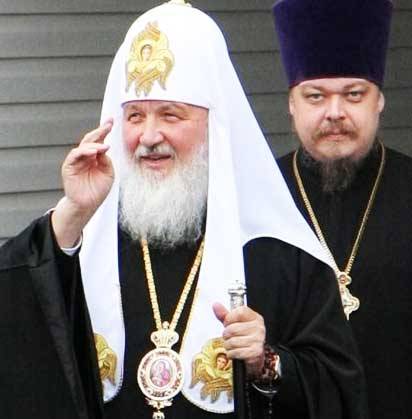
His Holiness Patriarch Kirill and Protopriest Fr Vsevolod (Chaplin)

The political brinksmanship that keeps coming out of Istanbul of late seems to be gathering pace, and the takes in the Anglo-European media have been insufferably predictable. (My own take, from within the OCA, can be found here, for those interested.) Suffice it to say that Western observers consider the Moscow Patriarchate to be firmly under the thumb of the Russian government, if not willing stooges of Putin’s every whim.

As with many things, there is a grain of truth to this observation. Orthodoxy has never been quite as squeamish as Western forms of Christianity about cultivating a close relationship with the state, and that has often meant historically that the Church adopts a syntax and usage that are amenable to certain core state interests. But the actual concerns of the Moscow Patriarchate in recent days seem to put the lie to this ‘conventional wisdom’, if you look closely enough.

The big issue at hand for the Russian Church is not the tomos (though they’re concerned about that, too) but rather the deeply-unpopular pension reform raising the retirement age five years for both sexes. Now, in most Anglophone coverage of the pension reform, where the Church is mentioned at all, it is usually to highlight its silence and complicity in the reform – because that fits the ‘narrative’ that it serves primarily as Putin’s handmaiden. But the Church – and here I mean not just Patriarch Kirill and the representatives of his office, but the other hierarchs and the rank-and-file clergy – have been anything but silent on the topic!

That’s not to say they’ve had a united voice. (Actually, so far the only official thing that has been said by the Danilov is that the Church doesn’t really have a single united stance on the issue, which is prima facie true, but still a tad disappointing.) But there are three broad camps emerging within Church circles on the topic. The first is a quasi-Stoic, austerian stance that says that these pension reforms are painful but necessary, and ordinary people need to grit their teeth and tighten their belts for the sake of the greater good. (On the extreme end of this camp are those churchmen who say the reforms are a divine punishment upon the Russian people for their godlessness.) The second group takes a harder neutral stance than the Danilov itself has, and says that the question of pension reforms is outside the Church’s competence to address. The last group – the group to which I am certainly most sympathetic – says that the pension reforms are unjust because they are unfilial: that the people who have contributed the most to the welfare of Russian society in their lives, are now being punished for the mistakes of the young. (One is tempted to consider this logic somewhat Confucian; but the proper analogy to my mind is the Apology of Socrates.) This radical left-Platonist / -Confucian approach is being championed most vocally by none other than Protopriest Father Vsevolod (Chaplin)!

Now, Western media gloss Fr Vsevolod as an arch-conservative; when it comes to sexual ethics and cultural issues, they’re not entirely wrong to do so. But I’ve blogged before about Fr Vsevolod (Chaplin)’s – perhaps surprising to some – agreement with the Œcumenical Patriarchate, and low-key disagreement with the Russian government, on œcological ethics, to the point where I remarked that he came off sounding like Bill McKibben or Wendell Barry. (‘I love this guy’, I believe I said.) Not just on the environment, either: Fr Vsevolod has been outspoken on œconomic issues as well. He has called for progressive income taxation (a rebuke of Putin’s flat tax policies); has called for a populist alternative, anti-usury banking system; has castigated Russia’s oligarchs as ‘pathetic jerks’ and called for the confiscation of their wealth; and has praised the theory of protectionist, state-directed investment promoted by left-wing Russian œconomist Sergei Glaz’ev. This recent œconomic populism on Fr Vsevolod’s part is not at all out of character for him.

His Holiness Patriarch Kirill’s well-publicised differences with Fr Vsevolod are certainly real, but they have likewise been somewhat overstated. On the environment, banking, income inequality and even pensions, Patriarch Kirill has also in the past shown a fairly strong left-populist streak. However, they do differ in terms of tactics. Patriarch Kirill does tend to be more accommodating with regard to the state, to a point; Fr Vsevolod advocates a more direct and prophetic approach.

The Danilov may be slow, and it may be accounting for a disunited clergy on this pressing issue. But it is far from being the politically-neutered, abject state bureau it is often painted in the Western media and among its domestic rivals. There was a time when it actually was beholden to the state – namely, during the synodal period and then again under the Soviets after an all-too-brief reinstatement of the Patriarchate. But these historical circumstances – owing to the particulars of rule by Peter the Great, by Lenin and by Stalin – no longer obtain, to the point where a difference in degree of government control becomes difference in kind. Pretending that these conditions still obtain is bad history. More to the point, pretending that they do is actually a form of theological orientalism, as I have stated before, and it plays into dangerous sæcular orientalist fantasies about Russia.

On the present issue, however, I hope it’s not too far out of line to hope that Patriarch Kirill listens to Fr Vsevolod’s group, and urges the Kremlin in a stronger and more strident tone to keep pedalling back – or, better yet, scrap – these ill-considered ‘reforms’.