19 January 2023

Echoing Morris on Russia

And who are they who flaunt in our faces the banner inscribed on one side ‘English interests’, and on the other ‘Russian misdeeds’? Who are they that are leading us into war? Let us look at these saviours of England’s honour, these champions of Poland, these scourges of Russia’s iniquities! Do you know them?—Greedy gamblers on the Stock Exchange, idle officers of the Army and Navy (poor fellows!), worn-out mockers of the Clubs, desperate purveyors of exciting war-news for the comfortable breakfast tables of those who have nothing to lose by war, and lastly, in the place of honour, the Tory Rump, that we fools, weary of peace, reason and justice, chose at the last election to ‘represent’ us: and over all their captain the ancient place-hunter, who, having at last climbed into an Earl’s chair, grins down thence into the anxious face of England while his empty heart and shifty head is compassing the stroke that will bring on our destruction perhaps, our confusion certainly:—O shame and double shame, if we march under such a leadership as this in an unjust war against a people who are not our enemies!
- William Morris, from ‘To the Working-men of England’, 11 May 1877

It is not as a Russophile (though perhaps I may be called that, however reluctantly) that I oppose war with Russia, or more accurately further escalation from the West of the already-devastating war in the Ukraine. It is in the same spirit of William Morris, the true Tory radical and advocate of the advancement of the working classes in Britain, that I oppose the same self-serving machinations of the imperialists at home and the squandering of American wealth on a war abroad that benefits only the war-profiteers in the so-called ‘defence’ sector and their assorted hangers-on. The character of these latter is precisely the same as the gamblers, mockers, purveyors of war-news and rump-parliamentarians whom Morris declaimed in this letter.

Yet I expect many of the same who in our day claim Morris as an inspiration would have been quick to dismiss him then, as they are quick to dismiss leftists now, as ‘campist’ or ‘tankie’ or ‘pro-Putin’ or ‘Russian bot’. Indeed, Morris did face opposition among fellow-‘leftists’ in his own day for his principled opposition to British imperialism, his support of Bulgarian independence and his opposition to Turkish atrocities in the Balkans. In the name of William Morris, then—in the name of the Eastern Question Association of his day, in the name of the good Englishmen and Americans of his day who opposed war and the exploitation that comes with it—this iteration of the Great Game must be opposed. It must be brought to an end before it brings on our destruction as it has already brought on our confusion. And those who flaunt in our faces the faded and jaded banner inscribed on one side rules-based order and on the other side Russian aggression must be called to account and shown for what they truly are!

05 January 2023

Does God take sides?


Sometimes one hears it said in American theopolitical discourse, that God does not take sides in politics. There is one sense in which this is a true and worthy impulse to say. And there is another sense in which this glib characterisation becomes dangerously wrong.

Firstly, I tend to believe that it is fully right and accurate to hold that the God of the Holy Scriptures, the Creator of the cosmos, has little to choose in terms of American politics. I believe it is proper to say that God is neither a Democrat nor a Republican.

The first reason that such a characterisation is true, is because the agendas of both parties take moral positions which would be thoroughly and irreconcilably repugnant to the early Church. The first-century Apostolic text called the Didachē, to take one example, explicitly condemns the practice of abortion. This practice is, sadly, ‘unequivocally’ countenanced as a ‘reproductive right’ by the official platform of the Democratic Party.

The Republican Party is no better than the Democratic Party—indeed, in one fundamental way it is worse. The Didachē condemns idolatry as thoroughly as, and in fact more often than, it condemns abortion. And the Republican Party upholds, from the very first sentence of the preamble of its own platform, an explicit form of idolatry: the idolatry which exalts the nation-state as ‘exceptional’ and ‘unlike any other nation on earth’, and which exalts the US Constitution as a sacred ‘covenant’. What does God have to choose between one party for which destroying innocent children is a sacred right, and another party which proclaims aloud with the priests of the Sanhedrin that they have ‘no king but Cæsar’?

Although for a long time I have personally refused to support either major party with my vote, I say this not to cast aspersions on the ordinary American Christians who decide to vote with one major party or the other. Most people have independent reasons, driven by pragmatism or by personal and contextual considerations, for preferring, even strongly preferring, one party over the other. I assuredly do not believe that having such reasons makes one evil or an enemy of God. I say this merely to demonstrate that the God Who created the whole of the cosmos, Who revealed Himself by the law and the prophets to ancient Israel, and Who Himself took human flesh from a certain virgin in first-century Galilee, has nowhere to lay His head when it comes to the halls of power in Washington.

But does this mean that God does not take sides in politics, full stop?

First-order, it strikes me as rather presumptuous for American Christians to assume, that simply because the two main Coke-and-Pepsi options in their own particular powerful nation-state are both distant from God, that God must be equally distant from all possible forms of political expression. Yet many high-minded and well-intentioned evangelicals, Catholics, even Orthodox Christians, make an explicit and public point that ‘God is not political’ and that it is the job of Christians to ‘rise above politics’.

However well-intentioned this apolitical impulse may be in its attempt to engender benefit of the doubt between neighbours on opposing sides of the political divide, it nevertheless confuses a particular point. Politics is, at its basis, merely the art of learning to live together with one’s neighbour. The call to love one’s neighbour is a fundamentally political statement, and even the strictest hermits and most cloistered monks in Christian history were enjoined by their vows to uphold this particular substance in their politics. But then comes the question of the scholar of the law to Christ: ‘Who, then, is my neighbour?’

Christ answers this in the immediate sense with the parable of the Good Samaritan. However, He also more generally answers the question of this scholar of the law in the Beatitudes of Matthew 5. If nothing else, the Beatitudes tell us, in their apportioning of blessing, the political position of God. In short: God does take sides. God takes the side of the poor; of those who sorrow; of the meek; of those who hunger and thirst for justice; of the merciful; of the innocent; of the peacemakers; of the persecuted.

Worth noting is that these categories are not merely symbolic or transcendental. The Beatitudes are not a parable—in fact, they are one of the few places in the Greek Scriptures where Jesus is not speaking in a way that points primarily to the symbolic. The Beatitudes are specific, direct and concrete. And they have immediate ramifications to present-day political situations.

Would Jesus be found on the side of the Iraqi people who still suffer from poverty, infant deformity and internal displacement—or would He be found on the side of their invaders and occupiers?


Would Jesus be found on the side of the Yemeni people, overwhelmingly children, who still suffer from the attacks of bombs and rockets and the threat of starvation—or would He be found on the side of the Croesuses of Saudi who launch those bombs and rockets and blockade Yemen’s ports?


Would Jesus be found on the side of the Syrian people who still suffer from the effects of war, invasion, religious persecution, starvation, sanctions—or would He be found on the side of the Turkish, Saudi, Qatari, Emirati, Uighur and other CIA-funded Wahhâbi religious extremists who invaded and murdered them?


Would Jesus be found on the side of the Palestinian people whose livelihoods are destroyed, who are evicted from their homes, and who are shot dead and detained on the streets of their own cities and villages—or would He be found on the side of the settlers and military who do the destroying, evicting, shooting and detaining?


Would Jesus be found on the side of the Haitian people who are protesting in the streets against the dysfunction of their state and the theft of their country’s wealth—or on the side of those who would send in tanks and planes to oppress them?


Would Jesus be found on the side of the ordinary people in Donbass who have suffered from nearly nine years of non-stop shelling and from deliberately-engineereed lack of access to schools and hospitals—or would He side with the race-nationalist paramilitaries, SBU, AFU and NATO forces who are doing the shelling?


Would Jesus be found on the side of ordinary Venezuelan people—or on the side of the foreign operatives and mercenaries who tried to overthrow their elected government? Would Jesus be found on the side of ordinary Bolivian people—or on the side of the lithium mining consortiums which foisted a coup on them? Would Jesus be found on the side of Indigenous water and land defenders—or on the side of huge multinational energy conglomerates who use police forces and National Guard to harass and repress them? Would Jesus be found on the side of ordinary Africans—or on the side of the French and British and American governments who continue to siphon off Africa’s wealth? Would Jesus be found on the side of innocent children—or on the side of those who traffic and exploit their bodies, or kill them in the womb?


In my own humble opinion, even to pose these questions in the light of the Beatitudes, is to answer them. Unfortunately, in each of these cases, the considerations and interests of worldly power—sometimes soft-pedalled into the conversation under the guise of soi-disant ‘democracy’, ‘rule of law’, ‘nuance’, ‘impartiality’, ‘objectivity’—serve to cloud and muddy the consciences of those who would otherwise clearly answer in each of these instances. But if Jesus does promise the blessings He did in the Beatitudes, then we must say that He would take the side of the Iraqis, Syrians, Yemenis, Palestinians, Haitians, New Russians, Venezuelans, Bolivians, Indigenous nations, African nations, children—over their oppressors and persecutors. Jesus Himself took just such a political side when He chose to be crucified by the Roman authorities in conjunction with the Sanhedrin and their Herodian puppets… between two bandits. They discredited Him and crucified Him as a political agent, as a would-be ‘King of the Jews’.

Those of us who live in an empire with pretensions of universality, a latter-day Rome, where the primary political choices are between infanticidaires on one side and open idolaters on the other, have a responsibility to choose a radical third option, and to side with those throughout the world who suffer at the hands of Cæsar. And we must do so even at the risk of being called ‘communists’, ‘tankies’, ‘campists’ and worse. To do otherwise would be to betray the Gospel, and the Beatitudes in particular which place God on the side of those who suffer, rather than those who of design and intent inflict suffering.

23 November 2022

It’s an unreal world that we’re forced to live in


Yves Smith over at naked capitalism recently reposted an interview between Nomi Prins, the author of several books about central banking, and Lynn Parramore of the Institute for New Economic Thinking. It’s a disturbing and in many ways disheartening read, in part because it describes a fictional economy of pure finance and manipulation of money that has become increasingly severed from what Prins calls the ‘real economy’ – that is to say, the economy in which real people exchange real goods and real services. The inflection point for this divorce, in her view, was the 2007-2008 financial crisis under the George W Bush administration and the Federal Reserve’s choice to insulate in perpetuity the investment-finance sector of the economy from any real-world consequences of their actions.

In many ways, what Prins is describing is a terminal stage in what Christopher Lasch called ‘the revolt of the élites’. Lasch talks about the divorce of élite segments of the society from their neighbours in terms of both values (with the élites being distinguished by New Age spirituality, a therapeutic self-help mindset, and carefully-cultivated lifestyle habits that are meant to serve as status markers) and space (with élites caging themselves off into exclusive universities, upscale neighbourhoods and gated enclaves away from everyone else). And Lasch’s prescription was for a rediscovery of certain community norms that would encourage cross-class contact. Unfortunately, the attempt by the élites to further distance themselves from working- and even middle-class people has only accelerated—a fact pointed to by more sociologically-minded (and less politically-correct) leftists such as Catherine Liu (who aims her guns as much against the élite-wannabe professional-managerial class as against the élites themselves) and Angela Nagle (who indicts the consequences to online communities of the élite betrayal of the commons).

Nomi Prins, on the other hand (as a former manager at Goldman Sachs and Bear Stearns), has a unique look into the inner workings of the economic side of the élite revolt. She talks about ‘wealth accumulation without accountability’, in which the creation of money, as decided largely through policies of the Federal Reserve meant to benefit the wealthiest fraction of the one percent, is increasingly unhinged from the creation of actual wealth. She notes that public policy initiatives, and indeed any attempts to influence the real economy for the better, are fundamentally impeded by the behaviour of this fictitious, purely monetary economy. This economy operates by processes which are irrational and opaque. One might almost say that this purely monetary economy is occult.

Prins still unfortunately places too much faith in fictive ‘decentralist’ solutions which are in fact not solutions at all. Cryptocurrencies, as we are currently seeing with the collapse of FTX and now possibly also Genesis, are not the transparent and stable alternative to checkbook-money that they promised themselves to be, but instead are themselves fuelled by the same occult processes that fuel the fictitious checkbook-money economy. (But honestly, we didn’t need FTX to collapse to figure this out. The evidence was there all along, and there were people and organisations warning us about the fundamental instability of crypto from the very start.) And the nature of exchanges in massively multiplayer online gaming spaces like Minecraft and World of Warcraft offers several intriguing possibilities, but they still ultimately cannot take the place of exchanges in the real economy. But taking Prins’s analysis alongside Liu’s analysis of the virtue-signalling élite-pretensions of the professional managerial class, and Nagle’s analysis of how online spaces have been warped by new (even nihilistic) configurations of value… it becomes clear that the Laschian emphasis on élite revolt in terms of social-ethical values, and the economic side of élite revolt in terms of the complete unmooring of the money economy from any sort of real-world accountability, cannot be divorced from each other.

Alongside the real world of actual ecologies and people and things, there now exists an alchemically-conjured financial world of unreality, which is governed by laws that are nearly completely resistant to rational analysis—even by those who have conjured it. And the élites who have conjured forth this unreality, are constantly seeking new ways to leverage that unreality to extort more and more control over the real world and its resources away from the rest of us. And the rest of us are thereby forced, to varying degrees, to live in both the real world and its simulacrum.

Among the reasons that the Fathers of the Early Church—people like Saint Basil the Great, Saint Gregory of Nyssa, Saint Gregory the Theologian and Saint John Chrysostom—preached so strongly against the practice of usury was that usury was based on a lie: producing what seems to be wealth out of the misery and debt of the indebted, or planting money in the backs of the poor and expecting it to grow out of itself. Consider what the Fathers of the Church would have to say about the way the Western form of capitalism is currently run: in which central banks—all empowered to do so by lending at interest—can conjure money out of thin air and flood it into various sections of the economy practically at whim, distorting the outcomes in the real economy of real people, real ecologies and real things as it pleases! Would they not see at work in this the hands of demonic powers? I understand how much he is (unjustly) hated in the West (because the West now blindly, unthinkingly, reflexively hates everyone and everything Russian); even so, I think the person who gave best voice to the suspicion of the way the current economy works is Patriarch Kirill of Moscow:
The modern economy is built largely on fraud, creating money out of thin air. [Money is] equivalent to human work and the riches God has given us: namely coal, ore, oil, our intellect, our physical labour, our culture and our spirituality. [But today,] every company produces its own money in the form of shares, which in the secondary market, rather than acting as simple securities, are used as items of trade and speculation. If these spectres earn billions, not being backed by real labour or capital, how can such an economy exist? And what becomes of the simple worker, who produces the value behind this entire bubble! [We need] a fair economic system, where money and capital are equivalent and are the expression of real work.
I don’t think it is entirely coincidental, either, that Russia has been placing so much emphasis on building up its dacha agrarian economy, its ability to grow its own vegetables, over the past decade and a half—or that this food security has been of great use to Russia in weathering and combatting the effects of Western sanctions. Or that Russia’s banking sector, with some input from the Church of Russia, has been exploring ways to organise itself in ways that don’t resort to usurious lending. These are healthy trends which deserve to be encouraged, which attempt to ground the economic life of Russians in the real world rather than in the simulacrum.

Ultimately, the West must do the same as Russia is doing now. We must choose to live in the world that God created, rather than in the simulacrum over which we fancy ourselves little gods—but within which we are at the whim of powers which we do not understand. And in order to do that, it strikes me that we need to be listening to those thinkers within the West, like Lasch and Liu and Nagle, who in pointing out the élite revolt against reality are in fact also pointing the way back to reality.

21 October 2022

Stand with Haiti: ‘to the next Insurrection’


We’re at it again, it seems. The Atlanticist empire is not content with the prospect of turning Eastern Europe into a blighted post-apocalyptic wasteland, with forty billion dollars of spending on weapons to the Ukraine (the profit of which will ultimately accrue to Silicon Valley and Acela-corridor defence contractors). Sleepy Joe and Shoe-Polish Justin are shipping out US and Canadian warplanes and armoured vehicles to Haiti in order to prop up the failing neoliberal government of Ariel Henry (installed after the assassination of President Jouvenel Moïse at the hands of US-backed Colombian mercenaries last year), and it seems the Haitian people are justifiably unhappy with the prospect of yet another US intervention. The following excerpt from the Life of Johnson gives us a strong impression of where our good scrivener of dictionaries and lover of language would stand on this particular issue:
Upon one occasion, when in company with some very grave men at Oxford, his toast was, “Here’s to the next insurrection of the negroes in the West Indies.” His violent prejudice against our West Indian and American settlers appeared whenever there was an opportunity. Towards the conclusion of his “Taxation no Tyranny,” he says, “how is it that we hear the loudest yelps for liberty among the drivers of negroes?” and in his conversation with Mr. Wilkes he asked, “Where did [Jamaica plantation owner William] Beckford and [Boston merchant Barlow] Trecothick learn English?”
Note that Haiti was founded in 1804 precisely by the ‘next insurrection in the West Indies’ which Dr Johnson toasted in front of that room full of stuffy Oxford dons in 1777. Haiti was the first country, at least in the Western world, to permanently ban slavery when it declared its independence from France. For the unforgivable sin of opposing colonialism and slavery, the French government has been extorting and impoverishing the Haitian people since 1825—to the tune of 150 million francs. The imposition of this horrific indemnity upon the newly independent nation, crippled Haiti’s ability to invest in its own people, infrastructure or education. Haiti’s government was only able to pay off the entire amount—including interest—in 1947.

But France’s partner in (as Samuel Johnson called it) robbery, the United States, invaded Haiti in 1915 and subjected it to a nineteen-year-long military occupation. Woodrow Wilson sent 330 US Marines to Haiti at the behest of the National City Bank of New York, where they proceeded to establish and then act as the enforcers for a military dictatorship that murdered over 15,000 Haitians. The US government stole $500,000 from the Haitian national bank and kept it in the City Bank in New York, thus rendering the Haitian government politically dependent on the US. In 1919, the Marines assassinated a Haitian freedom fighter named Charlemagne Pérault—and then stripped him naked and photographed him hanging from a tree in what was clearly a lynching. They then disseminated the photograph around the island in order to discourage any further resistance. However, the US literally rounded up Haitian villagers and used Haitians as forced labour in building schools and roads in the US. The American government very literally plundered Haiti’s labour and wealth, condemning it even further to poverty and inescapable debt. The occupation only ended in 1934 when Franklin Delano Roosevelt withdrew the last of the Marines, but he left in place a US-dominated gendarmerie that brutalised the Haitian populace until 1941.

Successive short-lived governments under Sténio Vincent and Elie Lescot attempted but failed to stabilise the society. There was a military-led revolution in 1946 that briefly established a populist, socially-minded government under Dumarsais Estimé: but Estimé was himself betrayed by the same elements of the military that had swept him into power. The military essentially imposed itself as a domestic dictatorship over Haiti until protests and street actions forced the military puppet president from office in 1956, paving the way for the Duvalier dictatorship: a right-wing government which used death-squad style paramilitaries, psychological and physical terror—including mutilation and rape—over the population in order to maintain power.

The United States had a rather two-faced relationship with the Duvaliers. On the one hand, François Duvalier himself was part of a US-based public health programme that combatted various tropical diseases—this is how he got the nickname ‘Papa Doc’. As an anti-communist (and friend to Cuban dictator Fulgencio Batista), Duvalier was someone whom the US was keen to cultivate as a potential ally. When he made his initial bid for power, the US Marines directly provided the training for Duvalier’s rural paramilitary death squads, the Tonton Macoutes. The public revelation of American complicity in Duvalier’s reign of terror, however, caused a scandal, and the Kennedy Administration suspended aid to Duvalier in 1962 on the grounds of human rights abuses (of which it was probably already well aware).

After this, the relationship between Papa Doc and the United States turned sour. Papa Doc’s rhetoric became more and more heatedly anti-American, although his government retained a right-wing nationalist and anti-communist position. However, the US was keen to renew ties with François Duvalier, as well as his son and heir Jean-Claude Duvalier, aka ‘Baby Doc’. American military ‘aid’ for Haiti (actually aimed at repressing the Haitian population) resumed in secret in 1973, the US Marines went back to Haiti in order to train up a new generation of Baby Doc’s rape gangs and death squads. The Duvalier dictatorship ended with Baby Doc being overthrown in a popular uprising in 1986—though being notoriously corrupt, Baby Doc absconded with hundreds of millions of dollars’ worth of Haiti’s wealth when he fled to France.

What was left in Haiti was a series of unstable governments that ended only when a former Catholic priest, liberation theologian and anti-Duvalierist named Jean-Bertrand Aristide was elected president in a landslide in 1990, in the ‘first honest election’ of Haiti’s history. Aristide had campaigned on a platform of improving health care, education, infrastructure and low-cost housing; returning land to farmers; cracking down on sexual violence against Haitian women; and doubling the minimum wage. He also led a campaign to rein in the military with the constitution, and replace some of its functions with a publicly-accountable civilian police force.

The Haitian army, under the newly-elevated commander Raoul Cédras, overthrew Aristide in a bloody coup and instituted a three-year reign of terror over Haiti. The US actually tried to play both sides of this coup: on the one hand, they supported Aristide’s overthrow through covert channels like the CIA, who were advising the Haitian army in 1991. On the other hand, the US State Department offered Aristide a lifeboat through the embassies, and allowed him to flee to safety. When conditions in Haiti got so bad that a ‘humanitarian intervention’ was demanded, the Clinton Administration used American military force to re-install Aristide as President of Haiti—but with some conditions attached. Instead of running on the liberation-theology platform that had gotten him elected in 1990, the US forced Aristide to enact neoliberal policies on Haiti that ran it into even further debt and rendered it completely dependent on American food aid.

Aristide himself, however, realising how badly his people had been treated by American interests, ran for the presidency and won a second term in 2000. This time he pledged to fight for Haitian interests rather than American ones, and for his trouble he was again ousted in another bloody coup, in 2004, this time by George W Bush’s neocons. But the interests that drove that coup were the same corporate interests that drove American intervention in 1994. These are the same interests, bent upon keeping Haiti subservient, dependent and miserable, that are driving calls for another ‘intervention’ now.

As a follower of Samuel Johnson’s especially in this line of his thinking, I stand with Haiti. And I too will toast, against our equivalent of the ‘grave Oxford men’ of Johnson’s time, ‘the next insurrection in the West Indies’ that has human flourishing, rather than financial-military-corporate domination and slavery, as its end.

05 September 2022

The twin geniuses of Creedence and Pesnyary


Creedence Clearwater Revival

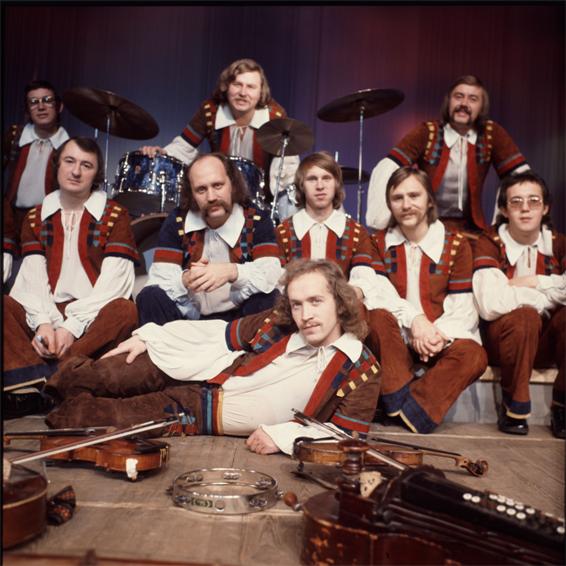
Recently I’ve been listening to the folk-tinged rock music of Creedence Clearwater Revival, on the one hand, and the rock-tinged folk music of Pesnyary on the other. Creedence were a Bay Area band who emerged out of, and came to exemplify, a certain strand within the sixties counterculture—though they usually composed lyrics about, and were influenced by the folk culture of—Greater Appalachia, the Bayou, the American South generally. Pesnyary, by contrast, were a Soviet state-sponsored VIA (vokal’no-instrumental’nyi ansambl’, literally ‘vocal-instrumental ensemble’) who played acid-rock and progressive-rock arrangements of traditional folk songs as well as their own compositions. They were also one of the very few Soviet bands to actually tour in America—specifically in the American South. Creedence had split up by 1972; Pesnyary were then just getting started: officially, there are two bands calling themselves Pesnyary now and four or five others borrowing the name without licence, but most people agree that Pesnyary’s classic period ended in 2003 with founding member Vladimir Mulyavin’s death. Despite their very different origins and ‘stances’—the lyrical and thematic difference between ‘Proud Mary’ and ‘Ave Maria’, as it were—I’m finding I’m enjoying them for very similar reasons.

One of the reasons I find both of these bands so enjoyable to listen to, is because they invest these deceptively simple melodies and chord progressions (these are rock groups, after all) with a great deal of dynamic and emotional depth. Creedence Clearwater Revival build on a basis of swamp blues—the harmonica was there from early on—and diverge from there in various directions, adding more and more rock instrumentation, as well as elements like Hammond organ. By the end of their career, as one can hear on songs like ‘Sweet Hitch-Hiker’, they were veering very close to hard rock or even proto-metal. CCR’s tunes are catchy, instantly-recognisable, iconic: ‘Suzie Q’, ‘Down on the Corner’, ‘Fortunate Son’, ‘Have You Ever Seen the Rain?’, ‘Lookin’ Out My Back Door’.

As important as Creedence Clearwater Revival are for a certain generation of Americans, I’d say that the Pesnyary are equally as important for a certain generation of people from the former Soviet Union. The Belarusian group, led by Vladimir Mulyavin, took its influences both from Western rock music (particularly the Beatles) and from traditional White Russian folk melodies. Pesnyary songs blend guitar melodies, drums, keyboards and even saxophones with traditional folk instruments (wooden whistles, fiddles, flutes, accordions, hurdy-gurdies) in a unique way. The VIA was signed to the state-owned label Melodiya in the Soviet Union (the only real game in town, as it were), and their albums sold millions of copies. Their unique approach to making accessible music with depth and feeling—with hits including ‘Aleksandrina’ and ‘Belovezhskaya Pushcha’—and Mulyavin’s ability to seek out and recruit talented multi-instrumentalists and singers, made the Pesnyary very literal rock stars in the Soviet Union.

John Fogerty and Leonid Bortkevich are, obviously, two very different vocalists—but even here there are some interesting similarities. Fogerty gives a very nasal delivery, with occasionally having a hoarse or a hard edge to his tenor melodies. There’s definitely a ‘country’ or ‘Southern’ inflection to this delivery, but it’s easy to hear the lasting influence on rock—even hard rock and heavy metal—that Fogerty’s voice had. Leonid Bortkevich was a much more traditional tenor: clean-toned, pectoral delivery, like a classically-trained singer. On the surface, he sounds much more like John Denver than John Fogerty. But Bortkevich deploys some interesting flourishes in his singing—a breath’s delayed approach to the note, a glide or a back-throat catch, that can make his vocals sound grittier, or ‘folksier’ (a good example of this being ‘Do Tret’ih Petruhov’).

It’s a bit strange. I’ve explored a lot of the musical differences between the two bands here. If we take account of their analogical positions within their respective cultures, the countercultural and ‘oppositional’ political nature of CCR’s music (‘Fortunate Son’, ‘Effigy’) more closely aligns with the career of the alternative rock / new wave band Kino headed by Viktor Tsoi. Pesnyary, meanwhile, despite the influence they took from the Beatles, probably more closely aligns with the folk-revival artists like Lead Belly, Woody Guthrie, Pete Seeger, Burl Ives and so on than with the later tail of the folk-rock trend in American music to which Creedence belongs. But somehow it seems more natural to my ear to connect these two bands. Both of them evince a vitality and a creativity that tends in a similar direction. Both CCR and Pesnyary seek their inspiration in the deep roots of their respective countries—not without a critical eye in each case—and both draw them out to infuse them with the sounds of their contemporaries. Certainly both bands are worth listening to and appreciating.


Pesnyary

The Legendarium according to Smaug


A meteoric dumpster fire

I’ve watched the first two episodes of Rings of Power. Even though I promised I wouldn’t.

It’s bad. And I mean really, holistically bad.

Let’s get the trivial concerns out of the way first. Casting Black actors and actresses to play hobbits, dwarves, men and elves isn’t at all a problem for me. If anything, Tolkien’s dwarves are supposed to be swarthy-skinned and dark of complexion, which for some reason they weren’t in the Jackson movies; and the hobbits were envisioned as being just as diverse of physical appearance as humans. The question is whether the actors and actresses can act well. (Sir Lenny Henry and Sophia Nomvete can and do act well here. Ismael Cruz Córdova? Not so much.) Also if it isn’t done cynically, which is a bit more questionable. Race politics have nothing to do with why I think Rings of Power is a full-on betrayal of Tolkien’s work.

What does, then? One word: Galadriel.

In Tolkien’s Silmarillion, Galadriel was originally a stubborn, headstrong and adventurous girl—this much is true. She did have something of a growth arc. The reason she came to Middle Earth at the end of the First Age was because she was intrigued by the place. She was tempted, in part, by Fëanor’s promises of glory, and longed to see the shores of an unknown land and even to rule them as queen. But she refused to join Fëanor’s quest for revenge against Melkor for the death of his father (Galadriel’s grandfather) Finwë, and she (along with her father Finarfin and her eldest brother Finrod) refused to engage in the political quarrels of the Noldor which ended in the slaughter of the Kinslaying and the Burning of the Ships.

That is as much as to say: she was stubborn and adventurous, but neither brooding nor vengeful—she was of like mind with her father and brother, not having sworn Fëanor’s oath of revenge. Further, it is highly hinted by Jack himself that the reason she stayed in Middle Earth was because she loved it. She loved the people, she loved the living creatures, and she especially loved the forests. The reason she stayed in Middle Earth was because she found hope there.

Melian said: ‘There is some woe that lies upon you and your kin. That I can see in you, but all else is hidden from me; for by no vision or thought can I perceive anything that passed or passes in the West: a shadow lies over all the land of Aman, and reaches far out over the sea. Why will you not tell me more?’

‘For that woe is past,’ said Galadriel; ‘and I would take what joy is here left, untroubled by memory. And maybe there is woe enough yet to come, though still hope may seem bright.’

In Rings of Power, there is no love at all in the character upon whom they wrongly bestow the name of ‘Galadriel’. There is no joy. There is not even a trace of hope. Her reasons for staying in Middle Earth have nothing to do with any kind of attachment to Middle Earth, land or creatures or people—and everything to do with hunting down her brother’s killer, Sauron. The makers of Rings of Power have made this ‘Galadriel’ into precisely a bitter, brooding, violent woman who is dead-set on revenge: in short, they have made her into Fëanor Mark II.


These are not the same character. Not even at different ages.

This is partly ideological. There is a current in the corporate culture machine’s interpretation of feminism, that thinks that in order to pander to women viewers they should make all female characters ‘strong’ by putting weapons in their hands—by making them ‘action heroines and corporate girl-bosses’. But this isn’t good writing, and arguably it isn’t even good feminism. Let me be blunt: Éowyn wasn’t a badass just because she picked up a sword, delivered a one-liner and stabbed a wraith in the ‘face’. If it had been just that, she wouldn’t have gotten any of the cheers she did. Éowyn was a badass because of the context of that action: she cared about Merry and her father enough to protect them.

This ‘Galadriel’? She doesn’t care for anything or anyone except her dead brother—and not even Finrod himself, but his ‘task’. This ‘Galadriel’ would never have been found worthy of the option of returning to Valinor in the first place—the pardon that the Valar bestowed only upon Finarfin and his children, among all of the Noldor. The only reason Galadriel was allowed to return to the Elf-home was because she wasn’t as vengeance-obsessed as Fëanor, and hadn’t taken Fëanor’s oath! Rewriting ‘Galadriel’ as another Fëanor doesn’t strengthen her—it diminishes her in ways that are frankly blasphemous.

And what’s worse, Rings of Power tries to make her Fëanorish vindictiveness a sign of her sagacity. Like Cassandra she warns of Sauron’s known-to-the-audience return when everyone around her, High King Gil-Galad and ‘Elrond’ particularly, disbelieve her and tell her she’s overreacting (the mansplaining chauvinist bastards). Never mind that in the book, Galadriel was the one urging Gil-Galad to show caution, not the other way around—and she was right to do so!

I’ve got other grievances with Rings of Power that operate on a similar level. The portrayal of ‘Elrond’ as Gil-Galad’s political staffer and speechwriter is particularly offensive. As is the notion that Celebrimbor would be worried about the size of the elves’ ‘workforce’ in building his Super-Duper Mega-Forge—sending ‘Elrond’ off to literally hammer out (and I do mean with a literal hammer) a labour contract with Durin’s dwarves. Tolkien would be appalled at this! His elves and dwarves had their flaws, but they were not industrialists and capitalists. Their crafts, were crafts. Capitalism was personified in Lord of the Rings by Saruman, and assembly-line Fordist industrialism metonymised by Isengard. They were certainly not valorised the way they are here.

But this should not come as a surprise. Both my gripes against ‘Galadriel’ and the characterisation of the elves and dwarves generally stem from a much broader complaint. That is: Rings of Power is nothing more and nothing less than the Legendarium according to Smaug. It’s Tolkien’s universe as interpreted by Jeff Bezos—born on third base, mega-polluter, war hawk defence contractor, exploiter of the poor—someone who doesn’t even value Tolkien or his œuvre and has nothing to do with Tolkien’s own ecological-minded Christian Tory-anarchist mythopoesis. Of course any interpretation he sponsors in order to garner a greater market share for his streaming service, is going to run dead against the logic of Tolkien’s universe.

Tolkien often expressed his own view through the words of Faramir. And this was Faramir’s view: ‘I do not love the bright sword for its sharpness, nor the arrow for its swiftness, nor the warrior for his glory. I love only that which they defend.Rings of Power, so far, takes the opposite view: trying to dazzle with special effects, battle sequences, blood and fire—while holding the substance of their source material, the characters and the setting, in utter contempt.

Give this one a hard pass.

25 August 2022

For Faina


I looked truth in the eye today,
in both of her lake-green eyes:
pools in whose depths
too much wordless fear and
anguish had been anchored.

And then I heard her speak.
She had a child’s voice,
soft and high and sterling-clear.
Such a voice should not belong
to eyes which have seen so much,

to tear-stained eyes which have taken
in from the tender age of five
the explosions of the shells,
the shredded bodies in rubble,
the flowers laid at infants’ graves.

But, even more than that,
when one hears such a voice
from a face with such eyes,
it is hard to turn away from.
And so, many choose not to hear.

Truth speaks, and she writes.
Her mind is full of starships,
and her heart is full of cats;
for that I’d praise her courage
but my throat catches on such a word.

Not for any lack in her of courage!
No! I balk at the obscenity:
no thirteen-year-old girl
should ever have her ‘courage’
tested under shell fire for eight years.

And yet still that voice comes:
soft and high and sterling-clear,
defying those who would consign her
to darkness and to silence.
Truth has always spoken thus.

- Matthew Cooper, 25 August 2022